Showing Spotlights 105 - 112 of 235 in category All (newest first):
 To overcome the pixel size limitation of existing digital image sensors, both new materials with enormous photoelectric properties and novel device architectures are required. In new work, researchers are now reporting ultra-high resolution nanorod digital image sensor (NDIS) which is fabricated by sandwiching vertically aligned zinc oxide nanorod arrays between orthogonal top and bottom nanostripe electrodes. The most important application of the NDIS is as a next-generation digital image sensor with ultra-high resolution, well beyond the limit of existing techniques.
Sep 29th, 2015
 A typical preliminary test for tuberculosis includes culturing the samples for at least 1-2 weeks in a lab, followed by examination under a fluorescence microscope. The lack of rapid, accurate, and inexpensive point-of-care tools for detecting low amounts of M. Tuberculosis is a critical bottleneck in early diagnosis and appropriate treatment. Researchers have now developed a rapid and flexible nano-biosensor for diagnosing TB in early stages using smart phones.
Sep 11th, 2015
 Among others, a significant area for nanopaper applications are sensors. Paper-based sensors promise to be simple, portable, disposable, low power-consuming, and inexpensive sensor devices that will find ubiquitous use in medicine, detecting explosives, toxic substances, and environmental studies. New work describes various nanopaper-based nanocomposites that exhibit plasmonic or photoluminescent properties that can be modulated using different reagents. These can be used for simple, disposable and versatile sensing platforms.
Jul 14th, 2015
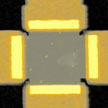 Magnetic field sensors are in very high demand for precise measurements of position, proximity and motion. The most commonly used Hall Effect devices are fabricated with silicon. The sensitivities of these sensors - voltage and current - depend on the device materials electronic properties such as charge carrier mobility and density. However, for futuristic advanced applications higher sensitivity Hall sensors are required than can be achieved with silicon. Researchers now have set a new world record for the sensitivity of Hall sensors using highest quality graphene encapsulated in hexagonal boron nitride.
May 21st, 2015
 Presently, several techniques for detecting mRNAs are available,which include in situ hybridization and polymerase chain reaction. However, these single-point and end-point techniques require the killing of the cells and are thus unable to capture the expression of mRNA in real time and locality with high precision. In new work, scientists describe a new way of preparing functional DNA nanostructures that can provide accurate quantification and visualization of mRNA transcripts in living cells.
May 6th, 2015
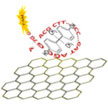 While the actual toxicity of Bisphenol A (BPA) is still debated, the direct measurement of BPA is difficult because of the weak response given by conventional electrochemical sensors, and current optical analysis methods are susceptible to the influence of interfering substances. A novel aptamer/graphene oxide FRET biosensor now provides a method for the rapid detection and risk assessment of BPA with high sensitivity and selectivity.
Apr 13th, 2015
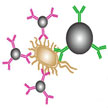 Researchers have developed a magnetic bead based sensor that combines magnetic separation (MS) and magnetic relaxation switch (MRS) for one-step detection of bacteria and viruses with high sensitivity and reproducibility. Compared to conventional assays for detection of bacteria and viruses, this novel MS-MRS assay is easy to operate without laborious pre-treatment, purification and can be adaptable to point-of-care tests easily.
Mar 13th, 2015
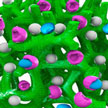 So far, there have been very few research reports on single electrode materials that enable the simultaneous detection of different metabolites - such as glucose, urea, cholesterol, and triglycerides - in whole blood. Moreover, it is a considerable challenge to integrate all required materials and devices on a single chip to ultimately produce a multiplexing biosensor array. In new work, researchers demonstrate that biosensors based on conducting polymer hydrogels enable the precise and full-range detection of different metabolites in human blood.
Jan 22nd, 2015

 Subscribe to our Nanotechnology Spotlight feed