Showing Spotlights 1 - 8 of 65 in category All (newest first):
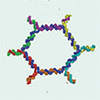 Scientists have developed an unprecedented artificial intelligence-driven tool that can predict the immune responses of human immune cells (specifically peripheral blood mononuclear cells) when they encounter nucleic acid nanoparticles or other therapeutic nucleic acids.
Apr 9th, 2023
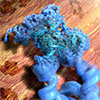 RNA nanotechnology is an emerging field that combines the unique properties of RNA with the principles of nanotechnology to create new and innovative applications in medicine, biotechnology, and materials science. Here we give an overview of RNA's potential in drug delivery, diagnostics, vaccine development and gene therapy.
Mar 15th, 2023
 To realize the full potential of DNA nanotechnology in nanoelectronics applications requires addressing a number of scientific and engineering challenges: how to create and manipulate DNA nanostructures? How to use them for surface patterning and integrating heterogeneous materials at the nanoscale? And how to use these processes to produce electronic devices at lower cost and with better performance? These topics are the focus of a recent reviewarticle.
Feb 17th, 2022
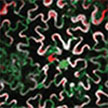 The development of plant genetic engineering lags behind the development of animal genetic engineering. Plant cells differ from animal cells in several aspects, a major one being that, in addition to the cell membrane, they possess a wall surrounding them to provide mechanical and structural support. In recent years, breakthroughs in nanotechnology for genetic engineering have provided more favorable tools for the genetic transformation of plants. A review summarizes the types of gene carriers used in plant genetic transformation, the ways of combining with foreign genes, and the differences and advantages compared with earlier traditional transgenic methods.
Jan 10th, 2022
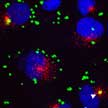 Nucleic acids offer an ideal building material for the development of therapeutic nucleic acids because they are biocompatible and can be programmed as or functionalized with antisense oligonucleotides, small interfering RNA (siRNAs), microRNAs (miRNAs), aptamers, and decoy sequence. New research shows that nucleic acid composition can be designed for enhanced stability, targeted cellular delivery, and optimal activation or abrogation of immune responses.
Oct 28th, 2020
 DNA is probably the most programmable biomaterial for creating a wide range of rationally designed and functionally enhanced nanostructures. The sophisticated, programmable, and addressable DNA nanostructures are strong candidates for constructing nanoelectronic devices. The size of DNA molecules is also key: DNA double-helix has a neighboring base pair distance of 0.34 nm and a diameter of 2.1 - 2.6 nm a, and thus DNA complex-based nanoelectronics may break the 5-nm processing limit of commercial silicon-based semiconductors.
Sep 10th, 2020
 Using DNA to directly store data is an attractive possibility because it is extremely dense and long-lasting. Currently, though, synthesizing and sequencing DNA molecules for storing large amounts of data involves complex devices and is very expensive. In an effort to make data storage in DNA more affordable and commercially viable, researchers have combined nanopore sensing and DNA nanotechnology in a solid-state nanopore platform for digital data storage. This digital data storage method provides an alternative to information storage in the DNA base sequence.
Jan 15th, 2019
 Investigating the potential of DNA to form self-assembled injectable hydrogels via physical crosslinking with silicate nanodisks, researchers have utilized DNA as a high molecular weight polymeric chain in order to form hydrogel networks for tissue regeneration and drug delivery applications. They have designed shear thinning hydrogels, which can be passed through a 22-gauge syringe by taking advantage of the native chemical structure of DNA and its specific base pairing interactions.
Sep 24th, 2018

 Subscribe to our Nanotechnology Spotlight feed