Showing Spotlights 1 - 7 of 7 in category All (newest first):
 Researchers develop spin-selective memtransistor showing electrical control of proximity-induced magnetism in graphene on antiferromagnetic CrI3, enabling energy-efficient spin logic and nonvolatile memory devices.
Feb 5th, 2024
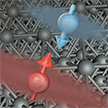 Spintronics is a technology that utilizes the spin of electrons - in addition to their charge - in order to store and process information. Unlike traditional electronics, which rely on the movement of electrons to perform their functions, spintronics uses the intrinsic angular momentum of electrons to achieve the same results. Spintronics offers the potential to address some limitations of traditional, charge-based computing and it has the potential for developing new types of devices such as spin-based transistors and logic gates.
Feb 1st, 2023
 The discovery of magnetism in two-dimensional (2D) ultrathin crystals opens up opportunities to explore new physics and to develop next-generation spintronic devices. However, 2D magnetic semiconductors with Curie temperatures higher than room temperature have rarely been reported. Researchers now show that high-quality, nonlayered cobalt ferrite nanosheets as thin as a single unit cell can be synthesized via van der Waals epitaxy.
Nov 15th, 2022
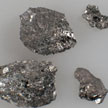 Strange new materials experimentally identified just a few years ago are now driving research in condensed-matter physics around the world. Tthese "strong 3-D topological insulators" - TIs for short - are seemingly mundane semiconductors with startling properties. Topological insulators offer unique opportunities to control electric currents and magnetism, and are promising materials for future spintronic applications or could provide access to novel, fascinating physical phenomena. While so far, only synthetic TIs had been experimentally identified, researchers in Germany report the discovery of a natural occurring topological insulator: the mineral Kawazulite.
Mar 11th, 2013
 A control over spin-electron interactions is vital for development of spintronic devices and for quantum computation. When a magnetic impurity is surrounded by free electrons, a realignment of the electron spins occurs below a critical temperature due to spin-electron interactions; this causes an increase in resistivity of the material - a phenomenon known as the "Kondo" effect. The Kondo effect has been observed in a wide range of systems including single atoms/molecules, quantum-dots, and carbon nanotubes, however two-dimensional molecular Kondo systems have yet to be explored. Molecules with magnetic properties recently have great appeal as they offer an ideal platform to advance the fundamental understanding of spin related mechanisms, and can act as templates for molecular spintronic device fabrication due to their propensity for spontaneous self assembly. By manipulating nearest-neighbor molecules with a scanning tunneling microscope tip researchers now were able to tune the spin-electron coupling of the center molecule inside a small hexagonal molecular assembly in a controlled step-by-step manner. This variation of Kondo effect might be useful for instance for storing or manipulating data in spintronic memory devices.
Jan 9th, 2007
Researchers have developed an original process to investigate the spin transport properties of a single nanoparticle and provided evidence for its successful realization. This new approach paves the way for a more in-depth study of magneto-Coulomb phenomena in nanosized clusters. While only two results are available up to now on connecting a 0D nano-object to ferromagnetic electrodes enabling spin polarized injection and detection, extensive theoretical studies have been undertaken, leaving the field wide open for experiments.
Oct 4th, 2006
A recent study shows that just by changing the structure of a molecule, without altering its chemical composition, can lead to a variation in the spin-electron interaction strength, and consequently the associated Kondo temperatures.
May 31st, 2006

 Subscribe to our Nanotechnology Spotlight feed