Showing Spotlights 25 - 32 of 40 in category All (newest first):
 Most products today are defined as 'nanotechnology product' because they contain nanoparticles in some form or other. For instance, many antimicrobial coatings contain silver in nanoscale form; food products and cosmetics contain nanoparticles; drug formulations are made with nanoscale ingredients; and some products are partially made with composite materials containing nanomaterials (e.g. carbon nanotubes or carbon nanofibers) to mechanically strengthen the material. Two researchers from the Norwegian National Institute for Consumer Research (SIFO), Harald Throne-Holst and Pal Strandbakken, argue that consumer rights in the nanotechnology age are not self-evident but rather have to be strengthened, partly redefined and certainly revived in order to empower and protect consumers.
Nov 17th, 2009
 From an energy savings point of view, the use of smart windows - electrically switchable glass which controls the amount of light passing through when voltage is applied - can save costs for heating, air-conditioning and lighting and avoid the cost of installing and maintaining motorized light screens or blinds or curtains. A disadvantage is of course the fact that the smart windows themselves need to draw energy in order to do their job. Now, researchers have developed a self-powered, fast-switching smart window that doubles as a solar cell, using sun light to power its chromic behavior and making the case for energy savings even more compelling. By employing a patterned tungsten oxide/platinum electrochromic electrode and a dye-sensitized titanium dioxide nanoparticle photoanode, the self-powered photovoltachromic cell (PVCC) which exhibits distinct electrochromic characteristics of a fast switching rate and tunable transmittance under illumination. The novel device has both photoelectrochromic and photovoltaic characteristics.
Oct 27th, 2009
 Not surprisingly, it has been scientists in The Netherlands - a country that has long been conducting large-scale and long-term field studies on the benefits of certain plants to mental and physical health (scientists refer to this effort as the 'great coffee house smoke screen studies') - that have come up with a nanotechnology discovery that could well revolutionize many consumer products from food to toys. In a report released today, April 1, the Dutch scientists report that a nanoparticulate substance found in Cannabis sativa, also know as marijuana, has an amazing ability to kill fat cells in the human body. Hoping to ride an early wave of commercialization, the Dutch research group has already filed for patent protection and registered the trademark 'Royal Spliffmeister Edition' for a range of planned products.
Apr 1st, 2009
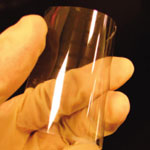 The emerging field of transparent and flexible electronics not only holds the promise of a new class of device components that would be more environmentally benign than current electronics; being able to print transparent circuits on low-cost and flexible plastic substrates also opens up the possibility of a wide range of new applications, ranging from windshield displays and flexible solar cells to clear toys and artificial skins and even sensor implants. Three broad application areas for this technology are taking shape: transparent displays; flexible displays; and transparent/flexible electronics. Traditional materials used for transparent electronics include indium tin oxide films and indium oxide nanowires. In their search for materials that can offer even higher mobility and therefore even better performance, researchers have turned to single-walled carbon nanotubes .New work at the University of Southern California has now demonstrated the great potential of massively aligned single-walled carbon nanotubes for high-performance transparent electronics.
Jan 6th, 2009
 Forget boxy loudspeakers. Researchers have now found that just a piece of carbon nanotube thin film could be a practical magnet-free loudspeaker simply by applying an audio frequency current through it. These loudspeakers - which are only tens of nanometers thick, transparent, flexible, and stretchable - can be tailored into many shapes and mounted on a variety of insulating surfaces, such as room walls, ceilings, pillars, windows, flags, and clothes without area limitations. The scientists demonstrated that their CNT loudspeakers can generate sound with wide frequency range, high sound pressure level, and low total harmonic distortion. Another advantage compared to conventional loudspeakers is that the CNT loudspeakers don't vibrate and are damage tolerant. They will work even if part of the thin film is torn or damaged.
Nov 3rd, 2008
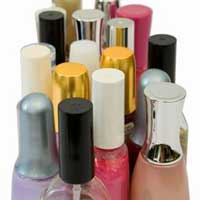 The controversy over the use of nanoparticles in everyday products, such as cosmetics, has been going on for a while now. At best, the evidence is inconclusive - it's too early to say whether there is a risk or not. The cosmetics industry of course argues that their nanoparticle-containing products are perfectly safe because no problem has been reported so far. Consumer, health and environmental groups beg to differ and claim that there is a potential risk because we just don't know enough about this issue and that we rather should err on the side of caution. The fact is, as a recent report by the European Commission's Health and Consumer Protectorate states, that at present there is inadequate information on hazard identification, exposure assessment, uptake, the role of physico-chemical parameters of nanoparticles determining absorption and transport across membranes in the gut and lungs, the role of physico-chemical parameters of nanoparticles in systemic circulation determining biokinetics and accumulation in secondary target organs, possible health effects, and translocation of nanoparticles via the placenta to the foetus. The EU report concludes that conventional risk assessment methodologies may be adequate for products that contain soluble and/or biodegradable nanoparticles but not for insoluble and/or biopersistent nanoparticles.
May 5th, 2008
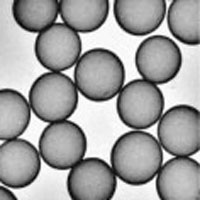 Lithium-ion batteries seem to be everywhere these days. They power most of the electronic devices we carry around with us - cell phones, laptops, MP3 players, digital cameras and so on. They get their name from the lithium ion that moves from the anode to the cathode during discharge and from the cathode to the anode during recharging. Due to their good energy-to-weight ratios, lithium batteries are some of the most energetic rechargeable batteries available today. In terms of weight and size, batteries have become one of the limiting factors in the continuous process of developing smaller and higher performance electronic devices. To meet the demand for batteries having higher energy density and improved cycle characteristics, researchers have been making tremendous efforts to develop new electrode materials or design new structures of electrode materials. Demonstrating the benefits of directed nanostructure-design of electrode materials, Chinese scientists have prepared tin nanoparticles encapsulated in elastic hollow carbon spheres. This tin-based nanocomposite exhibits a very high specific capacity, excellent cycling performance, and therefore shows great potential as anode materials in lithium-ion batteries.
Apr 7th, 2008
 The controversy over the use of nanoparticles in everyday cosmetics has been going on for a while now. At best, the evidence is inconclusive - it is too early to say whether there is a risk or not. Regulators have no specific research findings to act on. Cosmetic firms of course claim that their products are safe and comply with all the relevant laws and regulations. On the other hand, they fight tooth and nail to have to label their products containing synthetic nanoparticles. The cosmetic industry's stance is even more perplexing given the common sense approach that regulators are taking.
Oct 30th, 2007

 Subscribe to our Nanotechnology Spotlight feed