

Space Exploration News – Latest Headlines
 Subscribe to our Space Exploration News feed
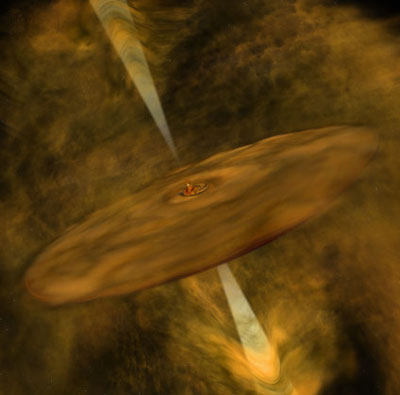
Brown dwarfs, stars share formation process, new study indicates
Astronomers have discovered jets of material ejected by still-forming young brown dwarfs. The discovery is the first direct evidence that brown dwarfs, intermediate in mass between stars and planets, are produced by a scaled-down version of the same process that produces stars.
July 23, 2015 Read more
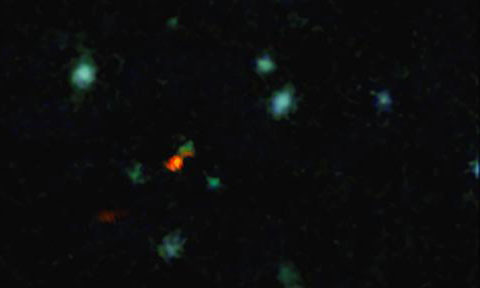
Astronomers witness assembly of galaxies in the early Universe for the first time
An international team of astronomers led by the University of Cambridge have detected the most distant clouds of star-forming gas yet found in normal galaxies in the early Universe - less than one billion years after the Big Bang. The new observations will allow astronomers to start to see how the first galaxies were built up and how they cleared the cosmic fog during the era of reionisation.
July 22, 2015 Read more
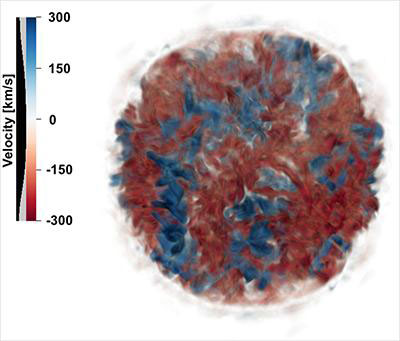
Seeing triple: New 3-D model could solve supernova mystery
How massive stars explode remains a mystery; However, recent work may bring some answers to this astronomical question.
July 21, 2015 Read more
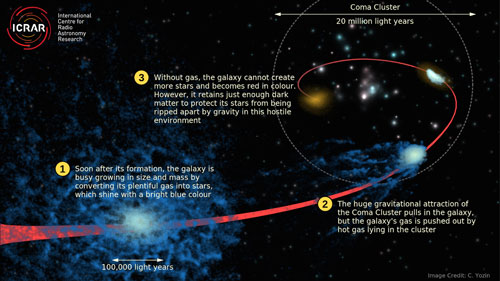
Dead galaxies in Coma Cluster may be packed with dark matter
Galaxies in a cluster roughly 300 million light years from Earth could contain as much as 100 times more dark matter than visible matter, according to an Australian study.
July 20, 2015 Read more
Astronomers bring a new hope to find 'Tatooine' planets (w/video)
Astronomers could discover a plethora of planets around binary star systems (stars that rotate around each other) by measuring with high precision how stars move around each other, looking for disturbances exerted by possible exoplanets.
July 15, 2015 Read more
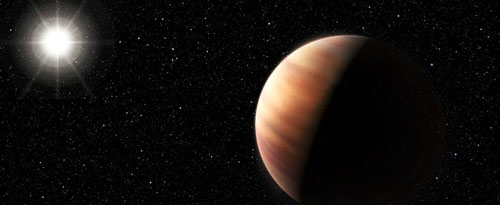
Jupiter twin discovered around solar twin
A research team has been targeting Sun-like stars in a bid to find planetary systems similar to our Solar System. The team has now uncovered a planet with a very similar mass to Jupiter, orbiting a Sun-like star, HIP 11915, at almost exactly the same distance as Jupiter.
July 15, 2015 Read more
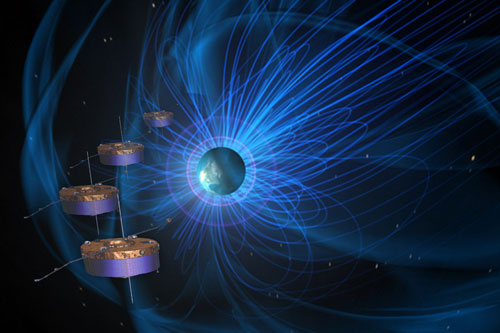
Researchers identify zebra-like stripes of plasma in a patch of space
The structure may help scientists identify radiation-remediation strategies in space.
July 14, 2015 Read more
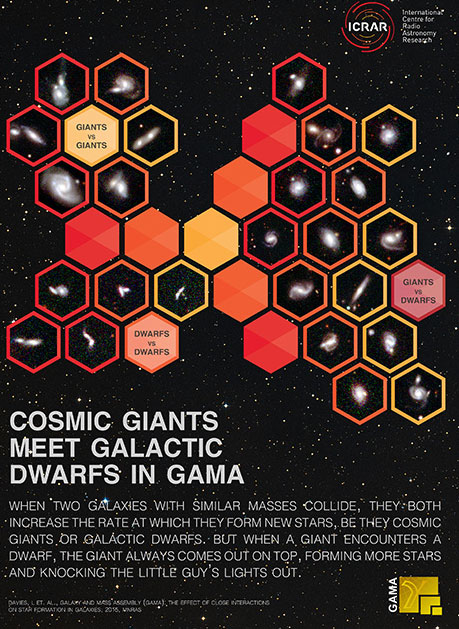
What happens when cosmic giants meet galactic dwarfs?
When two different sized galaxies smash together, the larger galaxy stops the smaller one making new stars, according to a study of more than 20,000 merging galaxies.
July 13, 2015 Read more
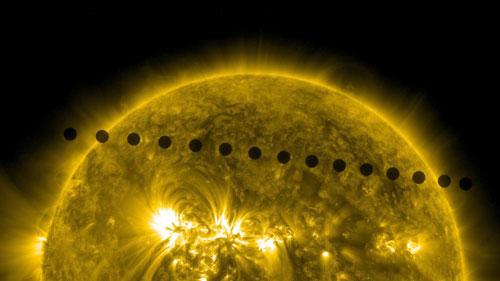
Scientists study atmosphere of Venus through transit images
Two of NASA's heliophysics missions can now claim planetary science on their list of scientific findings. A group of scientists used the Venus transit - a very rare event where a planet passes between Earth and the sun, appearing to us as a dark dot steadily making its way across the sun's bright face - to make measurements of how the Venusian atmosphere absorbs different kinds of light.
July 9, 2015 Read more
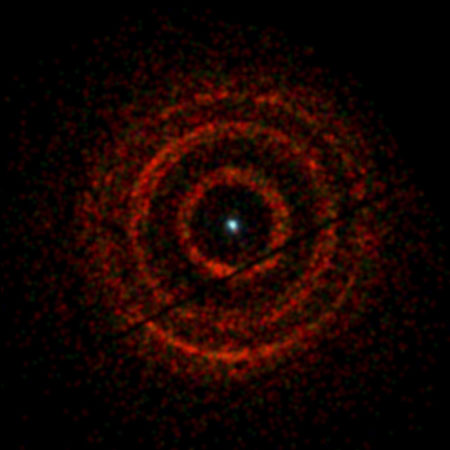
NASA's Swift reveals a black hole bull's-eye
What looks like a shooting target is actually an image of nested rings of X-ray light centered on an erupting black hole. On June 15, NASA's Swift satellite detected the start of a new outburst from V404 Cygni, where a black hole and a sun-like star orbit each other.
July 9, 2015 Read more
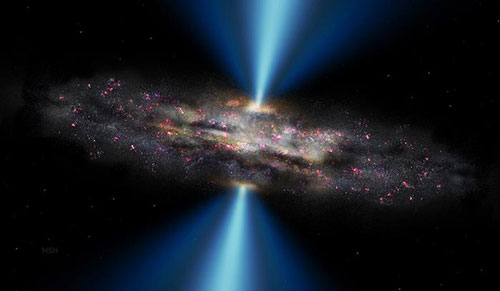
Astronomers find a massive black hole that outgrew its galaxy
Astronomers have spotted a super-sized black hole in the early universe that grew much faster than its host galaxy. The discovery runs counter to most observations about black holes In most cases, black holes and their host galaxies expand at the same rate.
July 9, 2015 Read more
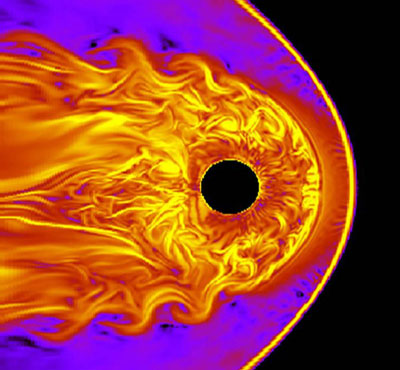
Data shows surfer-shaped waves in near-Earth space
Named Kelvin-Helmholtz waves in the late 1800s after their discoverers, these waves have since been discovered all over the universe: in clouds, in the atmospheres of other planets, and on the sun. Now two recently published papers highlight these shapely waves at the boundaries of near-Earth space.
July 9, 2015 Read more
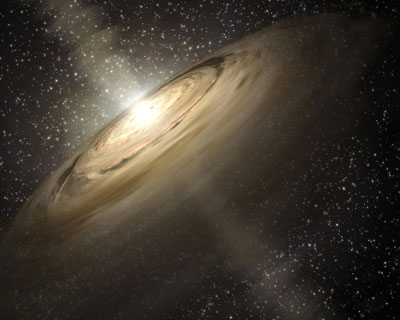
Bricks to build an Earth found in every planetary system
Earth-like planets orbiting other stars in the Milky Way are three times more likely to have the same type of minerals as Earth than astronomers had previously thought. In fact, conditions for making the building blocks of Earth-like rocks are ubiquitous throughout the Milky Way.
July 8, 2015 Read more
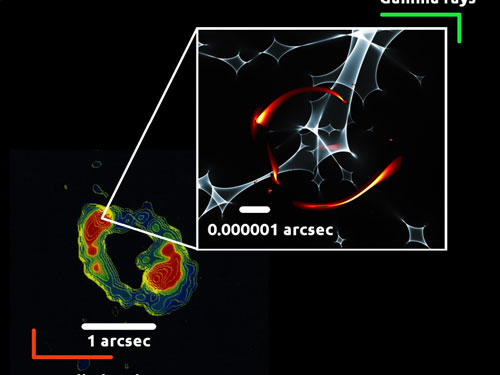
A black hole under the gravitational lens
An unusual observation method uncovers processes near the event horizon of a distant, massive monster.
July 6, 2015 Read more
Astronomers predict fireworks from a close encounter of the stellar kind (w/video)
Astronomers are predicting a close encounter between a stellar remnant the size of a city and one of the brightest stars in the Milky Way.
July 3, 2015 Read more
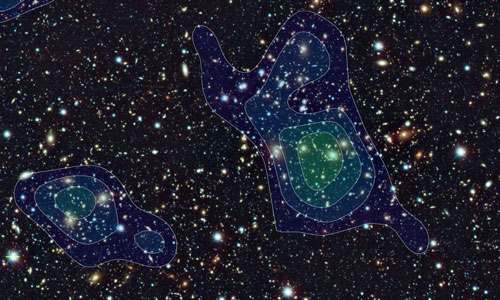
Dark matter map begins to reveal the Universe's early history
Researchers have begun a wide-area survey of the distribution of dark matter in the universe using Hyper Suprime-Cam, a new wide-field camera installed on the Subaru Telescope in Hawai'i.
July 2, 2015 Read more
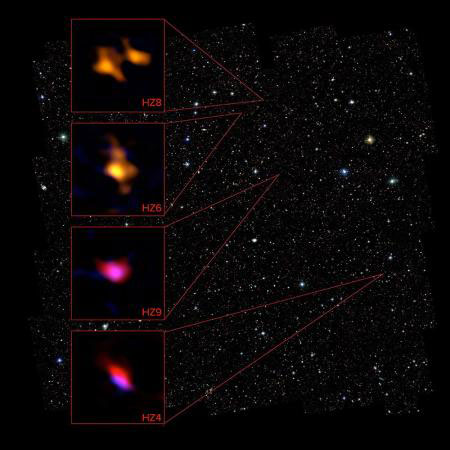
Discovering a new stage in the galactic lifecycle
Astronomers have been able to observe the dust contents of galaxies as seen just 1 billion years after the Big Bang - a time period known as redshift 5-6. These are the earliest average-sized galaxies to ever be directly observed and characterized in this way.
July 1, 2015 Read more
NASA missions monitor a waking black hole
NASA's Swift satellite detected a rising tide of high-energy X-rays from the constellation Cygnus on June 15, just before 2:32 p.m. EDT. About 10 minutes later, the Japanese experiment on the International Space Station called the Monitor of All-sky X-ray Image (MAXI) also picked up the flare.
July 1, 2015 Read more