

Space Exploration News – Latest Headlines
 Subscribe to our Space Exploration News feed
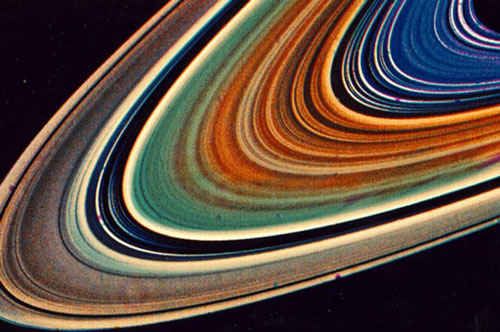
Saturn's rings in a supercomputer
Researchers have explained the structure of Saturn's rings and modeled them using a supercomputer - this result can be applied to a variety of systems.
August 6, 2015 Read more
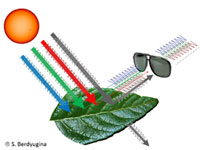
Searching for life in the Alpha Centauri system
A new technique enables scientists to search for traces of life on exoplanets in reflected light.
August 6, 2015 Read more
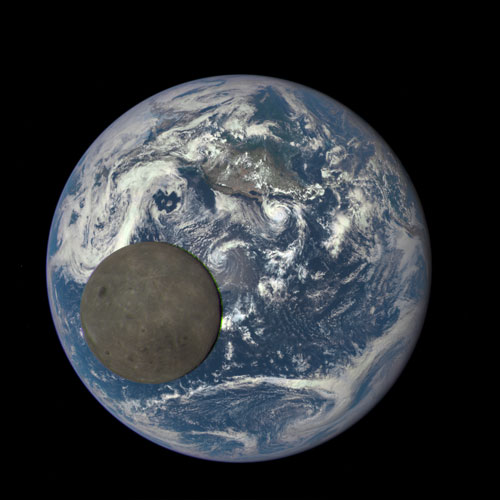
From a million miles away, satellite camera shows moon crossing face of Earth (w/video)
A camera aboard the Deep Space Climate Observatory (DSCOVR) satellite captured a unique view of the moon as it moved in front of the sunlit side of Earth last month. The series of test images shows the fully illuminated 'dark side' of the moon that is never visible from Earth.
August 6, 2015 Read more
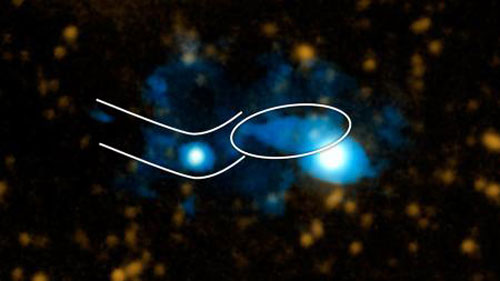
Astronomers unveil a distant protogalaxy connected to the cosmic web
A team of astronomers has discovered a giant swirling disk of gas 10 billion light-years away - a galaxy-in-the-making that is actively being fed cool primordial gas tracing back to the Big Bang. The finding provides the strongest observational support yet for what is known as the cold-flow model of galaxy formation.
August 5, 2015 Read more
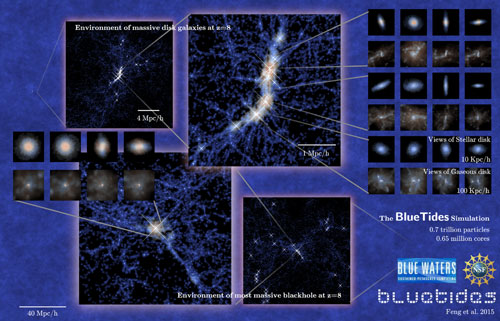
Milky Way-like galaxies may have existed in the early universe
A new, large-scale computer simulation has shown for the first time that large disk galaxies, much like our own Milky Way, may have existed in the early days of the universe.
August 5, 2015 Read more
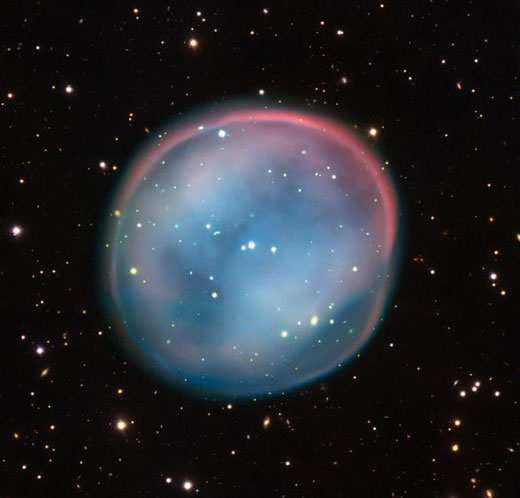
The ghost of a dying star
This extraordinary bubble, glowing like the ghost of a star in the haunting darkness of space, may appear supernatural and mysterious, but it is a familiar astronomical object: a planetary nebula, the remnants of a dying star. This is the best view of the little-known object ESO 378-1 yet obtained and was captured by ESO's Very Large Telescope in northern Chile.
August 5, 2015 Read more
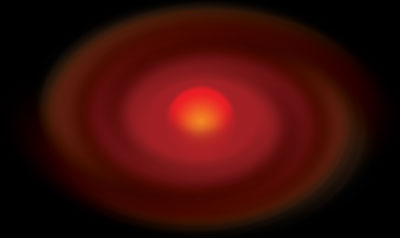
Lost lithium destroyed by ancient stars
A group of scientists think they have the answer to this so-called 'lithium problem': it was destroyed and re-accumulated by these stars shortly after they were born.
August 5, 2015 Read more
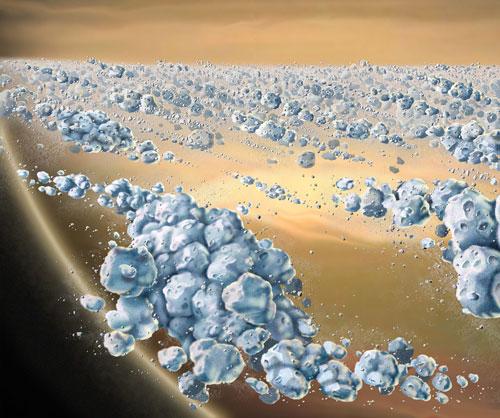
Scientists solve planetary ring riddle
Study suggests planetary rings have a universal particle distribution.
August 5, 2015 Read more
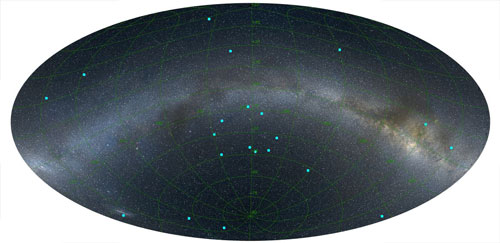
5 billion light years across: the largest feature in the universe
Astronomers have found what appears to be the largest feature in the observable universe: a ring of nine gamma ray bursts - and hence galaxies - 5 billion light years across.
August 4, 2015 Read more
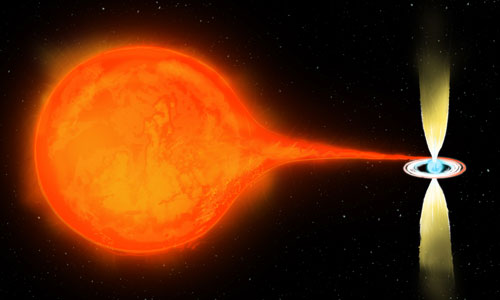
Super star takes on black holes in jet contest
A super-dense star formed in the aftermath of a supernova explosion is shooting out powerful jets of material into space, research suggests.
August 4, 2015 Read more
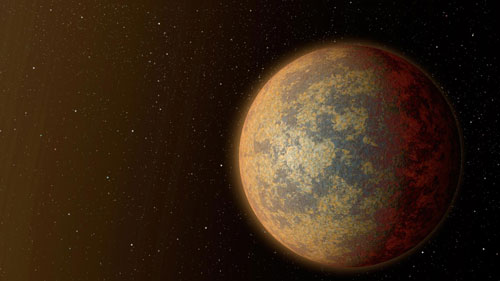
Cassiopeia's hidden gem: The closest rocky, transiting planet
A star in the constellation Cassiopeia has a planet in a three-day orbit that transits, or crosses in front of its star. At a distance of just 21 light-years, it is by far the closest transiting planet to Earth, which makes it ideal for follow-up studies. Moreover, it is the nearest rocky planet confirmed outside our solar system.
August 3, 2015 Read more
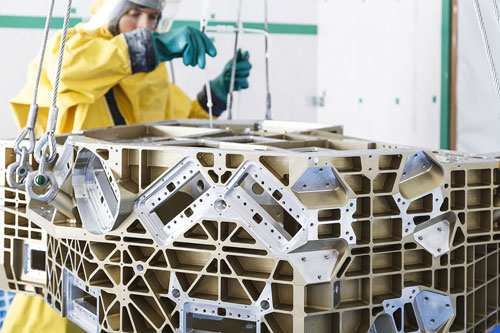
A cleanroom to sterilize space probes
Components used on a space mission must be cleaned meticulously. Fraunhofer researchers designed a cleanroom for the ESA (European Space Agency) in which the most infinitesimal contaminants can be removed.
August 3, 2015 Read more
Scientists study 'peanut-shaped' asteroid near Earth (w/video)
A mile-long asteroid that raced past Earth July 25 at about 45,000 miles per hour was imaged by radar telescopes so that astronomers could discern its precise orbit and physical shape.
July 31, 2015 Read more
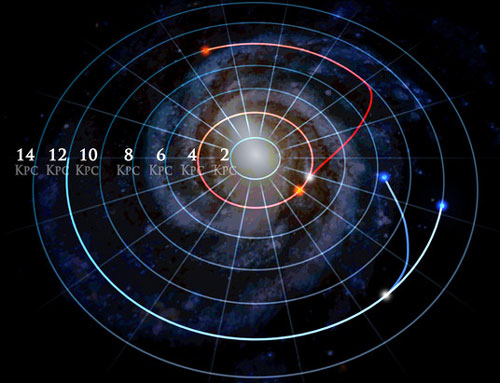
New Milky Way map reveals stars in our galaxy move far from home
Astronomers have created a new map of the Milky Way that provides the first clear evidence of migration of stars throughout our galaxy. The study, which determined that 30 percent of stars have traveled across the galaxy, is bringing a new understanding of how stars are formed and travel throughout the Milky Way.
July 31, 2015 Read more
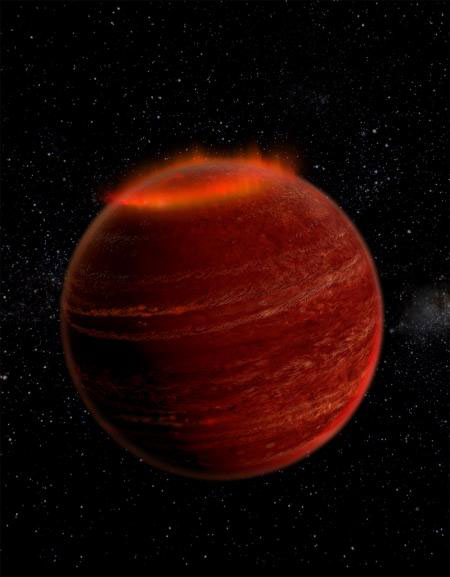
'Failed stars' host powerful auroral displays (w/video)
Astronomers say brown dwarfs behave more like planets than stars.
July 30, 2015 Read more
Dense star clusters shown to be binary black hole factories
The merger of two black holes is one of the most sought-after observations of modern astronomy. The first observatories capable of directly detecting gravitational waves will begin observing the universe later this year. When these waves rolling in from space are detected on Earth for the first time, astrophysicists predict astronomers will 'hear', through these waves, five times more colliding black holes than previously expected.
July 29, 2015 Read more
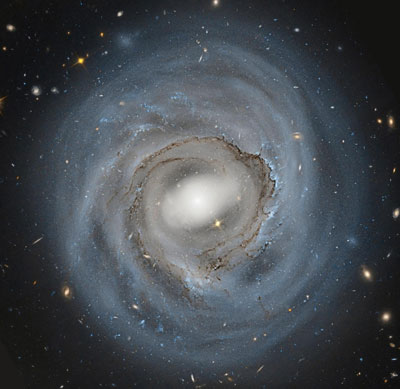
Dust pillars of destruction reveal impact of cosmic wind on galaxy evolution
Astronomers have long known that powerful cosmic winds can sometimes blow through galaxies, sweeping out interstellar material and stopping future star formation. Now they have a clearer snapshot of how it happens.
July 27, 2015 Read more
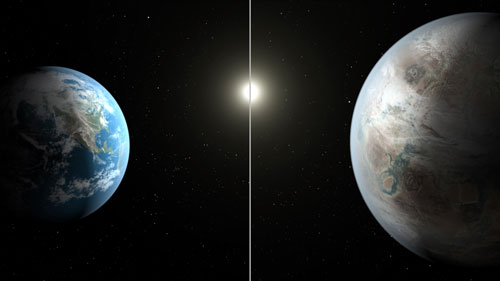
NASA finds first near-Earth-size planet in the habitable zone
NASA's Kepler mission has confirmed the first near-Earth-size planet in the 'habitable zone' around a sun-like star. This discovery and the introduction of 11 other new small habitable zone candidate planets mark another milestone in the journey to finding another Earth.
July 23, 2015 Read more