

Space Exploration News – Latest Headlines
 Subscribe to our Space Exploration News feed
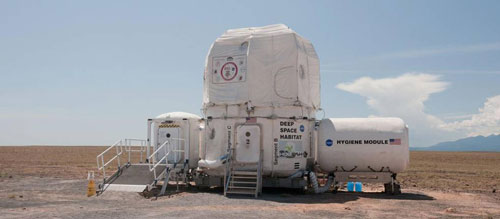
NASA selects eight projects for 2016 X-Hab Academic Innovation Challenge
NASA is working with eight U.S. universities on new technology projects for deep space exploration, including the agency's journey to Mars, as part of the 2016 X-Hab Academic Innovation Challenge.
June 8, 2015 Read more
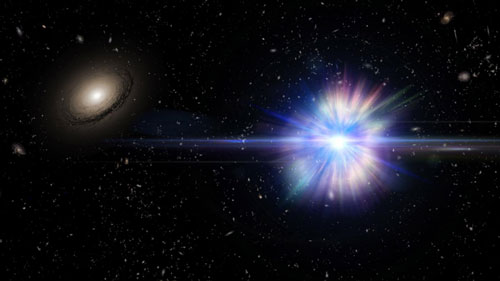
Exiled stars explode far from home
HST confirms 3 Type Ia supernovae were not part of a galaxy, but rare intracluster supernovae.
June 4, 2015 Read more
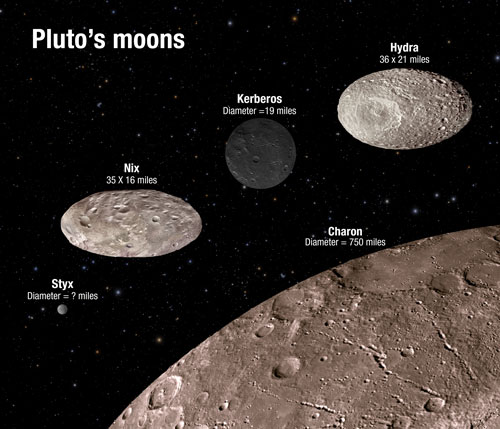
Hubble finds Pluto's moons tumbling in absolute chaos
If you lived on one of Pluto's moons, you might have a hard time determining when, or from which direction, the sun will rise each day. Comprehensive analysis of data from NASA's Hubble Space Telescope shows that two of Pluto's moons, Nix and Hydra, wobble unpredictably.
June 3, 2015 Read more
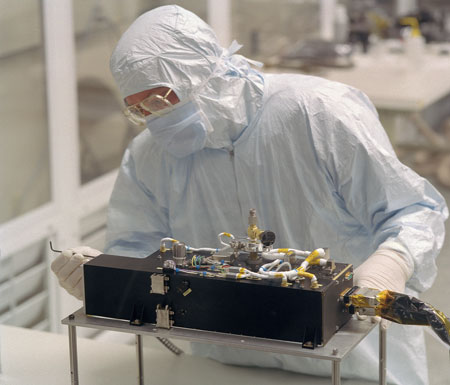
Alice instrument's ultraviolet close-up provides a surprising discovery about comet's atmosphere
A close-up of Comet 67P/Churyumov-Gerasimenko by NASA's ultraviolet instrument surprised scientists by revealing that electrons close to the comet's surface - not photons from the Sun as had been believed - cause the rapid breakup of water and carbon dioxide molecules spewing from the surface.
June 2, 2015 Read more
How to weigh the Milky Way
An international team of scientists used streams produced by dissolving globular clusters to measure the weight of our galaxy and determine the location of the sun within the Milky Way.
June 2, 2015 Read more
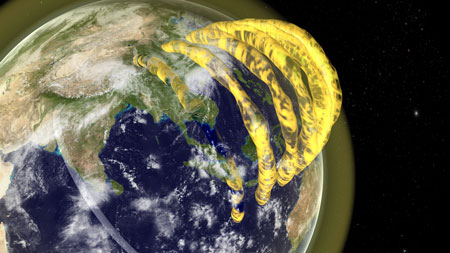
Distant radio galaxies reveal hidden structures right above our heads (w/video)
By observing galaxies billions of light-years away, a team of astronomers has detected tube-like structures mere hundreds of kilometres above the Earth's surface.
June 1, 2015 Read more
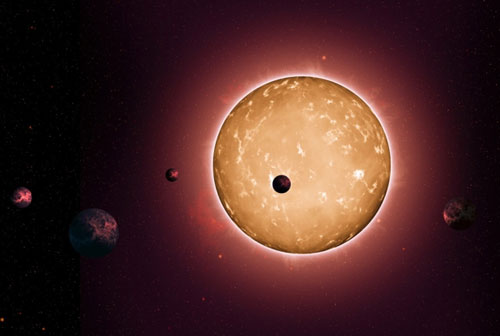
Circular orbits identified for small exoplanets
Observations of 74 Earth-sized planets around distant stars may narrow field of habitable candidates.
June 1, 2015 Read more
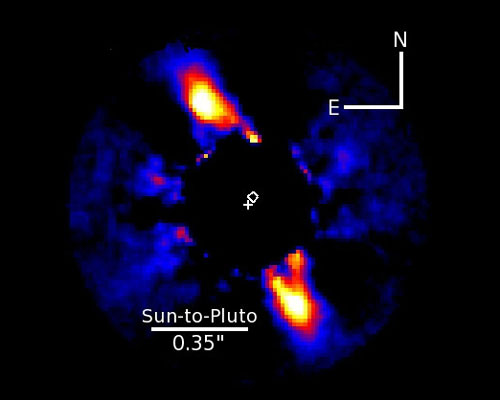
Astronomers discover a young solar system around a nearby star
An international team has discovered a young planetary system that shares remarkable similarities to our own early solar system. Their images reveal a ring-like disk of debris surrounding a Sun-like star, in a birth environment similar to the Sun's.
June 1, 2015 Read more
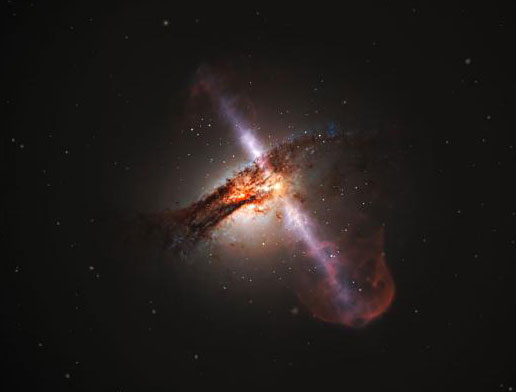
Merging galaxies break radio silence
Large Hubble survey confirms link between mergers and supermassive black holes with relativistic jets.
May 28, 2015 Read more
Scientists one step closer to mimicking gamma-ray bursts
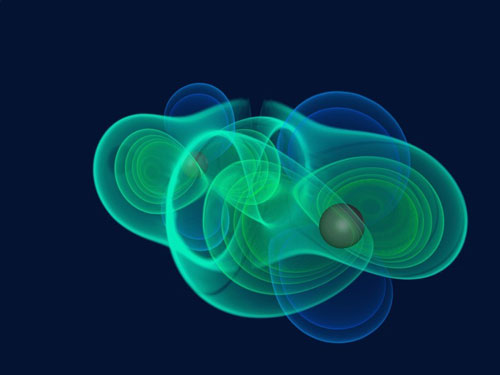
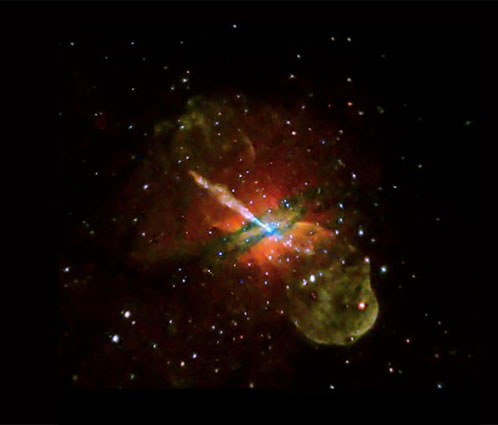
Using ever more energetic lasers, researchers have produced a record high number of electron-positron pairs, opening exciting opportunities to study extreme astrophysical processes, such as black holes and gamma-ray bursts.
May 27, 2015 Read more
Hubble video shows shock collision inside black hole jet
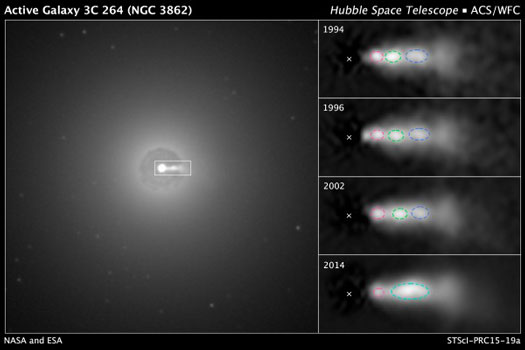
Astronomers have discovered for the first time a rear-end collision between two high-speed knots of ejected matter from a supermassive black hole. This discovery was made while piecing together a time-lapse movie of a plasma jet blasted from a supermassive black hole inside a galaxy, located 260 million light-years from Earth.
May 27, 2015 Read more
Discovery shows what the solar system looked like as a 'toddler'
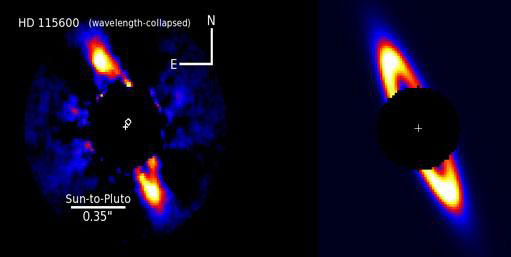
Astronomers have discovered a disc of planetary debris surrounding a young sun-like star that shares remarkable similarities with the Kuiper Belt that lies beyond Neptune, and may aid in understanding how our solar system developed.
May 27, 2015 Read more
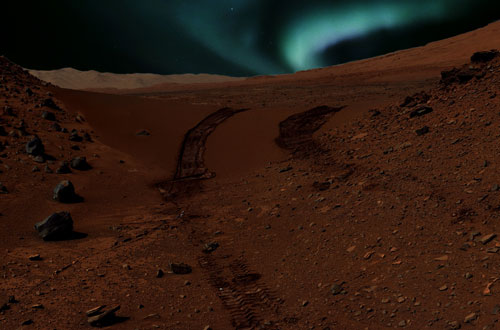
Similarities between aurorae on Mars and Earth
An international team of researchers has for the first time predicted the occurrence of aurorae visible to the naked eye on a planet other than Earth.
May 27, 2015 Read more
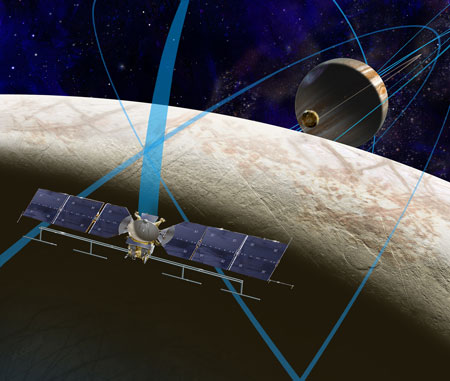
Looking for extra-terrestrial life in alien oceans
Great honour for Nicolas Thomas from the University of Berne: The scientist was selected as part of the imaging team for NASA's Europa Clipper mission. The mission will help to answer the question whether there is life in the oceans of Jupiter's moon, Europa.
May 27, 2015 Read more
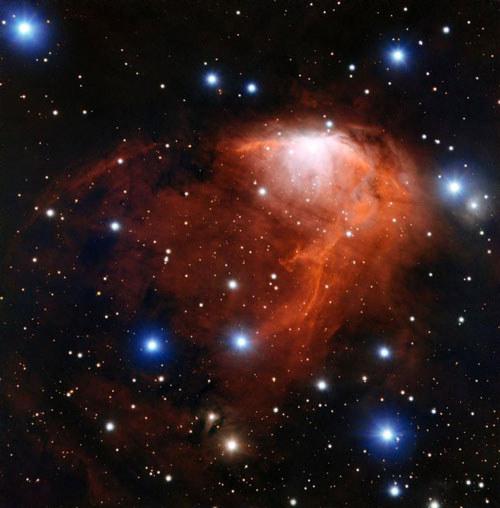
A bubbly cosmic celebration
In the brightest region of the nebula RCW 34, gas is heated and expands through the surrounding cooler gas. Once the heated hydrogen reaches the borders of the gas cloud, it bursts outwards into the vacuum like the contents of an uncorked champagne bottle - this process is referred to as champagne flow. But the young RCW 34 has more to offer; there seem to have been multiple episodes of star formation within the same cloud.
May 27, 2015 Read more
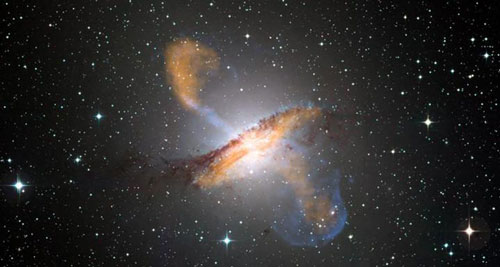
Supernovas help 'clean' galaxies
Supernovas just might be the maid service of the universe. It seems these explosions that mark the end of a star's life work hand-in-hand with supermassive black holes to sweep out gas and shut down galaxies' star-forming factories.
May 27, 2015 Read more
Monitoring magnetospheres
The research of magnetic, massive stars has uncovered questions concerning the behaviour of plasma within their magnetospheres.
May 26, 2015 Read more