

Space Exploration News – Latest Headlines
 Subscribe to our Space Exploration News feed
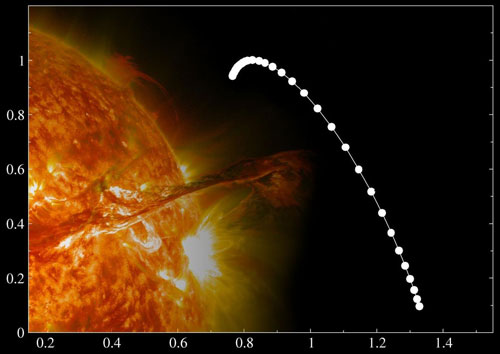
Multifractals suggest the existence of an unknown physical mechanism on the Sun
The famous sunspots on the surface of the Earth's star result from the dynamics of strong magnetic fields, and their numbers are an important indicator of the state of activity on the Sun. Researchers have been conducting multifractal analysis into the changes in the numbers of sunspots. The resulting graphs were surprisingly asymmetrical in shape, suggesting that sunspots may be involved in hitherto unknown physical processes.
April 29, 2015 Read more
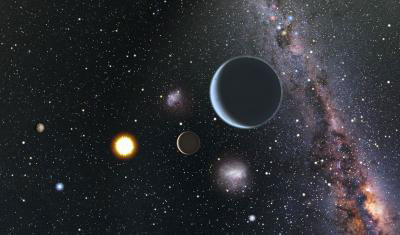
Robotically discovering Earth's nearest neighbors
A team of astronomers using ground-based telescopes in Hawaii, California, and Arizona recently discovered a planetary system orbiting a nearby star that is only 54 light-years away. All three planets orbit their star at a distance closer than Mercury orbits the sun, completing their orbits in just 5, 15, and 24 days.
April 29, 2015 Read more
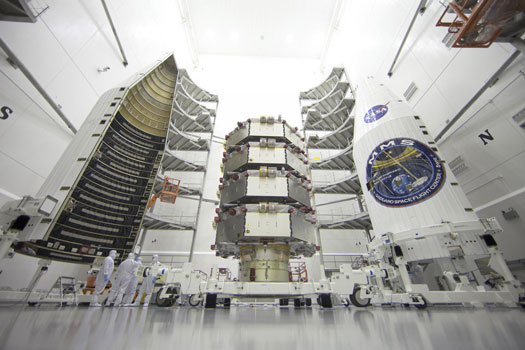
The fearsome foursome: Technologies enable ambitious MMS mission
It was unprecedented developing a mission that could fly four identically equipped spacecraft in a tight formation and take measurements 100 times faster than any previous space mission - an achievement enabled in part by four NASA-developed technologies that in some cases took nearly 10 years to mature.
April 29, 2015 Read more
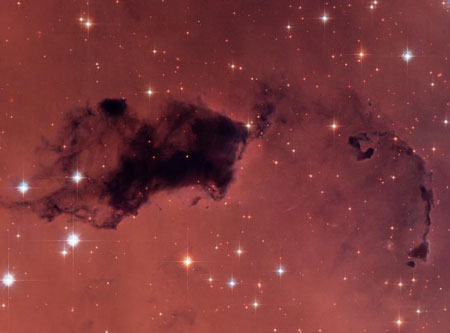
Water could have been abundant in the first billion years
How soon after the Big Bang could water have existed? Not right away, because water molecules contain oxygen and oxygen had to be formed in the first stars. Then that oxygen had to disperse and unite with hydrogen in significant amounts. New theoretical work finds that despite these complications, water vapor could have been just as abundant in pockets of space a billion years after the Big Bang as it is today.
April 28, 2015 Read more
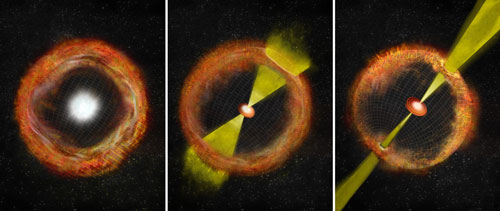
Strange supernova is 'missing link' in gamma-ray burst connection
Cosmic blast is intermediate example between 'ordinary' supernovae and ones that produce gamma-ray bursts.
April 27, 2015 Read more
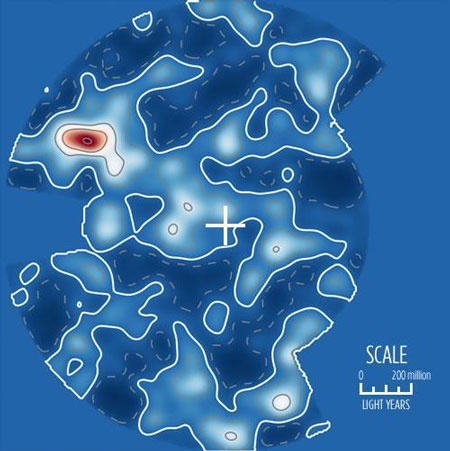
Astrophysicists draw most comprehensive map of the universe
Astrophysicists have created a 3D map of the universe that spans nearly two billion light years and is the most complete picture of our cosmic neighbourhood to date.
April 27, 2015 Read more
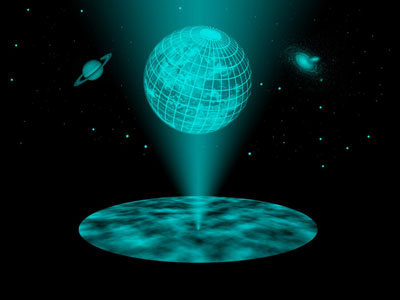
Is the universe a hologram?
Describing the universe requires fewer dimensions than we might think; new calculations show that this may not just be a mathematical trick, but a fundamental feature of space itself.
April 27, 2015 Read more
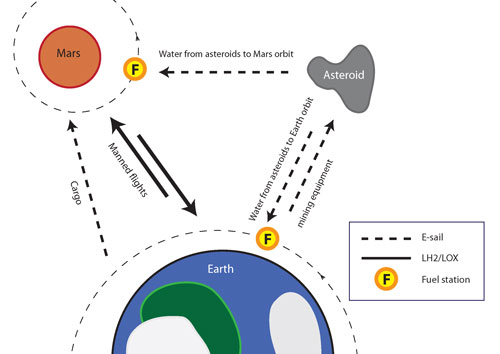
Electric Solar Wind Sail could make bidirectional manned Mars flights economically feasible
The E-sail is a novel propellantless technology that was invented in Finland in 2006. The E-sail utilises long, charged tethers to convert natural solar wind momentum flux into spacecraft thrust.
April 27, 2015 Read more
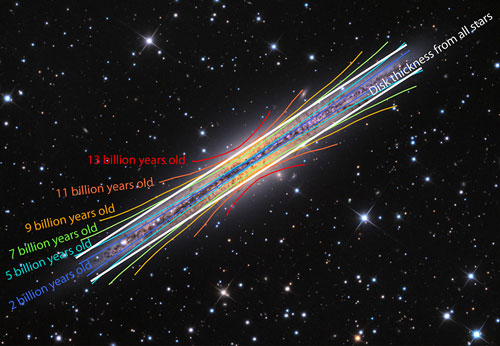
To flare or not to flare: the riddle of galactic thin - thick disk solved
A long-standing puzzle regarding the nature of disk galaxies has finally been solved by a team of astronomers using state-of-the-art theoretical models.
April 24, 2015 Read more
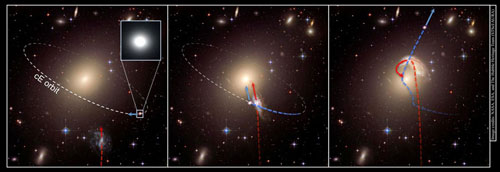
Astronomers find runaway galaxies
We know of about two dozen runaway stars, and have even found one runaway star cluster escaping its galaxy forever. Now, astronomers have spotted 11 runaway galaxies that have been flung out of their homes to wander the void of intergalactic space.
April 23, 2015 Read more
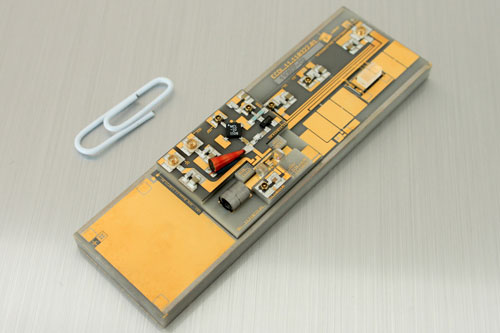
Examining Einstein - precise experiments using lasers in space
Tests carried out in zero-gravity on board the FOKUS research rocket. Successful demonstration of technology for the QUANTUS mission.
April 23, 2015 Read more
Tau Ceti: The next Earth? Probably not
The list of potential life-supporting planets just got a little shorter.
April 22, 2015 Read more
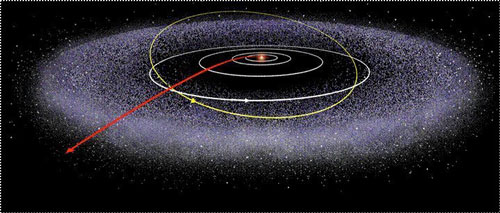
In the realm of eternal ice
Celestial bodies made up of frozen water orbit not only at the outer limits of our solar system but also further inside.
April 22, 2015 Read more
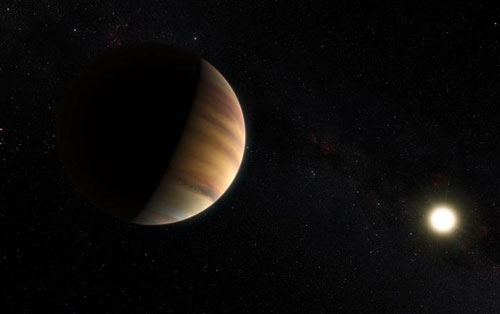
First exoplanet visible light spectrum
New technique paints promising picture for future.
April 22, 2015 Read more
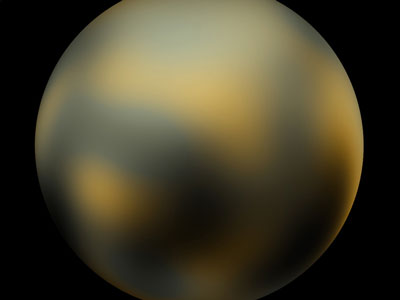
Pluto - a dwarf in the darkness
The celestial body seems to be Ceres' big brother and will soon receive a visit from a space probe.
April 22, 2015 Read more
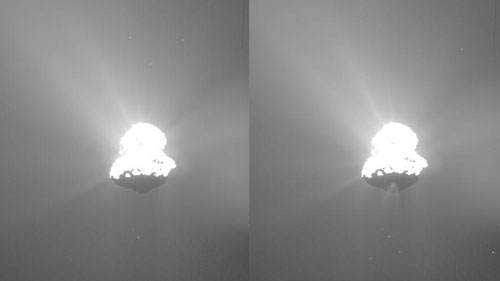
Mysterious dust jet from Comet 67P/Churyumov-Gerasimenko
Comets eject gas and dust into space. Primarily, this takes place on the areas of the comet's surface exposed to direct sunlight. In mid-March, from a distance of 75 kilometres, the Optical, Spectroscopic, and Infrared Remote Imaging System (OSIRIS) on board the Rosetta orbiter acquired images of an extraordinary phenomenon occurring on Comet 67P/Churyumov-Gerasimenko. A new dust jet - its origins currently unknown - was suddenly released from the shadowed side.
April 21, 2015 Read more
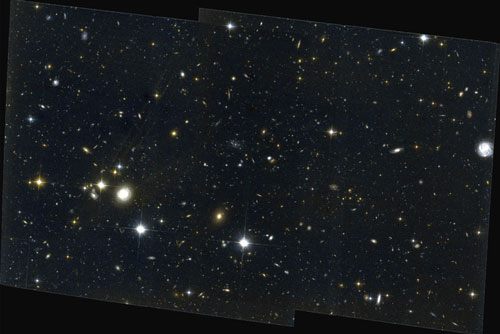
Astronomers find new details about star formation in ancient galaxy protoclusters
Astronomers are tracking velocity structures and gaseous metallicities in galaxies in two protoclusters located in the direction of the constellation Serpens. The clusters appear as they would have looked 11 billion years ago, and the team concluded that they are in the process of cluster formation that has led to present-day galaxy clusters.
April 21, 2015 Read more
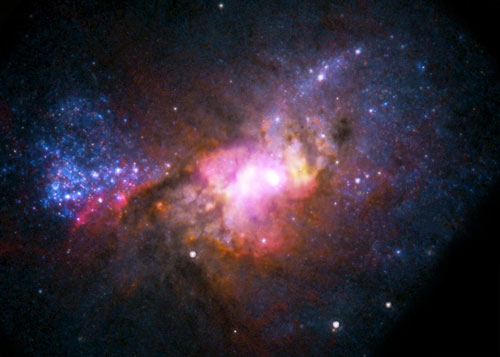
Black hole hunters tackle a cosmic conundrum
Astrophysicists have not only proven that a supermassive black hole exists in a place where it isn't supposed to be, but in doing so have opened a new door to what things were like in the early universe.
April 20, 2015 Read more