

Space Exploration News – Latest Headlines
 Subscribe to our Space Exploration News feed
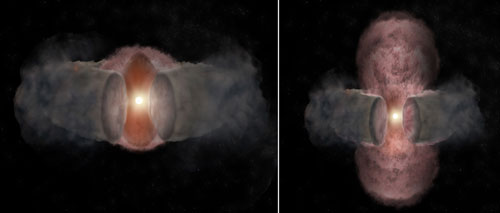
Astronomers watch unfolding saga of massive star formation
Astronomers are getting a unique, real-time look as a massive young star develops, with the promise of greatly improved understanding of the process.
April 2, 2015 Read more
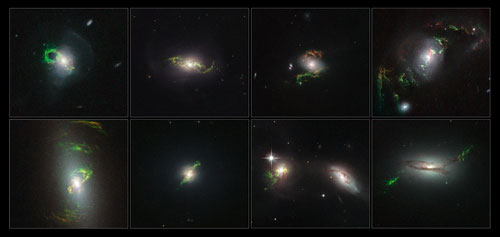
Hubble finds ghosts of quasars past
The Hubble Space Telescope has imaged a set of enigmatic quasar ghosts - ethereal green objects which mark the graves of these objects that flickered to life and then faded. The eight unusual looped structures orbit their host galaxies and glow in a bright and eerie goblin-green hue. They offer new insights into the turbulent pasts of these galaxies.
April 2, 2015 Read more
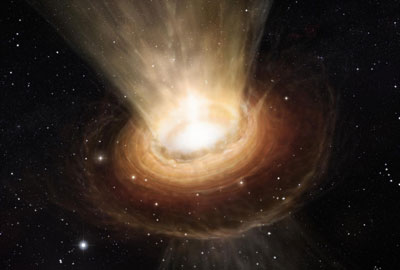
Black holes don't erase information, scientists say
Some physicists have argued that black holes are the ultimate vault, sucking in information and then evaporating without leaving behind any clue as to what they once contained. A new study shows this perspective may be wrong. The research finds that information is not lost once it has entered a black hole, and presents explicit calculations showing how information is, in fact, preserved.
April 2, 2015 Read more
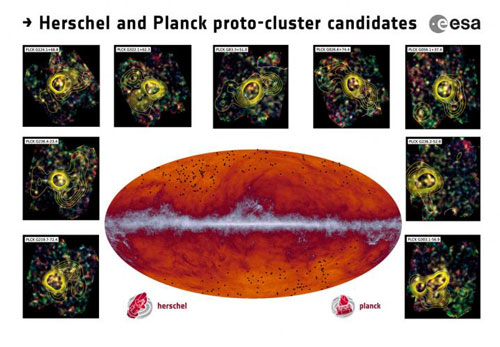
Astronomers discover likely precursors of galaxy clusters we see today
Observations made with two space observatories, Herschel and Planck, reveal glimpses into how today's galaxies came to be.
March 31, 2015 Read more
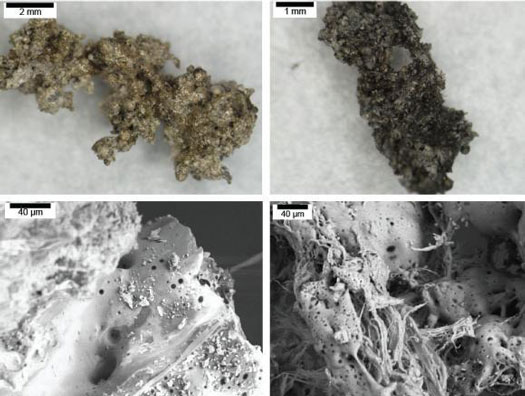
Comet dust: Planet Mercury's 'invisible paint'
A team of scientists has a new explanation for the planet Mercury's dark, barely reflective surface. They suggest that a steady dusting of carbon from passing comets has slowly painted Mercury black over billions of years.
March 30, 2015 Read more
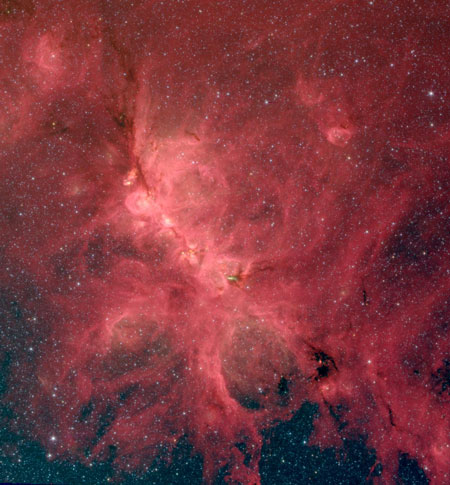
As stars form, magnetic fields influence regions big and small
Stars form when gravity pulls together material within giant clouds of gas and dust. But gravity isn't the only force at work. Both turbulence and magnetic fields battle gravity, either by stirring things up or by channeling and restricting gas flows, respectively. New research focusing on magnetic fields shows that they influence star formation on a variety of scales, from hundreds of light-years down to a fraction of a light-year.
March 30, 2015 Read more
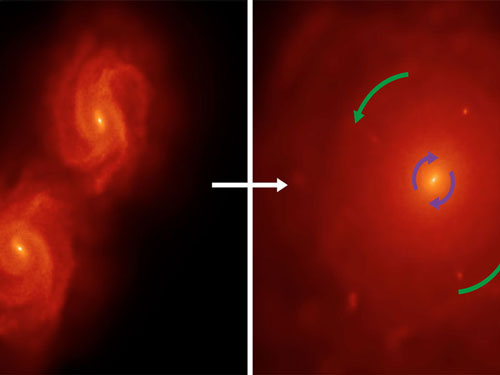
The forces that move stars in galaxies
A new mechanism explains the strange orbit of suns in elliptical galactic systems.
March 27, 2015 Read more
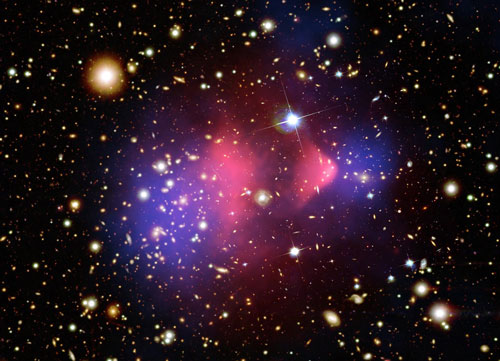
Galaxy clusters collide; dark matter still a mystery
When galaxy clusters collide, their dark matters pass through each other, with very little interaction. Deepening the mystery, a study by scientists at EPFL and the University of Edinburgh challenges the idea that dark matter is composed of particles.
March 27, 2015 Read more
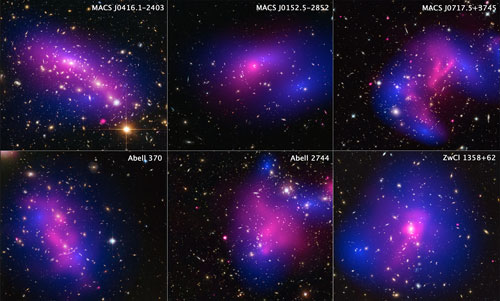
Hubble and Chandra discover Dark Matter is not as sticky as once thought
Astronomers using observations from NASA's Hubble Space Telescope and Chandra X-ray Observatory have found that dark matter does not slow down when colliding with each other. This means that it interacts with itself even less than previously thought. Researchers say this finding narrows down the options for what this mysterious substance might be.
March 26, 2015 Read more
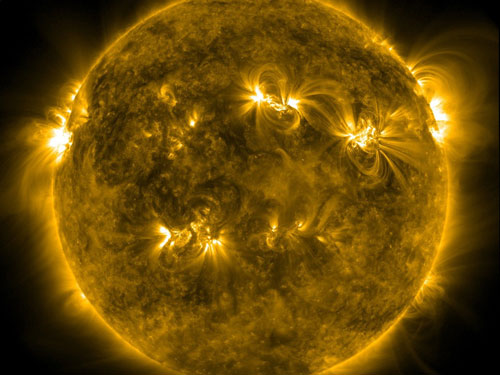
A new look at the Sun's magnetic field
Max Planck researchers discover how the strength of a forthcoming activity cycle can be predicted.
March 26, 2015 Read more
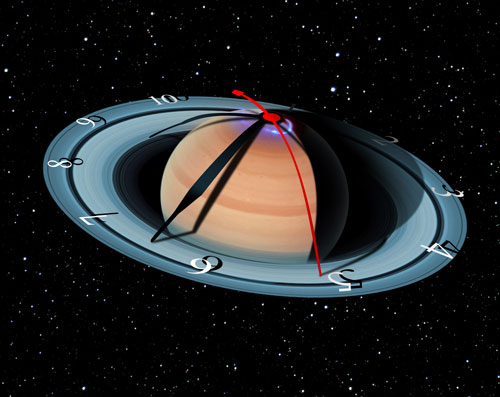
A short day on Saturn
If you could jump a spaceship out past Mars and Jupiter to Saturn, pass by its rings and somehow park on the planet's gaseous surface, how long would your day be there? This question, surprisingly, has not been precisely answered until now.
March 26, 2015 Read more
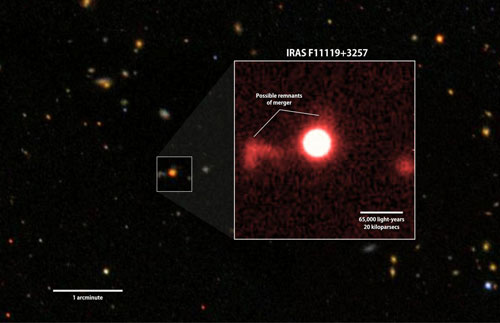
Supermassive black hole clears star-making gas from galaxy's core
A new study provides the first observational evidence that a supermassive black hole at the center of a large galaxy can power huge, wide-angled outpourings of material from deep inside the galaxy's core. These outflows remove massive quantities of star-making gas, thus influencing the size, shape and overall fate of the host galaxy.
March 25, 2015 Read more
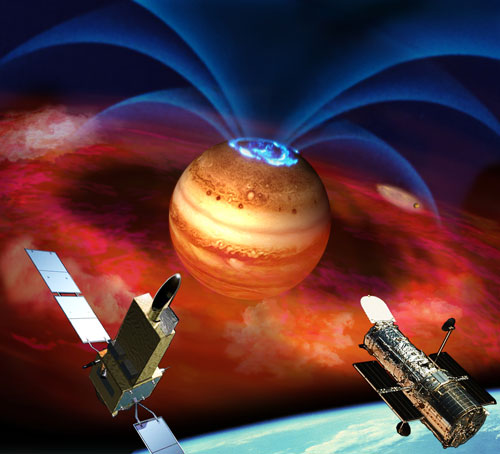
Explosions of Jupiter's aurora linked to extraordinary planet-moon interaction
New observations of the planet's extreme ultraviolet emissions show that bright explosions of Jupiter's aurora likely also get kicked off by the planet-moon interaction, not by solar activity.
March 25, 2015 Read more
A new spin on Saturn's peculiar rotation
The precise measurement of Saturn's rotation has presented a great challenge to scientists, as different parts of this sweltering ball of hydrogen and helium rotate at different speeds whereas its rotation axis and magnetic pole are aligned. A new method proposes a new determination of Saturn's rotation period and offers insight into the internal structure of the planet, its weather patterns, and the way it formed.
March 25, 2015 Read more
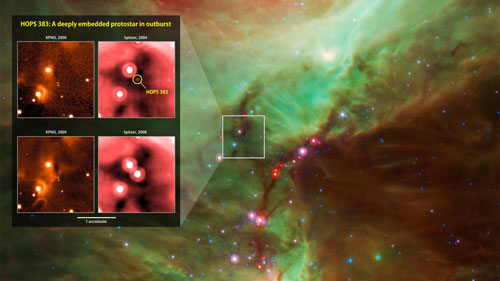
Satellites catch 'growth spurt' from newborn protostar
Using data from orbiting observatories, including NASA's Spitzer Space Telescope, and ground-based facilities, an international team of astronomers has discovered an outburst from a star thought to be in the earliest phase of its development. The eruption, scientists say, reveals a sudden accumulation of gas and dust by an exceptionally young protostar known as HOPS 383.
March 24, 2015 Read more
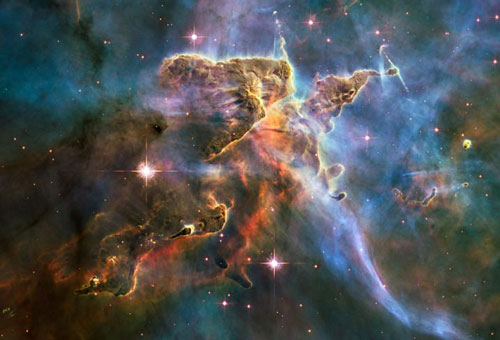
Automation offers big solution to big data in astronomy
The Square Kilometer Array, a radio telescope planned for Africa and Australia, will have an unprecedented ability to deliver data on the location and properties of stars, galaxies and giant clouds of hydrogen gas. In a new study, a team of scientists has developed a new, faster approach to analyzing all that data.
March 24, 2015 Read more

What is the impact of cosmic rays on galaxy formation?
European Research Council will fund HITS astrophysicist Christoph Pfrommer with an ERC Consolidator Grant with 2 million euros.
March 24, 2015 Read more
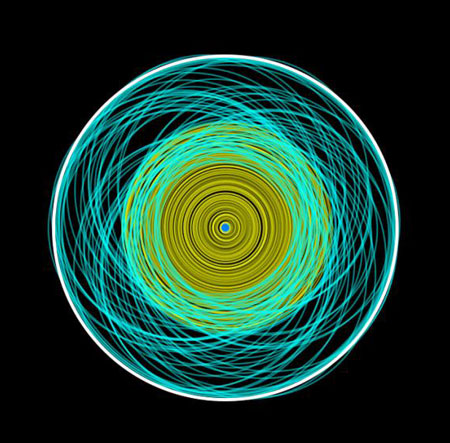
Our solar system may have once harbored super-earths
Long before Mercury, Venus, Earth, and Mars formed, it seems that the inner solar system may have harbored a number of super-Earths - planets larger than Earth but smaller than Neptune. If so, those planets are long gone - broken up and fallen into the sun billions of years ago largely due to a great inward-and-then-outward journey that Jupiter made early in the solar system's history.
March 24, 2015 Read more