

Space Exploration News – Latest Headlines
 Subscribe to our Space Exploration News feed
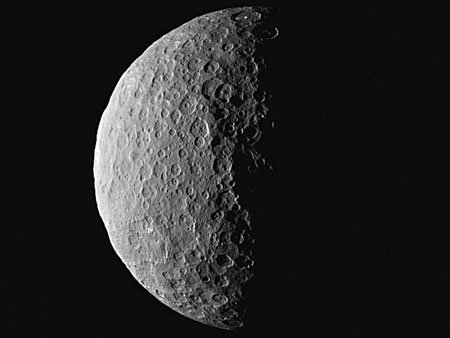
Ceres - A world full of mysteries
After an intermission of five weeks, the Dawn space probe is once again sending images of the dwarf planet back to Earth.
April 20, 2015 Read more
Pulsing light may indicate supermassive black hole merger
As two galaxies enter the final stages of merging, scientists have theorized that the galaxies' supermassive black holes will form a 'binary', or two black holes in such close orbit they are gravitationally bound to one another. In a new study, astronomers present direct evidence of a pulsing quasar, which may substantiate the existence of black hole binaries.
April 20, 2015 Read more
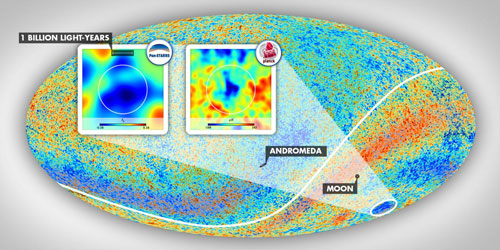
A cold cosmic mystery solved
Astronomers discover what might be the largest known structure in the universe that leaves its imprint on cosmic microwave background radiation.
April 20, 2015 Read more
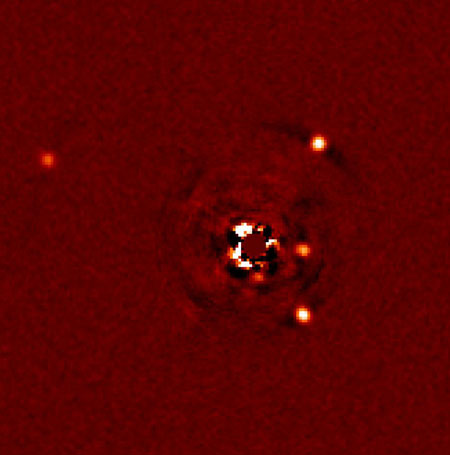
Astronomers probe inner region of young star and its planets
Taking advantage of the unprecedented sensitivity of the Large Binocular Telescope in southeastern Arizona, an international team of astronomers has obtained the first results from the LEECH exoplanets survey.
April 20, 2015 Read more
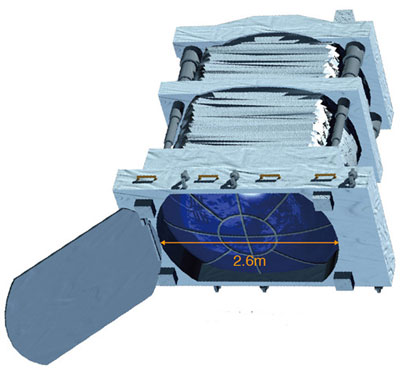
A blueprint for clearing the skies of space debris
An international team of scientists have put forward a blueprint for a purely space-based system to solve the growing problem of space debris.
April 17, 2015 Read more
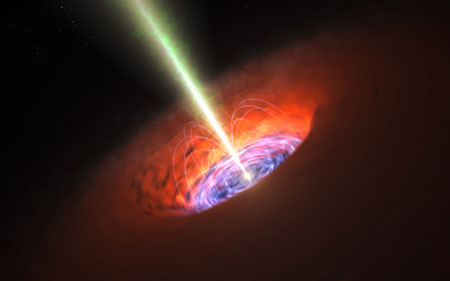
Astronomers reveal supermassive black hole's intense magnetic field
Astronomers have used the giant telescope Alma to reveal an extremely powerful magnetic field very close to a supermassive black hole in a distant galaxy.
April 16, 2015 Read more
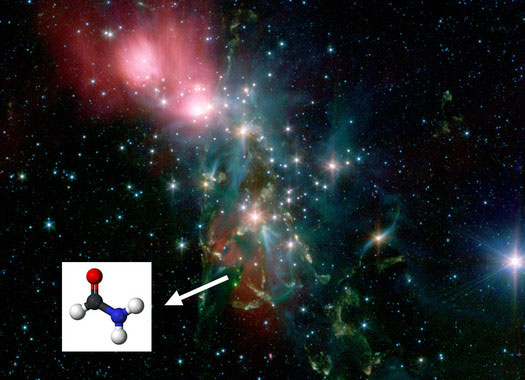
Protosuns teeming with prebiotic molecules
Complex organic molecules such as formamide, from which sugars, amino acids and even nucleic acids essential for life can be made, already appear in the regions where stars similar to our Sun are born. Astrophysicists have detected this biomolecule in five protostellar clouds and propose that it forms on tiny dust grains.
April 16, 2015 Read more
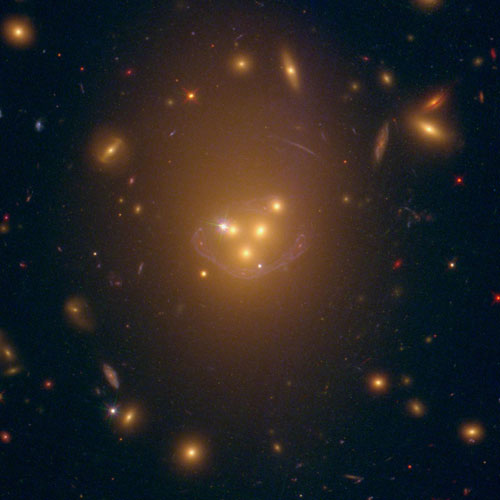
Potential signs of 'interacting' dark matter suggest it is not completely dark after all
Astronomers believe they might have observed the first potential signs of dark matter interacting with a force other than gravity.
April 15, 2015 Read more
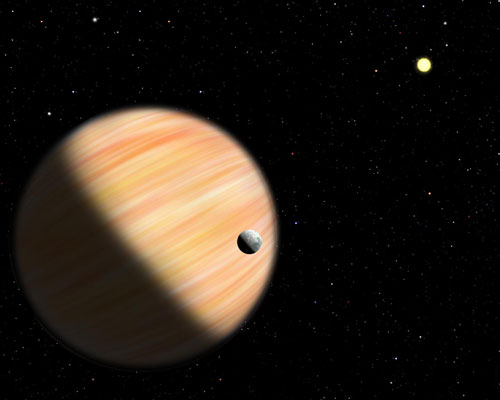
Spitzer, OGLE spot planet deep within our galaxy
NASA's Spitzer Space Telescope has teamed up with a telescope on the ground to find a remote gas planet about 13,000 light-years away, making it one of the most distant planets known.
April 15, 2015 Read more
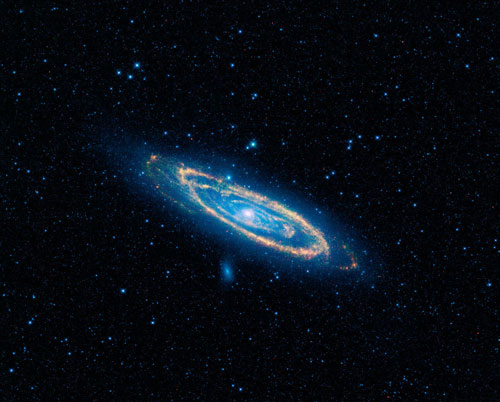
Search for advanced civilizations beyond Earth finds nothing obvious in 100,000 galaxies
After searching 100,000 galaxies for signs of highly advanced life, a team of scientists using observations from NASA's WISE satellite has found no evidence of advanced civilizations there. The idea behind the research is that, if an entire galaxy had been colonized by an advanced spacefaring civilization, the energy produced by that civilization's technologies would be detectable in mid-infrared wavelengths.
April 14, 2015 Read more
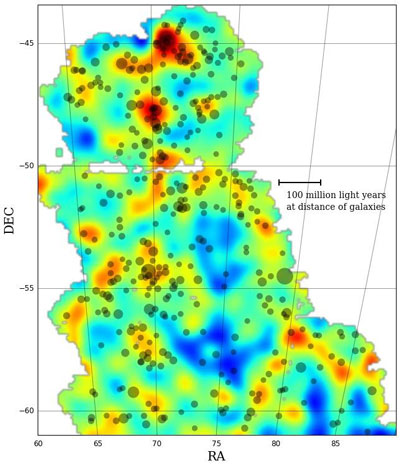
Dark Energy Survey creates detailed guide to spotting dark matter
Analysis will help scientists understand the role that dark matter plays in galaxy formation.
April 14, 2015 Read more
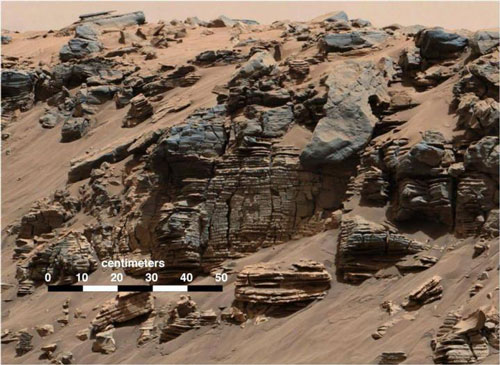
Mars might have liquid water
Researchers have long known that there is water in the form of ice on Mars. Now, new research from NASA's Mars rover Curiosity shows that it is possible that there is liquid water close to the surface of Mars. The explanation is that the substance perchlorate has been found in the soil, which lowers the freezing point so the water does not freeze into ice, but is liquid and present in very salty salt water - a brine.
April 13, 2015 Read more
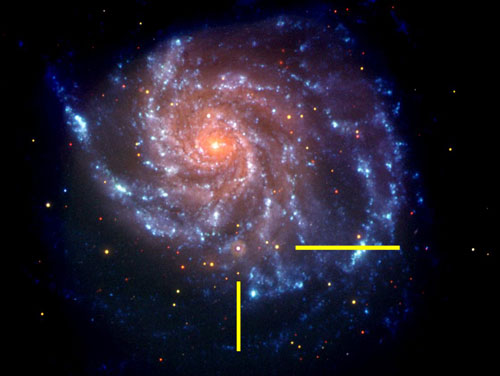
Accelerating universe? Not so fast
A team of astronomers found that the type of supernovae commonly used to measure distances in the universe fall into distinct populations not recognized before; the findings have implications for our understanding of how fast the universe has been.
April 12, 2015 Read more
An exoplanet with an infernal atmosphere
As part of the PlanetS National Centre of Competence in Research (NCCR), astronomers have come to measure the temperature of the atmosphere of an exoplanet with unequalled precision, by crossing two approaches.
April 10, 2015 Read more
Cosmic debris: Study looks inside the universe's most powerful explosions
Finding sets the stage for discoveries from the next generation of neutrino telescopes.
April 10, 2015 Read more
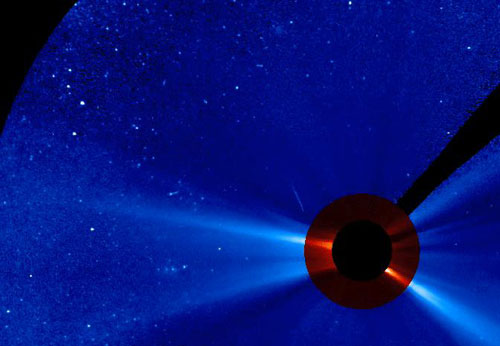
Small solar eruptions can have profound effects on unprotected planets
While no one yet knows what's needed to build a habitable planet, it's clear that the interplay between the sun and Earth is crucial for making our planet livable - a balance between a sun that provides energy and a planet that can protect itself from the harshest solar emissions.
April 10, 2015 Read more
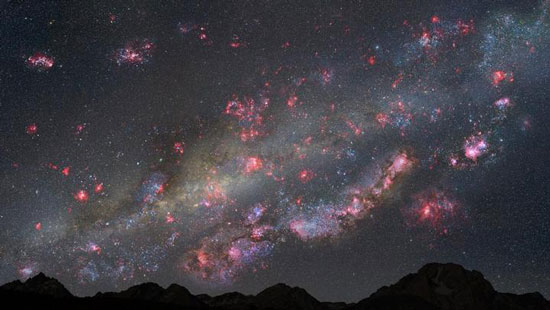
Our Sun came late to the Milky Way's star-birth party
In one of the most comprehensive multi-observatory galaxy surveys yet, astronomers find that galaxies like our Milky Way underwent a stellar 'baby boom', churning out stars at a prodigious rate, about 30 times faster than today.
April 10, 2015 Read more
Flip-flopping black holes spin to the end of the dance
When black holes tango, one massive partner spins head over heels (or in this case heels over head) until the merger is complete, said researchers.
April 9, 2015 Read more