

Space Exploration News – Latest Headlines
 Subscribe to our Space Exploration News feed
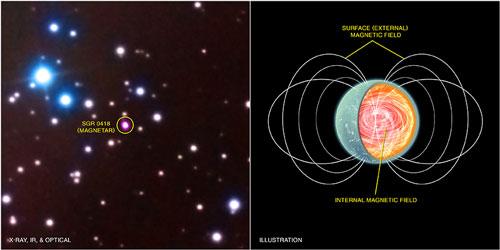
A hidden population of exotic neutron stars
Magnetars - the dense remains of dead stars that erupt sporadically with bursts of high-energy radiation - are some of the most extreme objects known in the Universe. A major campaign using NASA's Chandra X-ray Observatory and several other satellites shows magnetars may be more diverse and common - than previously thought.
May 23, 2013 Read more
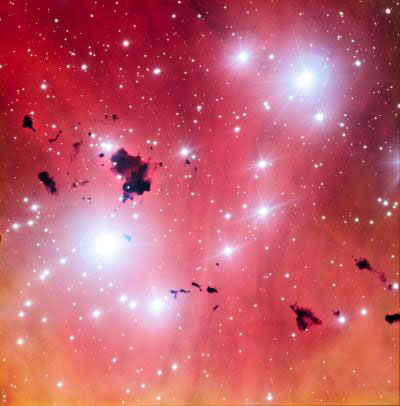
ESO's Very Large Telescope celebrates 15 years of success
With this new view of a spectacular stellar nursery ESO is celebrating 15 years of the Very Large Telescope - the world's most advanced optical instrument.
May 23, 2013 Read more
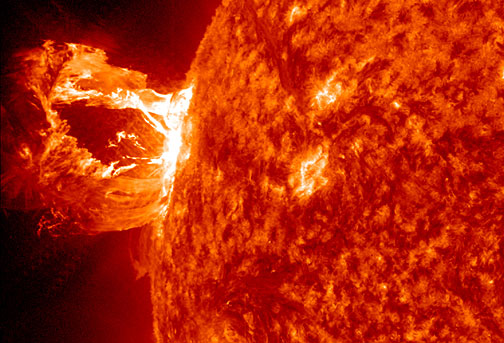
Researchers explain magnetic field misbehavior in solar flares
When a solar flare erupts from the sun, its magnetic fields sometime break a widely accepted rule of physics. Why? Now we know.
May 22, 2013 Read more
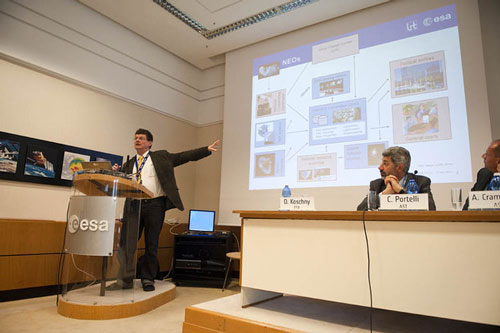
Watching for hazards: ESA opens asteroid center
ESA today inaugurated a new hub that will strengthen Europe's contribution to the global hunt for asteroids and other hazardous natural objects that may strike Earth.
May 22, 2013 Read more
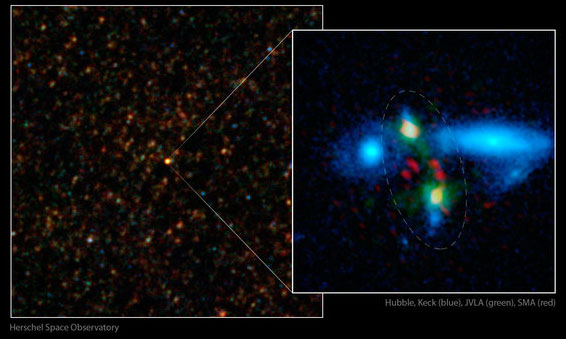
Rare merger reveals secrets of galaxy evolution
A rare encounter between two gas-rich galaxies spotted by ESA's Herschel space observatory indicates a solution to an outstanding problem: how did massive, passive galaxies form in the early Universe?
May 22, 2013 Read more
NASA calls for Phase II Visionary Advanced Concepts
NASA is looking for far-out ideas. NASA's Innovative Advanced Concepts (NIAC) Program is seeking Phase II proposals for continuation of promising studies selected during the first phase of the visionary program.
May 22, 2013 Read more
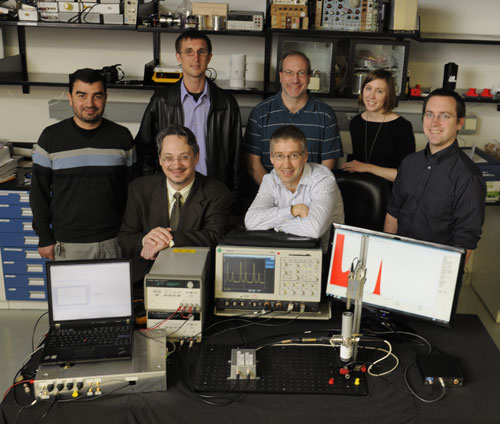
NASA builds unusual testbed for analyzing X-ray navigation technologies
Pulsars have a number of unusual qualities. Like zombies, they shine even though they're technically dead, and they rotate rapidly, emitting powerful and regular beams of radiation that are seen as flashes of light, blinking on and off at intervals from seconds to milliseconds. A NASA team has built a first-of-a-kind testbed that simulates these distinctive pulsations.
May 21, 2013 Read more
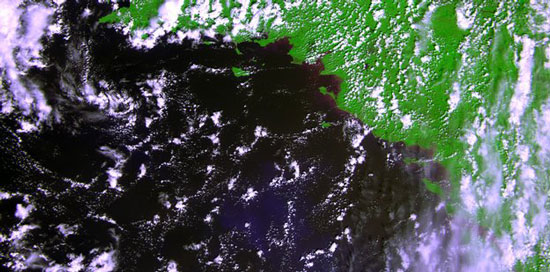
Earth watcher Proba-V opens its eyes
Earth watcher Proba-V is in good health following its launch last week. The Vegetation imager has been switched on and the first image has been captured over western France.
May 18, 2013 Read more
NASA's asteroid sample return mission moves into development (w/video)
NASA's first mission to sample an asteroid is moving ahead into development and testing in preparation for its launch in 2016.
May 18, 2013 Read more
2nd Luxembourg Workshop on Satellite Communication
The University of Luxembourg in collaboration with the Max Planck Institute Luxembourg for International, European and Regulatory Procedural Law and the SES Chair in Satellite Communication and Media Law present the 2nd Luxembourg Workshop on Satellite Communication entitled Satellite Communication and Dispute Resolution.
May 17, 2013 Read more
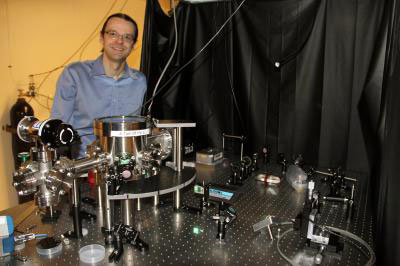
New method proposed for detecting gravitational waves from ends of universe
A new window into the nature of the universe may be possible with a device proposed by scientists at the University of Nevada, Reno and Stanford University that would detect elusive gravity waves from the other end of the cosmos.
May 16, 2013 Read more
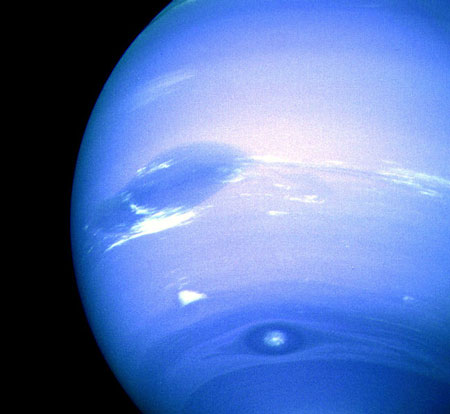
Weather on the outer planets only goes so deep
Weizmann Institute researchers and their colleagues set an upper limit for the thickness of jet streams on Uranus and Neptune.
May 16, 2013 Read more
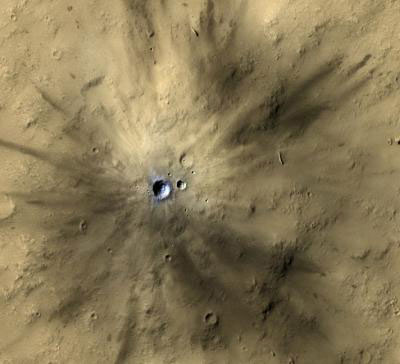
HiRISE Mars camera reveals hundreds of impacts each year
Taking before and after pictures of Martian terrain, researchers of the HiRISE imaging experiment have identified almost 250 fresh impact craters on the Red Planet, providing a more accurate yardstick of surface processes on Mars.
May 15, 2013 Read more
Scientists shape first global topographic map of Saturn's moon Titan
Scientists have created the first global topographic map of Saturn's moon Titan, giving researchers a valuable tool for learning more about one of the most Earthlike and interesting worlds in the solar system.
May 15, 2013 Read more
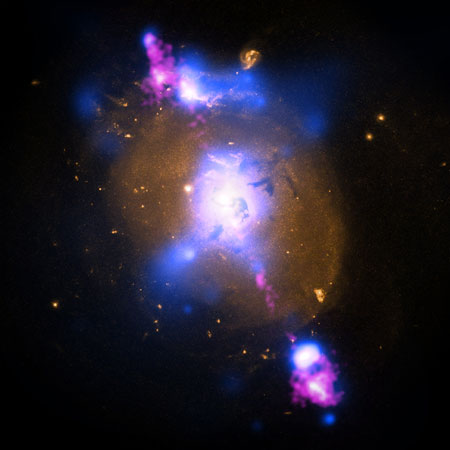
Black hole powered jets plow into galaxy
The intense gravity of a supermassive black hole can be tapped to produce immense power in the form of jets moving at millions of miles per hour.
May 15, 2013 Read more
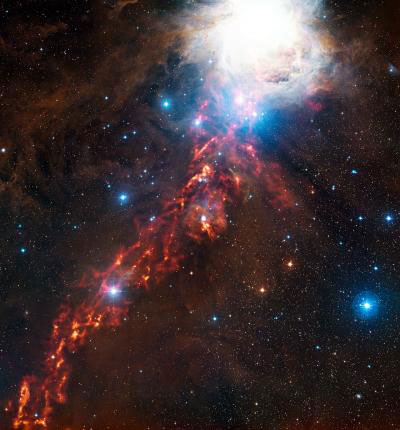
Orion's hidden fiery ribbon
A dramatic new image of cosmic clouds in the constellation of Orion reveals what seems to be a fiery ribbon in the sky.
May 15, 2013 Read more
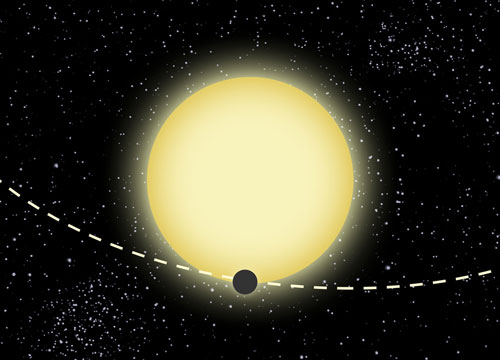
New method of finding planets scores its first discovery
Detecting alien worlds presents a significant challenge since they are small, faint, and close to their stars. The two most prolific techniques for finding exoplanets are radial velocity (looking for wobbling stars) and transits (looking for dimming stars). A team at Tel Aviv University and the Harvard-Smithsonian Center for Astrophysics has just discovered an exoplanet using a new method that relies on Einstein's special theory of relativity.
May 13, 2013 Read more
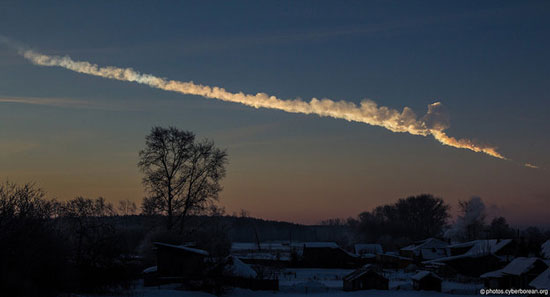
After Chelyabinsk: European experts assess asteroid options
This week, Deimos Space, an industrial partner working for ESA on SSA, has invited top researchers from universities, research institutes, national space agencies and industry in Europe and the USA to discuss the state of the art in near-Earth objects impact effects and threat mitigation.
May 13, 2013 Read more