

Space Exploration News – Latest Headlines
 Subscribe to our Space Exploration News feed
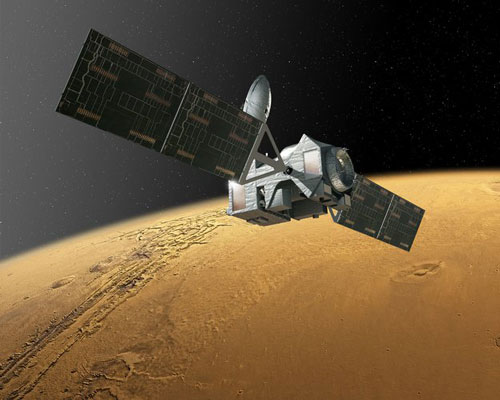
ExoMars 2016 set to complete construction
ESA's mission to Mars in 2016 has entered the final stage of construction with the signature of a contract today with Thales Alenia Space at the Paris Air and Space Show.
June 17, 2013 Read more
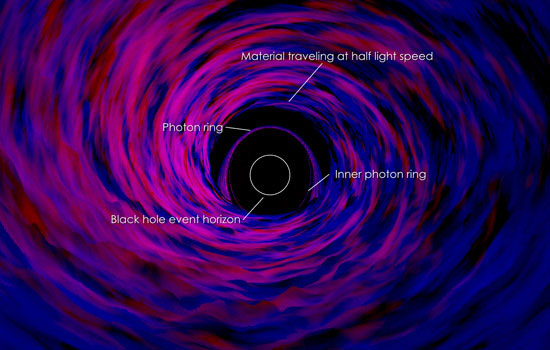
NASA-led study explains decades of black hole observations
A new study by astronomers at NASA, Johns Hopkins University and Rochester Institute of Technology confirms long-held suspicions about how stellar-mass black holes produce their highest-energy light.
June 14, 2013 Read more
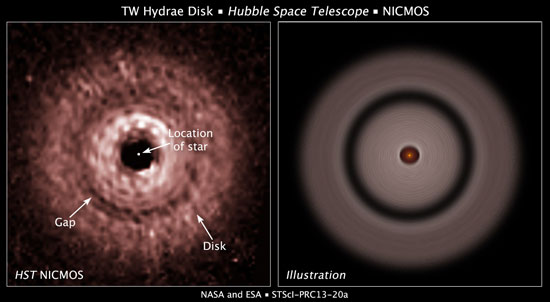
Hubble uncovers evidence for extrasolar planet under construction
The keen vision of NASA's Hubble Space Telescope has detected a mysterious gap in a vast protoplanetary disk of gas and dust swirling around the nearby star TW Hydrae, located 176 light-years away in the constellation Hydra. The gap's presence is best explained as due to the effects of a growing, unseen planet that is gravitationally sweeping up material and carving out a lane in the disk, like a snow plow.
June 13, 2013 Read more
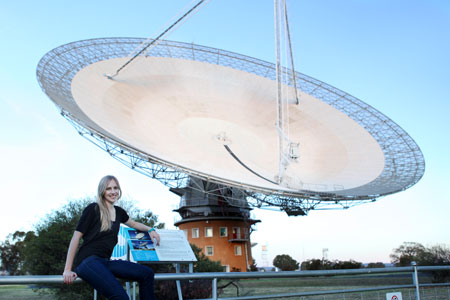
Stacking up a clearer picture of the Universe (w/video)
Researchers from the International Centre for Radio Astronomy Research (ICRAR) have proven a new technique that will provide a clearer picture of the Universe's history and be used with the next generation of radio telescopes such as the Square Kilometre Array (SKA).
June 13, 2013 Read more
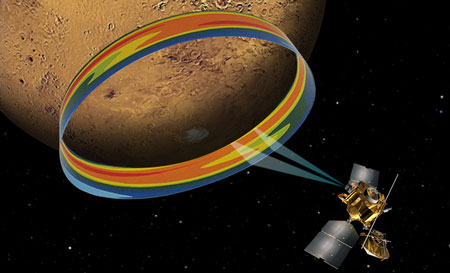
Mars water-ice clouds are key to odd thermal rhythm
Researchers using NASA's Mars Reconnaissance Orbiter have found that temperatures in the Martian atmosphere regularly rise and fall not just once each day, but twice.
June 12, 2013 Read more
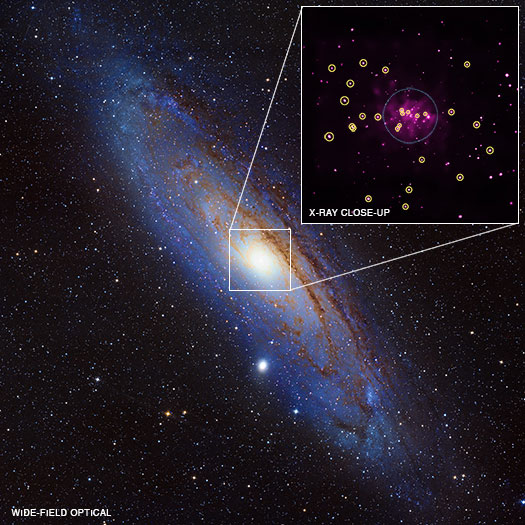
Chandra turns up black hole bonanza in galaxy next door
Using data from NASA's Chandra X-ray Observatory, astronomers have discovered an unprecedented bonanza of black holes in the Andromeda Galaxy, one of the nearest galaxies to the Milky Way.
June 12, 2013 Read more
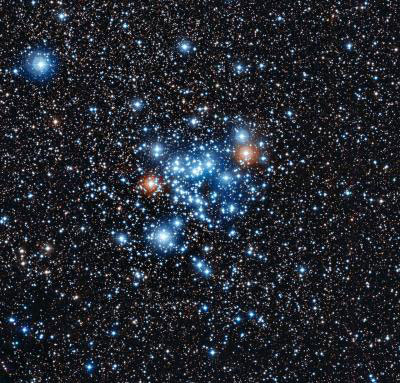
New kind of variable star discovered
Minute variations in brightness reveal whole new class of stars.
June 12, 2013 Read more
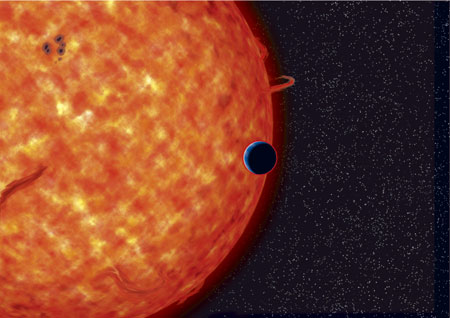
Sunny super-Earth?
Researchers observed the atmosphere of super-Earth GJ3470b in Cancer for the first time in the world using two telescopes at OAO (Okayama Astrophysical Observatory, NAOJ). The observational data revealed that this planet is highly likely to not be covered by thick clouds.
June 12, 2013 Read more
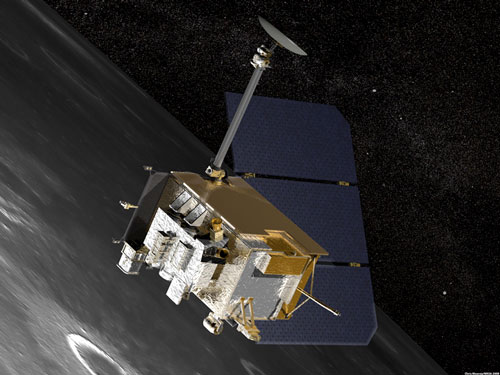
Moon radiation findings may reduce health risks to astronauts
Space scientists from the University of New Hampshire and the Southwest Research Institute report that data gathered by NASA's Lunar Reconnaissance Orbiter show lighter materials like plastics provide effective shielding against the radiation hazards faced by astronauts during extended space travel. The finding could help reduce health risks to humans on future missions into deep space.
June 11, 2013 Read more
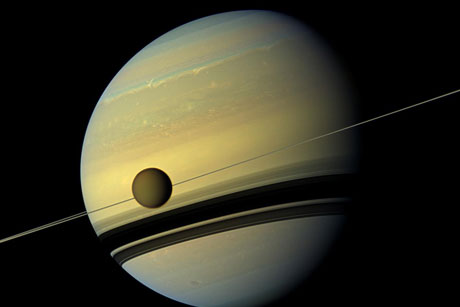
Cosmic quiver: Saturn's vibrations create spirals in rings
Astronomers know that gravity from Saturn's various moons tug at the planet's rings and make spirals in them. But the catalyst for certain spiral patterns has been difficult to pin down. Now, two Cornell astronomers have determined the source: Saturn itself.
June 11, 2013 Read more
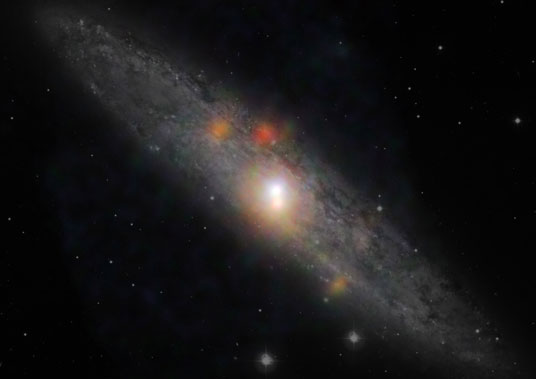
Black hole naps amidst stellar chaos
Nearly a decade ago, NASA's Chandra X-ray Observatory caught signs of what appeared to be a black hole snacking on gas at the middle of the nearby Sculptor galaxy. Now, NASA's Nuclear Spectroscopic Telescope Array (NuSTAR), which sees higher-energy X-ray light, has taken a peek and found the black hole asleep.
June 11, 2013 Read more
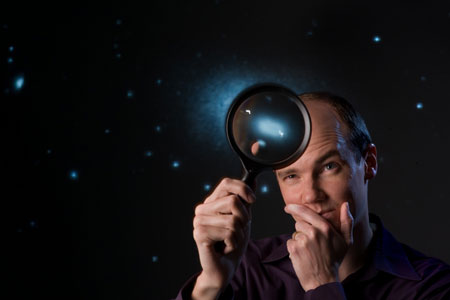
Scientists size up universe's most lightweight dwarf galaxy
The least massive galaxy in the known universe has been measured by UC Irvine scientists, clocking in at just 1,000 or so stars with a bit of dark matter holding them together.
June 10, 2013 Read more
NASA announces 2013 Space Technology Research Grants
NASA has selected 65 graduate students as the 2013 class of Space Technology Research Fellows.
June 10, 2013 Read more
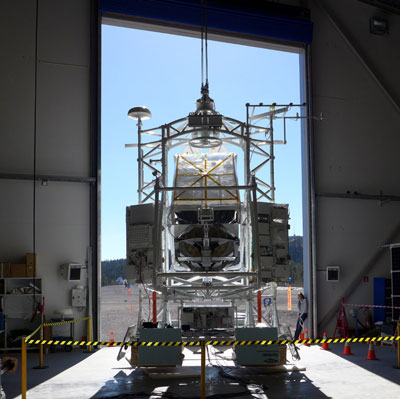
A journey to the active Sun
Four years after its first mission, the Sunrise team is preparing the balloon-borne solar observatory for a second flight.
June 7, 2013 Read more
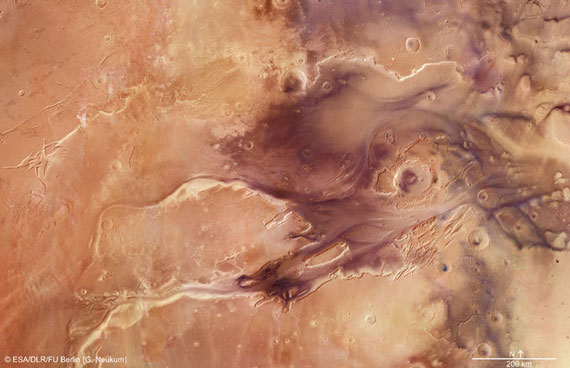
The floodwaters of Mars
Dramatic flood events carved this impressive channel system on Mars covering 1.55 million square kilometres, shown here in a stunning new mosaic from ESA's Mars Express.
June 6, 2013 Read more
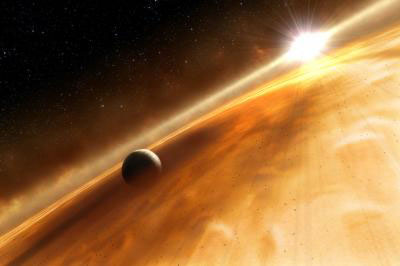
Astronomers gear up to discover Earth-like planets
As part of an international team of exoplanets hunters, astronomers at the University of Arizona are developing a technique to detect faint dust clouds around other stars, many of which might hide Earth-like planets.
June 6, 2013 Read more
'Dust trap' around distant star may solve planet formation mystery
Based on a treasure trove of recent discoveries, astronomers now know that planets are remarkably plentiful in our galaxy and may be common throughout the Universe. Though planets appear to form readily, the actual process of planet formation remains a mystery and astronomers are searching for the missing pieces to this cosmic puzzle.
June 6, 2013 Read more
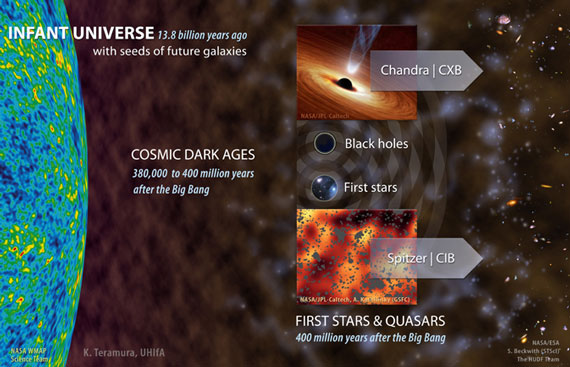
NASA Chandra, Spitzer study suggests black holes abundant among the earliest stars
By comparing infrared and X-ray background signals across the same stretch of sky, an international team of astronomers has discovered evidence of a significant number of black holes that accompanied the first stars in the universe.
June 5, 2013 Read more