

Space Exploration News – Latest Headlines
 Subscribe to our Space Exploration News feed
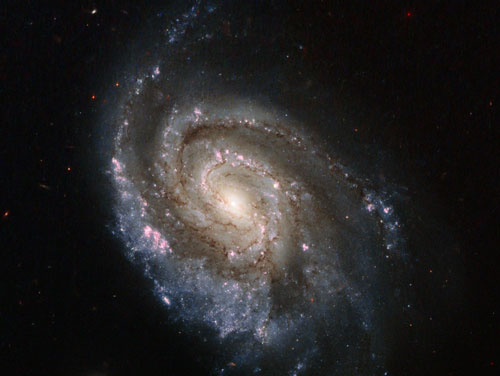
Hubble catches stellar explosions in NGC 6984
The subject of this new Hubble image, spiral galaxy NGC 6984, played host to one of these explosions back in 2012, known as SN 2012im. Now, another star has exploded, forming supernova SN 2013ek.
November 9, 2013 Read more
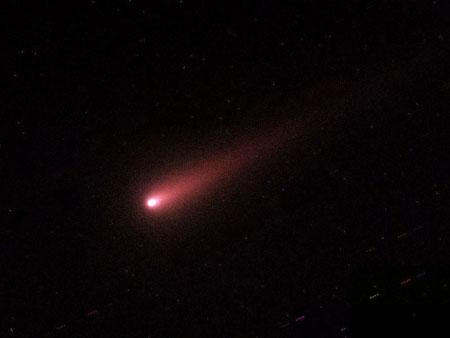
Fossil from the depths of the solar system
While amateur astronomers are waiting excitedly for the solar fly-by of comet ISON, researchers are already revealing the first properties of the stranger.
November 8, 2013 Read more
The moon's face doesn't tell its whole story (w/video)
Researchers find that huge craters on the near side of the moon may overstate the intensity of asteroid impacts about 4.1 billion years ago.
November 7, 2013 Read more
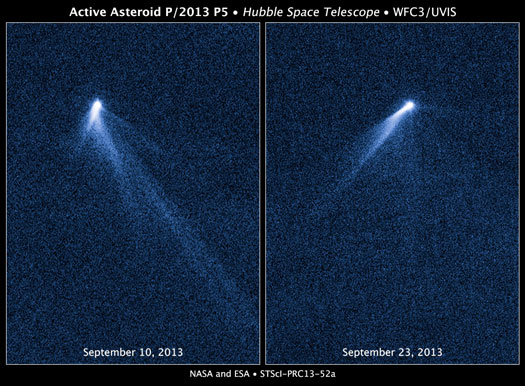
Hubble telescope sees asteroid spouting six comet-like tails
Astronomers viewing our solar system's asteroid belt with NASA's Hubble Space Telescope have seen for the first time an asteroid with six comet-like tails of dust radiating from it like spokes on a wheel.
November 7, 2013 Read more
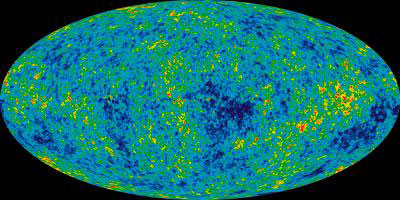
Researchers shed new light on dark energy, cosmic speed-up
Study uses Big Bang afterglow to show Earth has no special place in expanding universe.
November 7, 2013 Read more
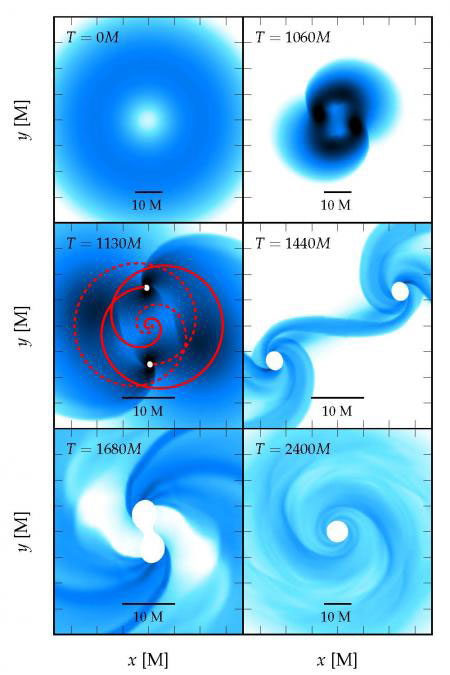
From 1 collapsing star, 2 black holes form and fuse (w/video)
Over billions of years, small black holes can slowly grow into supermassive black holes by taking on mass from their surroundings, and also by merging with other black holes. But this slow process can't explain how supermassive black holes existing in the early universe would have formed less than one billion years after the Big Bang. New findings from a group of Caltech researchers help to test a model that solves this problem.
November 6, 2013 Read more
Astronomers find black hole in globular cluster
Last year when a team of astronomers led by a Michigan State University professor discovered two black holes in a collection of stars known as a globular cluster, they weren't sure if their presence was a common occurrence or a unique stroke of luck.
November 6, 2013 Read more
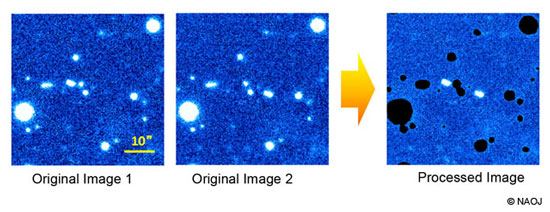
Astronomers establish the strength of high-inclination asteroids
A team of astronomers from the National Astronomical Observatory of Japan and the University of Hyogo used the Subaru Prime Focus Camera (Suprime-Cam) mounted on the Subaru Telescope to observe faint asteroids with highly inclined orbits. They found that a smaller fraction of tiny bodies occur among high-inclination asteroids than those near the ecliptic plane.
November 6, 2013 Read more
NASA selects research teams for new Virtual Institute
NASA has selected nine research teams from seven states for a new institute that will bring researchers together in a collaborative virtual setting to focus on questions concerning space science and human space exploration.
November 5, 2013 Read more
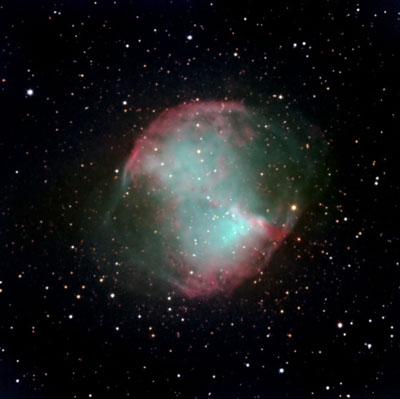
White dwarfs hide information on dark forces
Researchers from Europe and the USA have ruled out a multitude of possible parameters for dark photons - a type of dark matter and energy - with the help of white dwarfs. In some aspects, the shining of these dying stars gives more information on dark forces than is provided by earth-based laboratories.
November 5, 2013 Read more
India launches Mars-bound spacecraft
India on Tuesday launched its first spacecraft bound for Mars, a complex mission that it hopes will demonstrate and advance technologies for space travel.
November 5, 2013 Read more
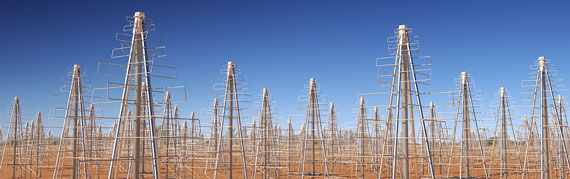
Work towards largest telescope contracts awarded
The international Square Kilometre Array (SKA) office awarded contracts to prepare for the world's largest radio telescope yesterday, marking the start of the return on Australia and WA's investment in the ambitious Square Kilometre Array.
November 5, 2013 Read more
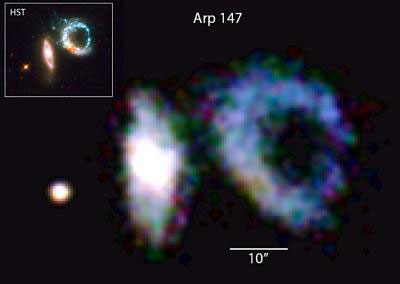
A cutting-edge detector technology for astronomical observations
Semiconductors have had a nice run, but for certain applications, such as astrophysics, they are being edged out by superconductors. Ben Mazin, assistant professor of physics at UC Santa Barbara, has developed a superconducting detector array that measures the energy of individual photons.
November 4, 2013 Read more
New tool may unveil inhabitable worlds
Funding for SPIRou, a spectropolarimeter and a high-precision velocimeter optimized for both the detection of habitable Earth twins orbiting around nearby red dwarf stars and the study of the formation of Sun-like stars and their planets, was confirmed today by the Canada-France-Hawaii Telescope (CFHT) observatory.
November 4, 2013 Read more
Gravity and the robot satellite attitude problem
Using an in-orbit robot to capturing a malfunctioning satellite that is tumbling out of control is currently just a theoretical idea. However, research inspired by nature could take us a small step towards making such science fiction science fact.
November 4, 2013 Read more
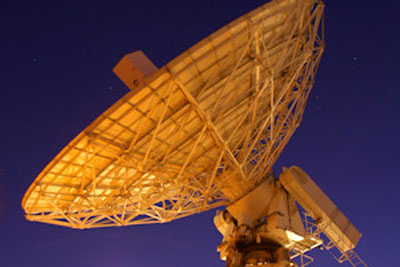
Former missile-tracking telescope helps reveal fate of baby pulsar
A radio telescope once used to track ballistic missiles has helped astronomers determine how the magnetic field structure and rotation of the young and rapidly rotating Crab pulsar evolves with time.
November 1, 2013 Read more
Magnetic 'force field' shields giant gas cloud during collision with Milky Way
Doom may be averted for the Smith Cloud, a gigantic streamer of hydrogen gas that is on a collision course with the Milky Way galaxy. Astronomers using the VLA and GBT have discovered a magnetic field deep in the cloud's interior, which may protect it during its meteoric plunge into the disk of our galaxy.
October 31, 2013 Read more
Houston we have a problem: Microgravity accelerates biological aging
New research suggests that gravitational unloading significantly impairs the function of endothelial cells, as evidenced by gene expression studies conducted in space.
October 31, 2013 Read more