

Space Exploration News – Latest Headlines
 Subscribe to our Space Exploration News feed
Could a Milky Way supernova be visible from Earth in next 50 years? (w/video)
Astronomers have calculated the odds that, sometime during the next 50 years, a supernova occurring in our home galaxy will be visible from Earth.
October 31, 2013 Read more
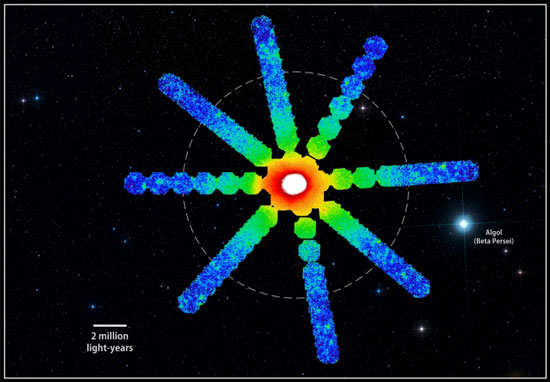
Suzaku study points to early cosmic 'seeding'
Most of the universe's heavy elements, including the iron central to life itself, formed early in cosmic history and spread throughout the universe, according to a new study of the Perseus Galaxy Cluster using Japan's Suzaku satellite.
October 31, 2013 Read more
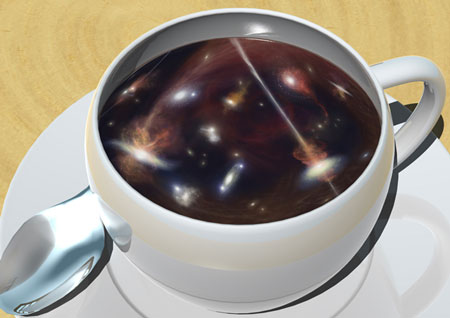
Researchers show how universe's violent youth seeded cosmos with iron
By detecting an even distribution of iron throughout a massive galaxy cluster, astrophysicists can tell the 10-billion-year-old story of how exploding stars and black holes sowed the early cosmos with heavy elements.
October 30, 2013 Read more
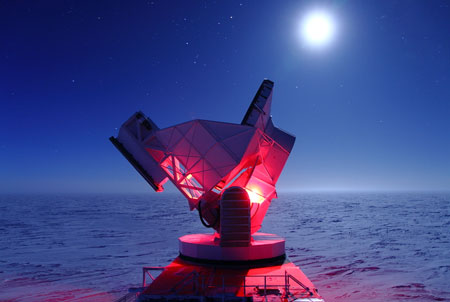
South Pole Telescope helps scientists study earliest ages of the universe
At the South Pole Telescope, scientists measure cosmic radiation still traveling across space from the early days of the universe.
October 30, 2013 Read more
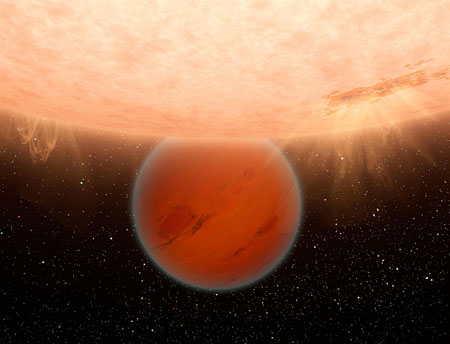
Researchers discover that an exoplanet is Earth-like in mass and size
While too hot to support life, Kepler 78b is roughly the size of the Earth.
October 30, 2013 Read more
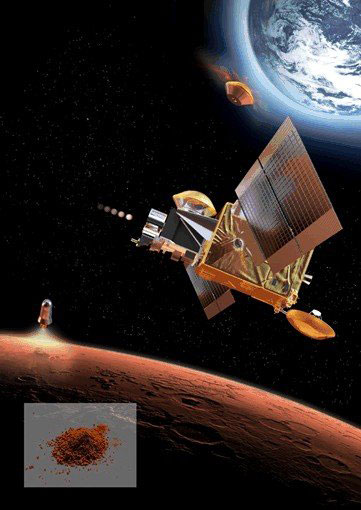
Martian box of delights (w/video)
A Mars sample-return mission is one of the most challenging space ventures possible for robotic exploration.
October 29, 2013 Read more
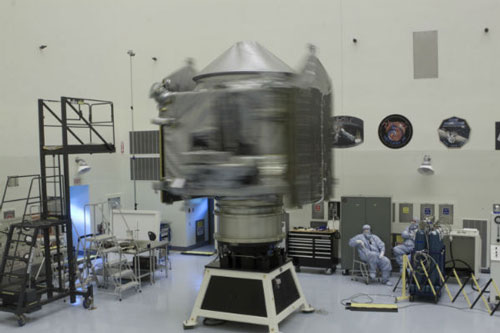
NASA prepares to launch first mission to explore Martian atmosphere
A NASA spacecraft that will examine the upper atmosphere of Mars in unprecedented detail is undergoing final preparations for a scheduled 1:28 p.m. EST Monday, Nov. 18 launch from Cape Canaveral Air Force Station in Florida.
October 28, 2013 Read more
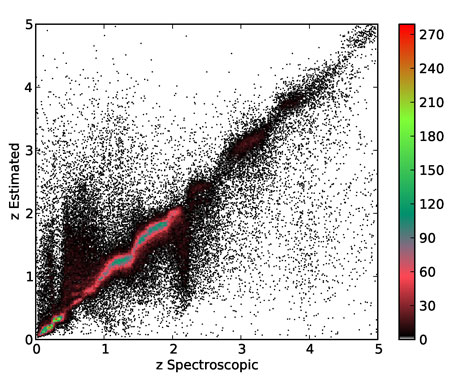
Computer science helps astronomers exploring the sky
The new HITS research group 'Astroinformatics' will develop methods and software for astronomers and help facilitating the analysis and processing of the rapidly growing amount of data in astronomy.
October 28, 2013 Read more
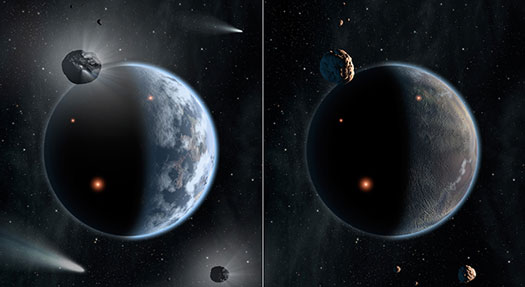
Carbon worlds may be waterless, finds NASA study
Planets rich in carbon, including so-called diamond planets, may lack oceans, according to NASA-funded theoretical research. Read more: http://www.nanowerk.com/news2/space/newsid=32939.php#ixzz2ivkRS7Qk
October 27, 2013 Read more
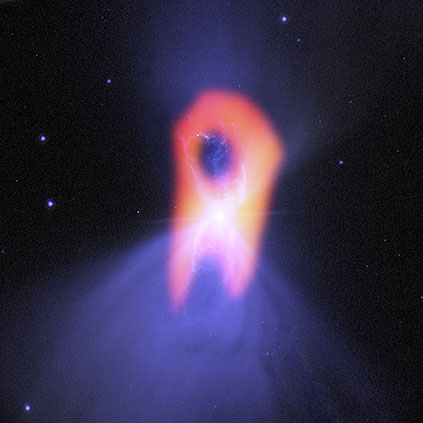
ALMA reveals ghostly shape of 'coldest place in the universe'
At a cosmologically crisp one degree Kelvin (minus 458 degrees Fahrenheit), the Boomerang Nebula is the coldest known object in the Universe - colder than the faint afterglow of the Big Bang, which is the natural background temperature of space. Astronomers using the Atacama Large Millimeter/submillimeter Array (ALMA) telescope have taken a new look at this intriguing object to learn more about its frigid properties and to determine its true shape, which has an eerily ghost-like appearance.
October 24, 2013 Read more
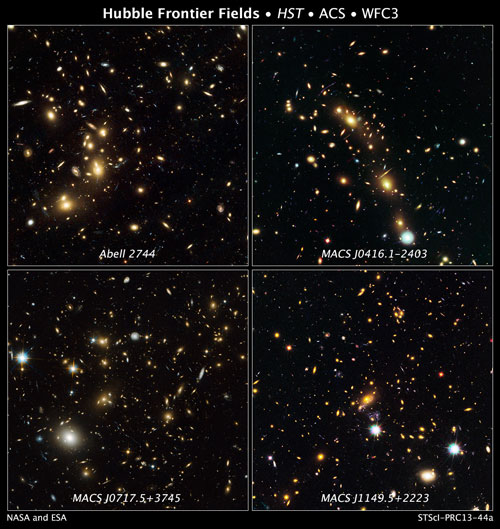
NASA's Great Observatories begin deepest ever probe of the universe
In an ambitious collaborative program, called The Frontier Fields, NASA's Great Observatories are teaming up to look deeper into the universe than ever before. With a boost from natural 'zoom lenses' found in space, they should be able to uncover galaxies that are as much as 100 times fainter than what the Hubble, Spitzer, and Chandra space telescopes can typically see.
October 24, 2013 Read more
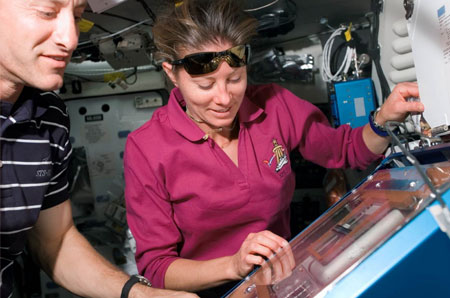
Just two weeks in orbit causes changes in eyes
Just 13 days in space may be enough to cause profound changes in eye structure and gene expression, report researchers. Their study is the first to examine eye-related gene expression and cell behavior after spaceflight.
October 24, 2013 Read more
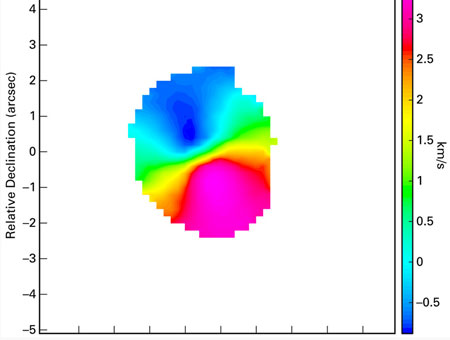
A rare snapshot of a planetary construction site
Planets are formed in disks of gas and dust around nascent stars. Now, observations have produced a rare view of a planetary construction site in an intermediate state of evolution: Contrary to expectations, the disk around the star HD 21997 appears to contain both primordial gas left over from the formation of the star itself and dust that appears to have been produced in collisions between planetesimals.
October 24, 2013 Read more
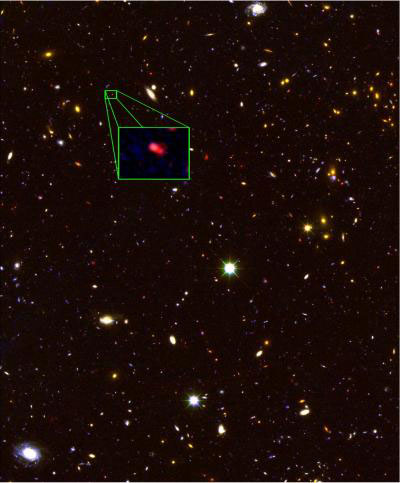
Astronomers discover universe's most distant galaxy
Astronomers have detected the most distant spectroscopically confirmed galaxy ever found - one created within 700 million years after the Big Bang.
October 23, 2013 Read more
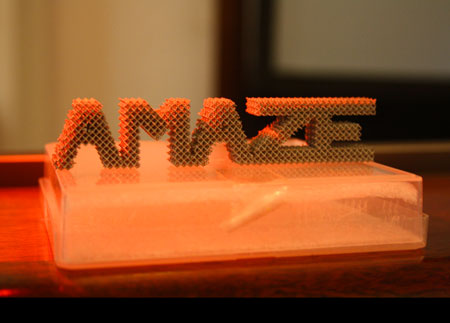
ESA launches 3D metal printing project in space
3D printing is getting ready to revolutionise space travel. ESA is paving the way for 3D-printed metals to build high-quality, intricate shapes with massive cost savings.
October 23, 2013 Read more
Shedding light on black holes at November 6 online public lecture
Perimeter Institute Associate Faculty member Avery Broderick will explore how astronomers are now imaging the horizons of black holes and attaining new insights about these enigmatic monsters in the dark.
October 23, 2013 Read more
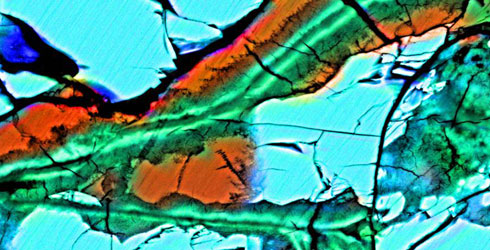
Martian meteorite may hold secret to slowing global warming
The early Martian atmosphere lost much of its carbon dioxide through a reaction with rock - a reaction that could slow global warming on Earth.
October 23, 2013 Read more
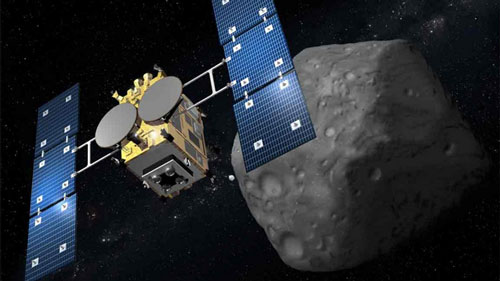
Asteroid space cannon ready for test
Japanese scientists readying to blast a crater in an asteroid to find out what it is made of said Wednesday they have successfully tested their new space cannon.
October 23, 2013 Read more