

Space Exploration News – Latest Headlines
 Subscribe to our Space Exploration News feed
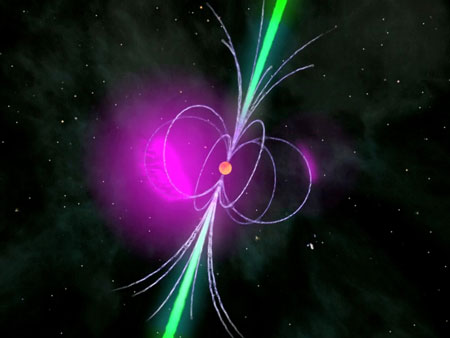
Home computers discover gamma-ray pulsars
Einstein@Home volunteers find four cosmic lighthouses in data from NASA's Fermi Gamma-ray Space Telescope.
November 26, 2013 Read more
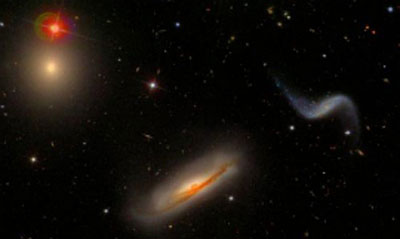
Galaxy groups running out of fuel
Astronomers at Swinburne University of Technology and their international collaborators have found evidence that galaxies that are located in groups might be running out of gas.
November 26, 2013 Read more
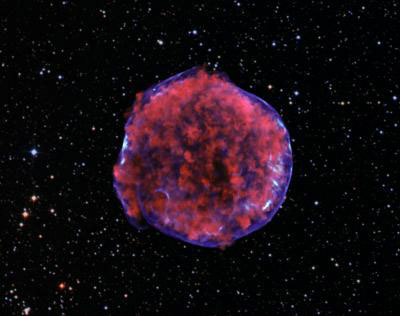
Mach 1000 shock wave lights supernova remnant
When a star explodes as a supernova, the material blasted outward from the explosion still glows hundreds or thousands of years later, forming a picturesque supernova remnant. What powers such long-lived brilliance? In the case of Tycho's supernova remnant, astronomers have discovered that a reverse shock wave racing inward at Mach 1000 (1,000 times the speed of sound) is heating the remnant and causing it to emit X-ray light.
November 25, 2013 Read more
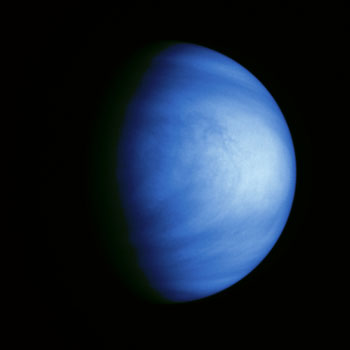
Sounding rocket to peek at atmosphere of Venus
A week after launching a new orbiter to investigate the upper atmosphere of Mars, NASA is sending a sounding rocket to probe the atmosphere of Venus.
November 25, 2013 Read more
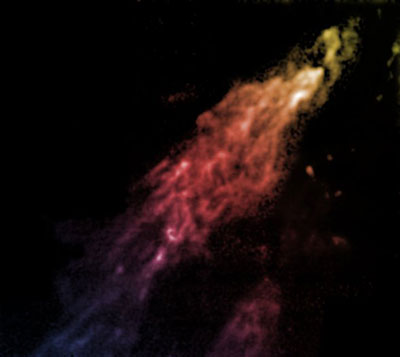
Pill-popping galaxy hooked on gas
Our Galaxy may have been swallowing 'pills' - clouds of gas with a magnetic wrapper - to keep making stars for the past eight billion years.
November 25, 2013 Read more
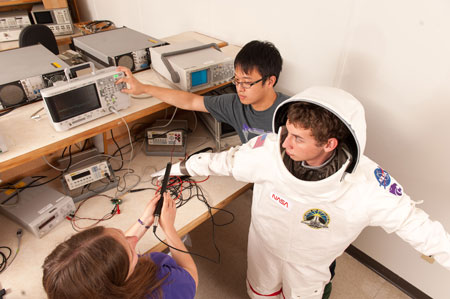
Engineers design spacesuit tools, biomedical sensors to keep astronauts healthy
By working with a model spacesuit, a group of Kansas State University engineering professors and students are exploring how wearable medical sensors can be used in future space missions to keep astronauts healthy.
November 25, 2013 Read more
Recycling orbital satellites as construction material, fuel or even food
No matter how painstakingly we choose the materials to build satellites, once a mission is over they are just so much junk. But what if one day they could be recycled in space for future missions - perhaps as construction material, fuel or even food?
November 25, 2013 Read more
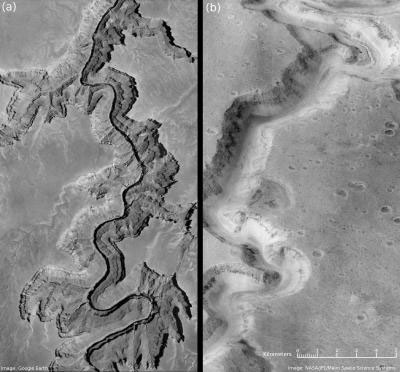
Unusual greenhouse gases may have raised ancient Martian temperature
Much like the Grand Canyon, Nanedi Valles snakes across the Martian surface suggesting that liquid water once crossed the landscape, according to a team of researchers who believe that molecular hydrogen made it warm enough for water to flow.
November 24, 2013 Read more
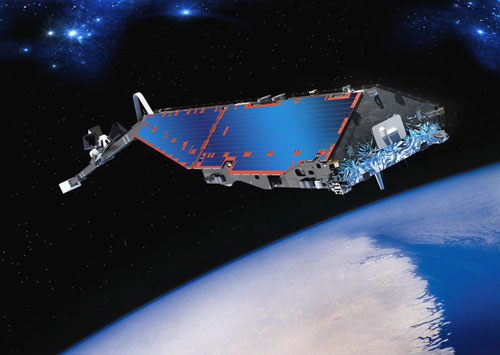
Satellite trio to explore the Earth's magnetic field
SWARM is an ESA mission as part of its 'Living Planet' program. The satellite swarm is to measure the Earth's magnetic field from space with unprecedented precision for at least four years.
November 22, 2013 Read more
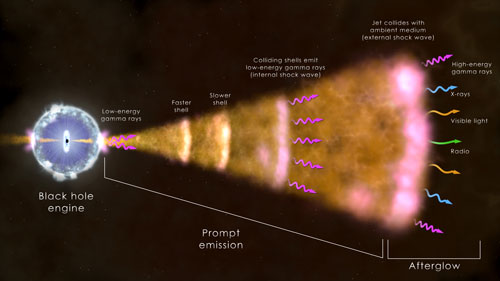
NASA sees 'watershed' cosmic blast in unique detail
On April 27, a blast of light from a dying star in a distant galaxy became the focus of astronomers around the world. The explosion, known as a gamma-ray burst and designated GRB 130427A, tops the charts as one of the brightest ever seen. A trio of NASA satellites, working in concert with ground-based robotic telescopes, captured never-before-seen details that challenge current theoretical understandings of how gamma-ray bursts work.
November 21, 2013 Read more
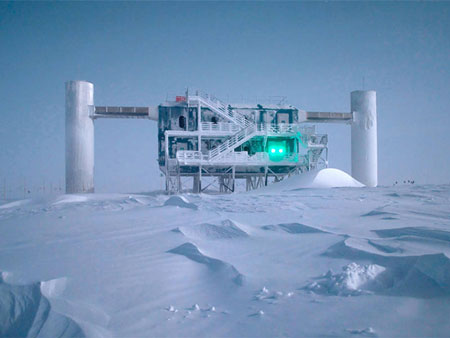
Racing particles from space
For the first time scientists have uncovered concrete evidence for highly energetic neutrinos stemming from outside our solar system. The IceCube experiment, a huge neutrino detector in Antarctica, has observed 28 neutrinos that most likely stem from cosmic objects such as supernovae, black holes, pulsars or other extreme cosmic phenomena.
November 21, 2013 Read more
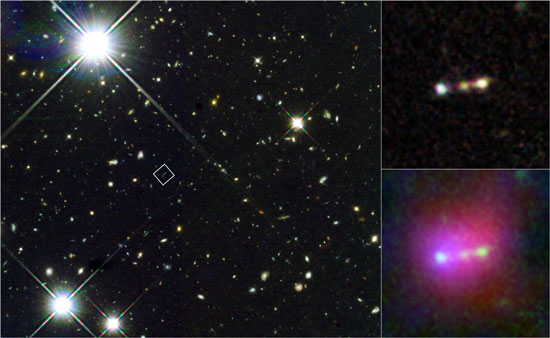
Infant galaxies merging near 'cosmic dawn'
Astronomers using the combined power of the Atacama Large Millimeter/submillimeter Array (ALMA) telescope and NASA's Hubble Space Telescope have discovered a far-flung trio of primitive galaxies nestled inside an enormous blob of primordial gas nearly 13 billion light-years from Earth.
November 21, 2013 Read more
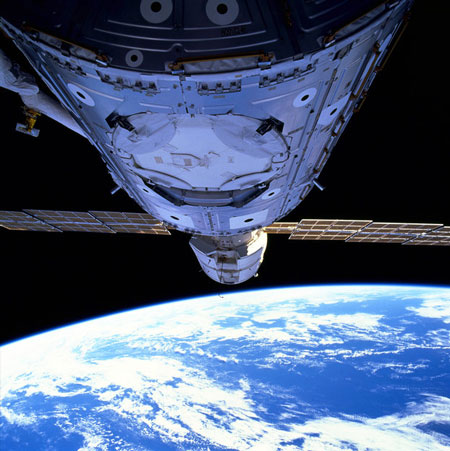
Happy Birthday, Space Station!
The International Space Station celebrated its birthday yesterday, 15 years after the first module was launched in 1998.
November 21, 2013 Read more
NASA's Chandra helps confirm evidence of jet in Milky Way's black hole
Astronomers have long sought strong evidence that Sagittarius A*, the supermassive black hole at the center of the Milky Way, is producing a jet of high-energy particles. Finally they have found it, in new results from NASA's Chandra X-ray Observatory and the National Science Foundation's Very Large Array radio telescope.
November 20, 2013 Read more
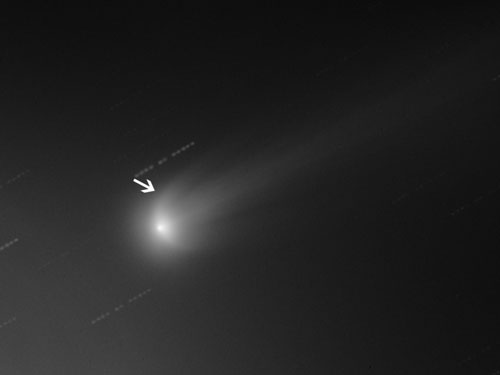
Winged comet
New images of ISON indicate that the comet has lost individual fragments.
November 20, 2013 Read more
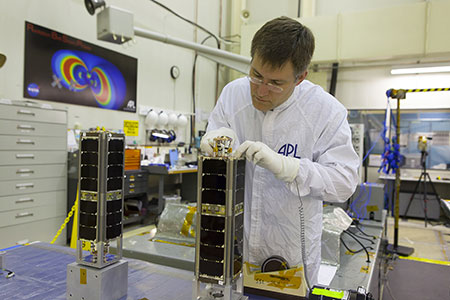
Experimental new 'Cubesats' designed for range of national security, science missions
The Johns Hopkins University Applied Physics Laboratory (APL) introduced a new generation of small satellites today with the launch of two experimental 'cubesats' designed for a range of national security and space science operations.
November 20, 2013 Read more
Researchers simulate electrons in astrophysical plasma jets
Physicists have been able to simulate the motion of billions of electrons within astrophysical plasma jets and calculate the light they emit with the help of a high-performance computer. They have been nominated for the Gordon Bell Prize as a result of their work.
November 19, 2013 Read more
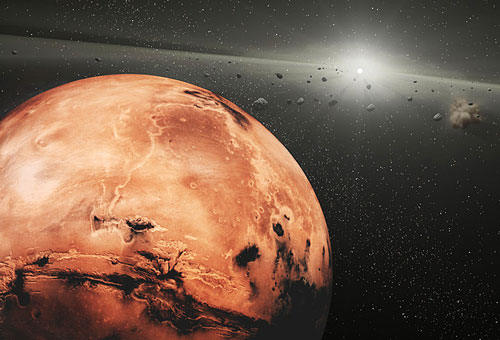
Asteroids' close encounters with Mars
Scientists find that Mars, not Earth, shakes up some near-Earth asteroids.
November 19, 2013 Read more