

Space Exploration News – Latest Headlines
 Subscribe to our Space Exploration News feed
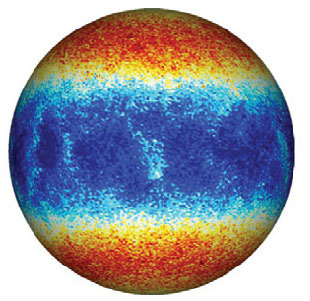
Ocean currents shape Europa's icy shell in ways critical for potential habitats
In a finding of relevance to the search for life in our solar system, researchers have shown the subsurface ocean on Jupiter's moon Europa may have deep currents and circulation patterns with heat and energy transfers capable of sustaining biological life. The findings, summarized in this week's online edition of Nature Geosciences, are based on numerical models accounting for the formation of the chaos terrains, one of Europa's most prominent surface features.
December 3, 2013 Read more
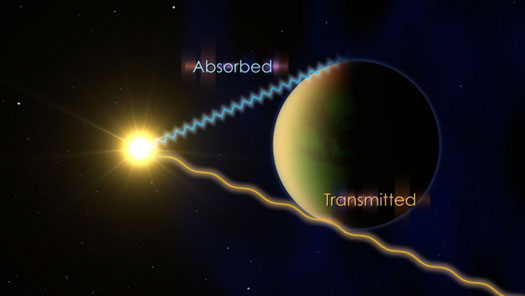
Hubble traces subtle signals of water on hazy worlds
Using the powerful eye of NASA's Hubble Space Telescope, two teams of scientists have found faint signatures of water in the atmospheres of five distant planets. The presence of atmospheric water was reported previously on a few exoplanets orbiting stars beyond our solar system, but this is the first study to conclusively measure and compare the profiles and intensities of these signatures on multiple worlds.
December 3, 2013 Read more
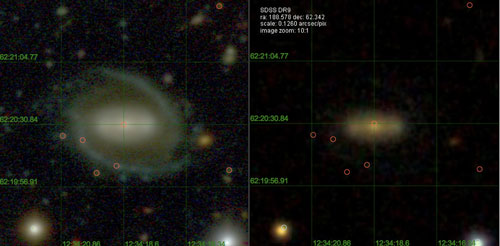
The most detailed catalogue of galaxies to trace the evolution of the universe during the last 10,000 million years
The ALHAMBRA project has identified and classified more than half a million galaxies, after seven years of close observation of the universe from the Observatory of Calar Alto and thanks to a technique that breaks the stars energy in their colours through astronomical filters.
December 2, 2013 Read more
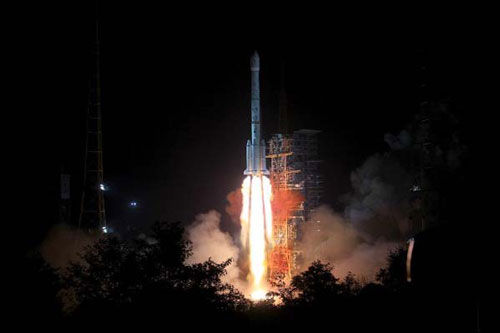
China launches probe and rover to Moon
China launched the Chang'e-3 lunar probe with the country's first moon rover aboard early on Monday, marking a significant step toward deep space exploration.
December 2, 2013 Read more
The mystery of neutron stars heats up
Until now, scientists were pretty sure they knew how the surface of a neutron star - a super dense star that forms when a large star explodes and its core collapses into itself - can heat itself up. However, research by a team of scientists led by a Michigan State University physicist has researchers rethinking that.
December 1, 2013 Read more
Launch of astroEDU: Peer-reviewed open-access astronomy education activities platform
astroEDU is a platform that allows educators to discover, review, distribute, improve and remix astronomy education activities, and offers a free peer-review service by professionals in education and science.
November 29, 2013 Read more
ESA project to map a billion stars in the Milky Way
The Milky Way Galaxy comprises hundreds of billions stars. An ambitious ESA project will map around a billion of these. The European funded GREAT network will train young researchers across Europe to help make sense of this wealth of data.
November 29, 2013 Read more
New space mission will switch on the sound to study the universe in a new way
A new space mission that will study the universe in a completely new way will be launched by the European Space Agency in 2034.
November 29, 2013 Read more

Bringing Martian technology down to Earth
An EU-backed project is adapting inflatable technology developed for Mars missions to bring objects in space back down to Earth.
November 29, 2013 Read more
44 million stars and counting: astronomers play Snap and remap the sky
Tens of millions of stars and galaxies, among them hundreds of thousands that are unexpectedly fading or brightening, have been catalogued properly for the first time.
November 29, 2013 Read more
Telescope to track space junk using youth radio station
A combination of pop songs, talkback radio and cutting-edge science has enabled Australian astronomers to identify a way to prevent catastrophic, multi-billion dollar space junk collisions, a new study has revealed.
November 29, 2013 Read more
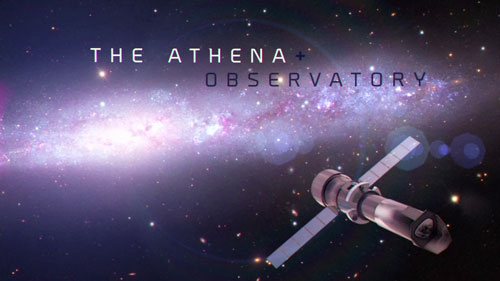
A New View into the Hot and Energetic Universe - ESA selects science theme for its next large mission
At its meeting in Paris today, the Science Programme Committee of the European Space Agency (ESA) selected the 'The Hot and Energetic Universe' as the theme for its next Large mission, which is expected to be launched in 2028.
November 28, 2013 Read more
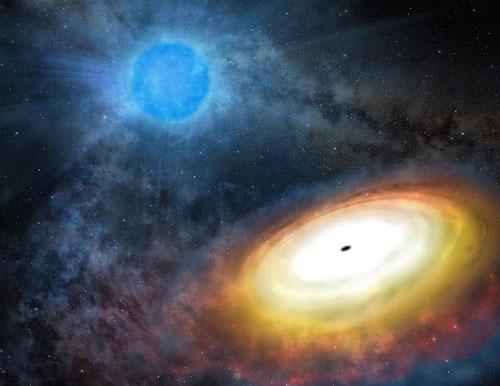
Fast, furious, refined: Smaller black holes can eat plenty
Gemini observations support an unexpected discovery in the galaxy Messier 101. A relatively small black hole (20-30 times the mass of our sun) can sustain a hugely voracious appetite while consuming material in an efficient and tidy manner - something previously thought impossible. The research also affects the long quest for elusive intermediate-mass black holes.
November 27, 2013 Read more
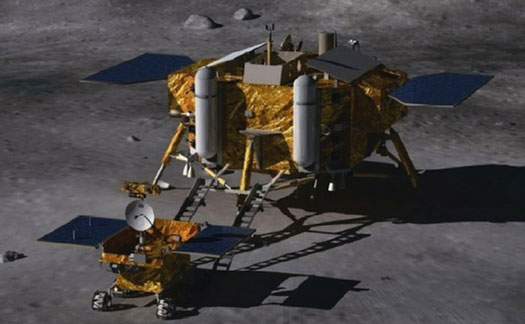
China readies Moon rover mission
China is counting down to the launch of its first lunar rover mission, which will blast off early next month.
November 27, 2013 Read more
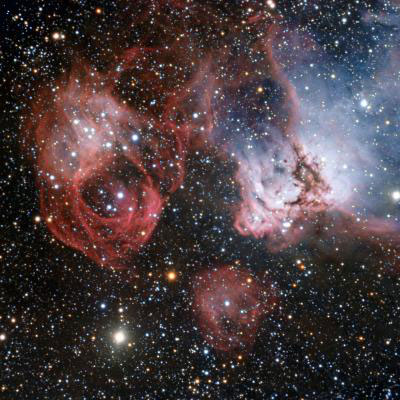
A fiery drama of star birth and death
The Large Magellanic Cloud is one of the closest galaxies to our own. Astronomers have now used the power of ESO's Very Large Telescope to explore one of its lesser known regions. This new image shows clouds of gas and dust where hot new stars are being born and are sculpting their surroundings into odd shapes. But the image also shows the effects of stellar death - filaments created by a supernova explosion.
November 27, 2013 Read more
Grant for the search for quantum space-time
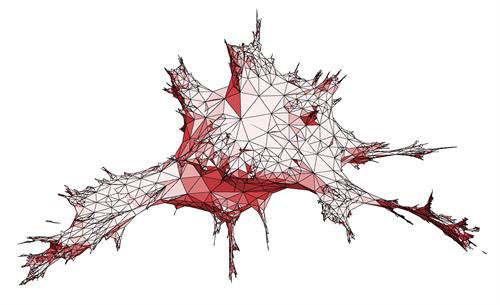
The Dutch Foundation for Fundamental Research on Matter (FOM) has awarded a 1.2 million Euro grant to the research program 'Quantum gravity and the search for quantum spacetime', led by professor Renate Loll of Radboud University Nijmegen.
November 27, 2013 Read more
Figures of Eight and Peanut Shells: How stars move at the centre of the Galaxy
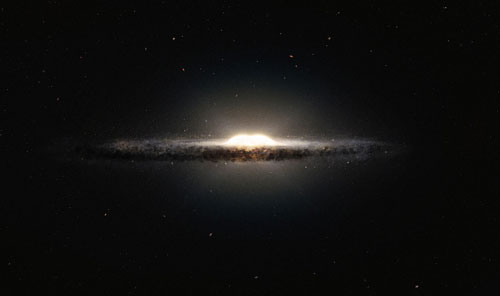
Two months ago astronomers created a new 3D map of stars at the centre of our Galaxy, showing more clearly than ever the bulge at its core. Previous explanations suggested that the stars that form the bulge are in banana-like orbits, but a paper published this week suggests that the stars probably move in peanut-shell or figure of eight-shaped orbits instead.
November 27, 2013 Read more
Search for habitable planets should be more conservative
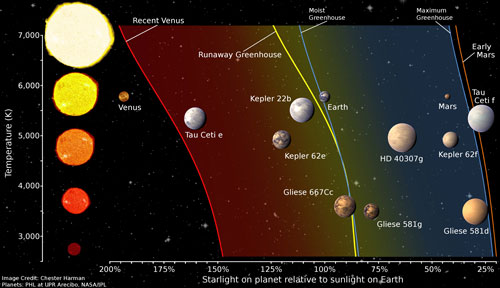
Scientists should take the conservative approach when searching for habitable zones where life-sustaining planets might exist, according to James Kasting, Evan Pugh Professor of Geosciences at Penn State, including when building terrestrial planet finders.
November 26, 2013 Read more