

Space Exploration News – Latest Headlines
 Subscribe to our Space Exploration News feed
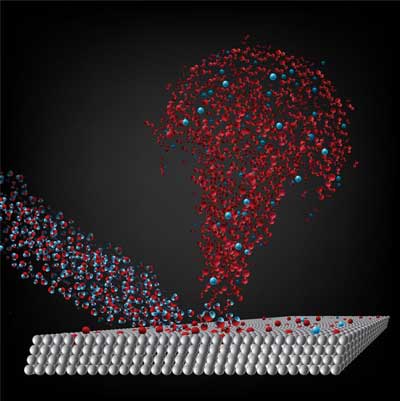
Chemical engineer explains oxygen mystery on comets
A chemical engineer who normally develops new ways to fabricate microprocessors in computers has figured out how to explain a nagging mystery in space - why comets expel oxygen gas, the same gas we humans breathe.
May 8, 2017 Read more
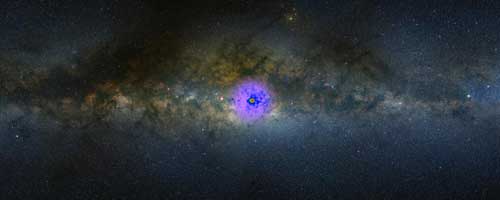
Origin of Milky Way's hypothetical dark matter signal may not be so dark
Galaxy's excessive gamma-ray glow likely comes from pulsars, the remains of collapsed ancient stars.
May 3, 2017 Read more
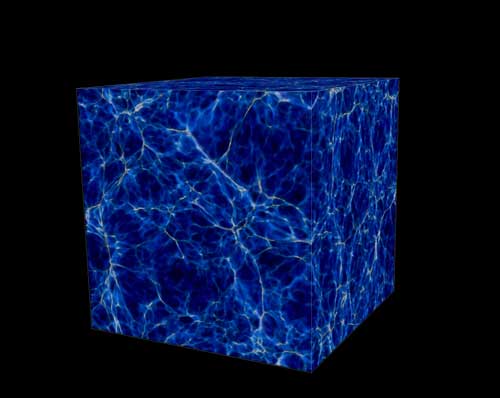
Ripples in the cosmic web
A team of astronomers has made the first measurements of small-scale ripples in primeval hydrogen gas using rare double quasars.
April 27, 2017 Read more
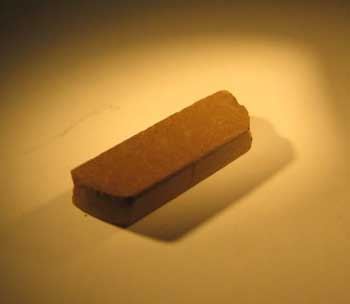
Engineers investigate a simple, no-bake recipe to make bricks from Martian soil
Explorers planning to settle on Mars might be able to turn the planet's red soil into bricks without needing to use an oven or additional ingredients. Instead, they would just need to apply pressure to compact the soil - the equivalent of a blow from a hammer.
April 27, 2017 Read more
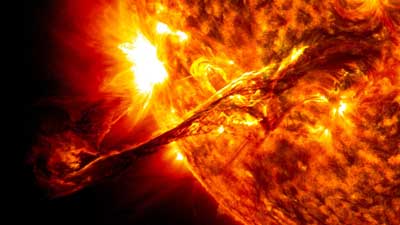
Scientists propose mechanism to describe solar eruptions of all sizes (w/video)
Scientists propose that a universal mechanism can explain the whole spectrum of solar eruptions. They used 3-D computer simulations to demonstrate that a variety of eruptions can theoretically be thought of as the same kind of event, only in different sizes and manifested in different ways.
April 26, 2017 Read more
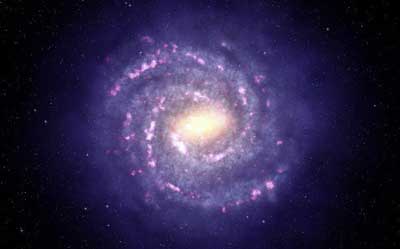
'Ageless' silicon throughout Milky Way may indicate a well-mixed galaxy
New surveys of the Milky Way found no aging trend for the element silicon, a fundamental building block of rocks throughout our solar system. This 'ageless' appearance may mean that the Milky Way is more efficient at mixing its contents than previously thought, thereby masking the telltale signs of chemical aging.
April 26, 2017 Read more
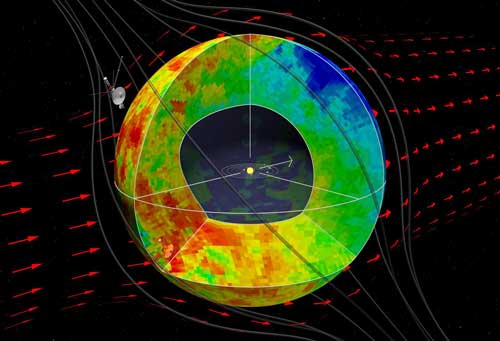
Cassini, Voyager missions suggest new picture of Sun's interaction with galaxy
New data from NASA's Cassini mission, combined with measurements from the two Voyager spacecraft and the Interstellar Boundary Explorer, or IBEX, suggests that our sun and planets are surrounded by a giant, rounded system of magnetic field from the sun - calling into question the alternate view of the solar magnetic fields trailing behind the sun in the shape of a long comet tail.
April 24, 2017 Read more
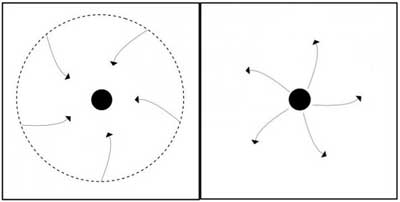
Can we see a singularity?
A team of scientists has found new ways to detect a bare or naked singularity, the most extreme object in the universe.
April 20, 2017 Read more
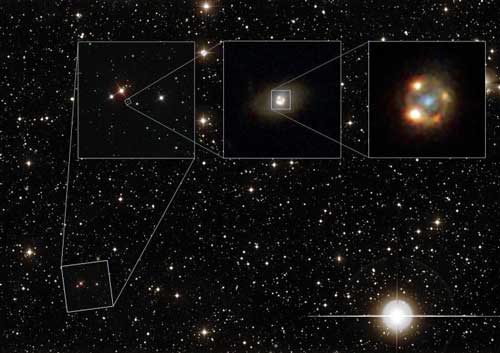
Hubble observes first multiple images of explosive distance indicator
Lensed supernova will give insight into the expansion of the universe.
April 20, 2017 Read more
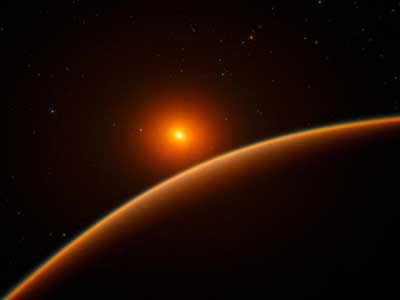
Newly discovered exoplanet may be best candidate in search for signs of life
Transiting rocky super-Earth found in habitable zone of quiet red dwarf star.
April 19, 2017 Read more
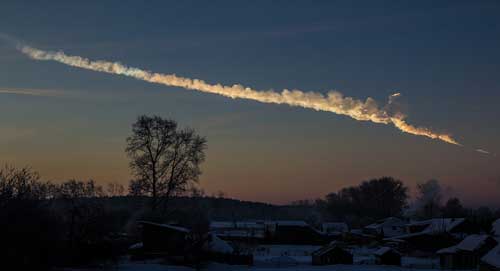
New study ranks hazardous asteroid effects from least to most destructive
Violent winds, shock waves from impacts pose greatest threat to humans.
April 19, 2017 Read more
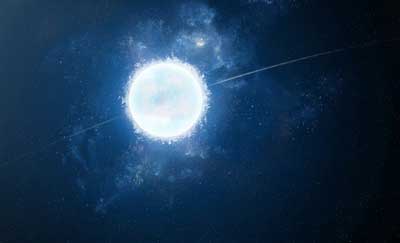
New method can model chemistry in extreme magnetic fields of white dwarfs
Researchers have developed a new methodology to calculate theoretical spectra for atoms and molecules in strong magnetic fields exhibited by up to one-fifth of white dwarfs.
April 19, 2017 Read more
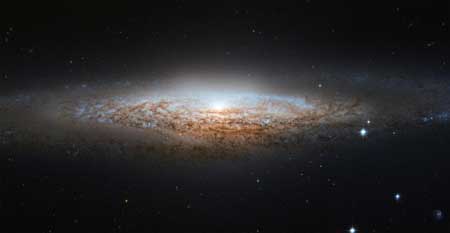
Hydrogen halo lifts the veil of our galactic home
Astronomers find missing mass in the hydrogen halo that surrounds our home galaxy.
April 18, 2017 Read more
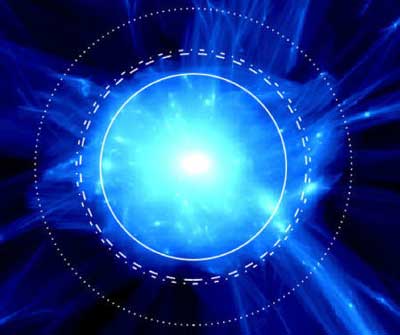
Researchers provide new insight into dark matter halos
New research could shed light on the distribution of one of the most mysterious substances in the universe.
April 17, 2017 Read more
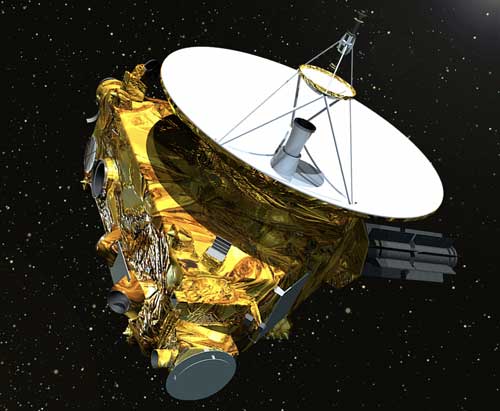
Scientist measures brightness of the universe with NASA's New Horizons spacecraft
Planetary mission offers up-close view of Cosmic Optical Background.
April 11, 2017 Read more
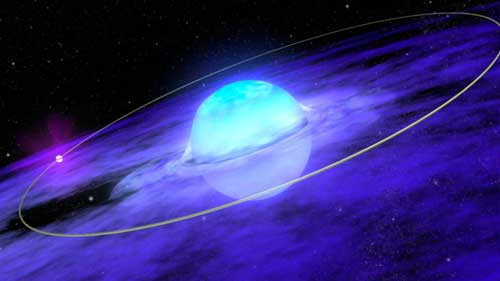
Binary star caught in violent cycle
Massive gouts of x-rays may arise from an unusual conjunction between a neutron star and the disk of matter around its companion.
April 7, 2017 Read more
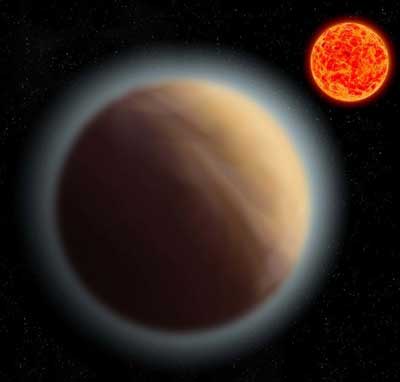
Atmosphere detected around an Earth-like planet
Astronomers have detected an atmosphere around the super-Earth planet GJ 1132b. This marks the first detection of an atmosphere around an Earth-like planet other than Earth itself, and thus is a significant step on the path towards the detection of life outside our Solar System.
April 6, 2017 Read more
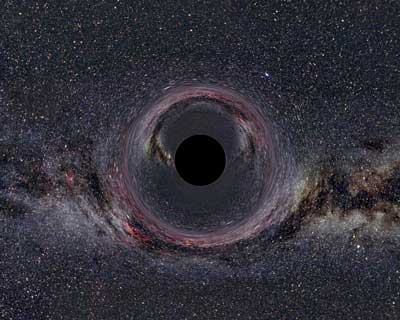
Scientists make progress on unravelling the puzzle of merging black holes
Astrophysicists have made progress in understanding a key mystery of gravitational-wave astrophysics: how two black holes can come together and merge.
April 5, 2017 Read more