

Space Exploration News – Latest Headlines
 Subscribe to our Space Exploration News feed
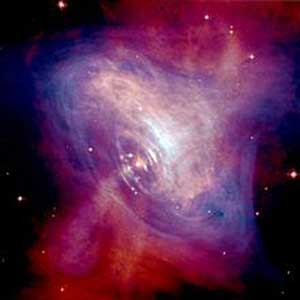
Study calls into question theories on pulsar phenomena
Researchers have cast doubt over established explanations for certain behaviours in pulsars - highly magnetised rotating neutron stars, formed from the remains of supernovae.
July 3, 2017 Read more
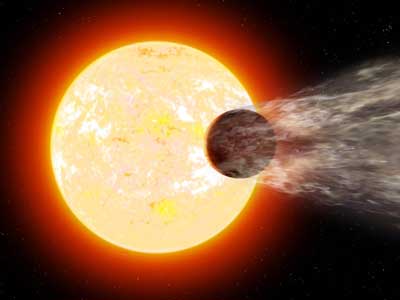
Under pressure - Extreme atmosphere stripping may limit exoplanets' habitability
New models of massive stellar eruptions hint at an extra layer of complexity when considering whether an exoplanet may be habitable or not. Models developed for our own Sun have now been applied to cool stars favoured by exoplanet hunters.
July 3, 2017 Read more
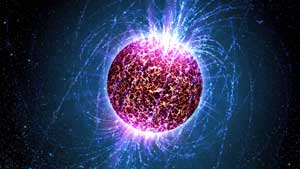
Neutron stars could be our GPS for deep space travel
NASA's Neutron Star Interior Composition Explorer, or NICER will study the exotic astrophysical objects known as neutron stars and examine whether they could be used as deep-space navigation beacons for future generations of spacecraft.
June 30, 2017 Read more
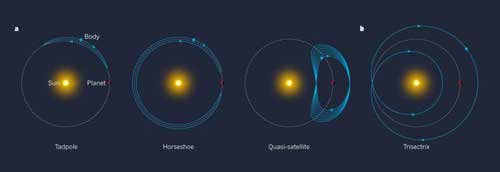
The Bee-Zed asteroid orbits in the opposite direction to planets
The asteroid makes a complete circuit around the Sun every 12 years, corresponding with the orbital period of Jupiter, which shares its orbit but travels in the opposite direction.
June 28, 2017 Read more
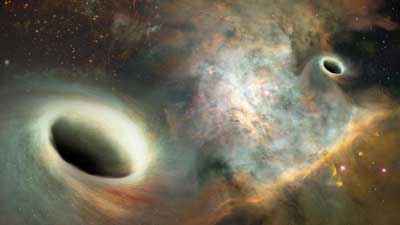
Groundbreaking discovery confirms existence of orbiting supermassive black holes
For the first time ever, astronomers say they've been able to observe and measure the orbital motion between two supermassive black holes hundreds of millions of light years from Earth - a discovery more than a decade in the making.
June 27, 2017 Read more
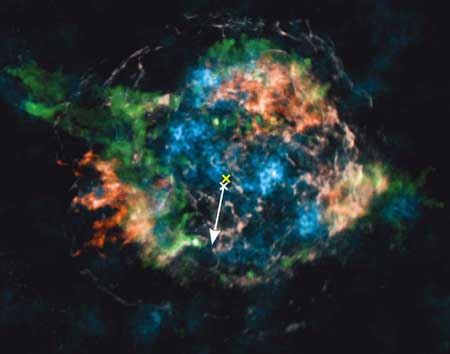
Neutrinos as drivers of supernovae
Radioactive elements in gaseous supernova remnant Cassiopeia A provide glimpses into the explosion of massive stars.
June 26, 2017 Read more
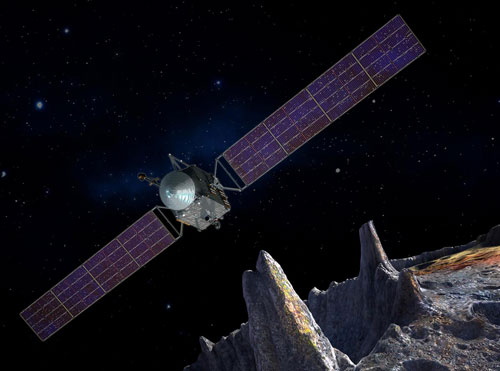
Magnetic memories of a metal world
Research deciphering the hidden magnetic messages encoded in a rare group of meteorites has helped secure nearly half a billion dollars of NASA funding for a journey to their parent asteroid.
June 22, 2017 Read more
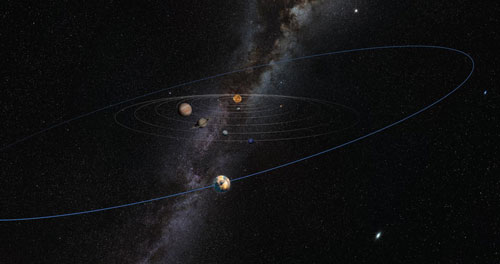
The curious case of the warped Kuiper Belt
The plane of the solar system is warped in the outer reaches of the Kuiper Belt, signaling the presence of an unknown Mars-to-Earth-mass planetary object far beyond Pluto.
June 22, 2017 Read more
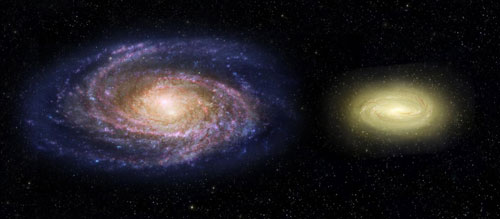
Hubble captures massive dead disk galaxy that challenges theories of galaxy evolution
By combining the power of a 'natural lens' in space with the capability of NASA's Hubble Space Telescope, astronomers made a surprising discovery - the first example of a compact yet massive, fast-spinning, disk-shaped galaxy that stopped making stars only a few billion years after the big bang.
June 21, 2017 Read more
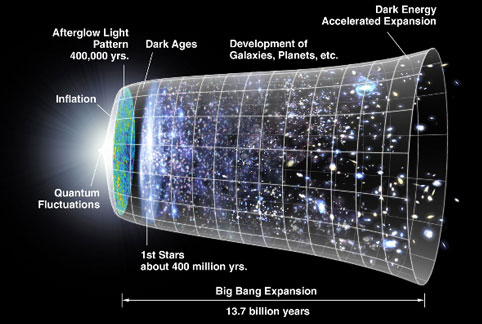
Our expanding universe: Delving into dark energy
Space is expanding ever more rapidly and scientists are researching dark energy to understand why.
June 21, 2017 Read more
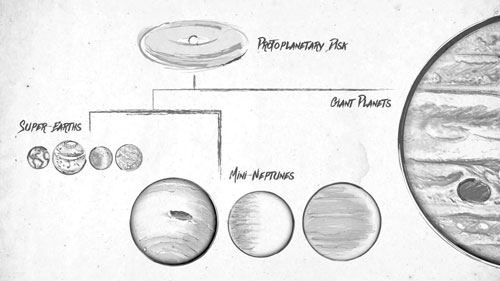
New branch in family tree of exoplanets discovered
In a new study, researchers have classified exoplanets in much the same way that biologists identify new animal species.
June 19, 2017 Read more
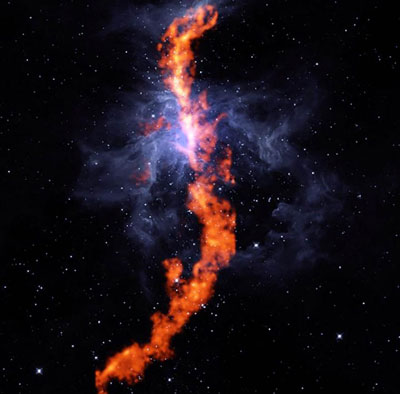
Radio astronomers peer deep into the stellar nursery of the Orion Nebula
Astronomers release image of 50-light-year long filament of star-forming gas in the stellar nursery of the Orion Nebula.
June 15, 2017 Read more
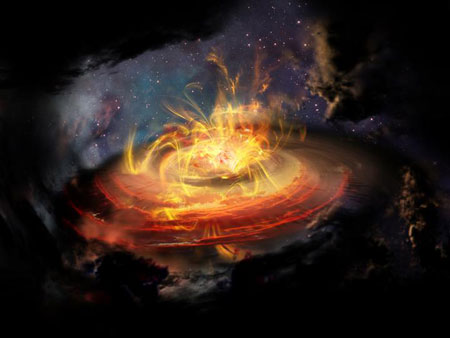
Chaotically magnetized cloud is no place to build a star, or is it?
For decades, scientists thought that the magnetic field lines coursing around newly forming stars were both powerful and unyielding, working like jail bars to corral star-forming material. More recently, astronomers have found tantalizing evidence that large-scale turbulence far from a nascent star can drag magnetic fields around at will.
June 14, 2017 Read more
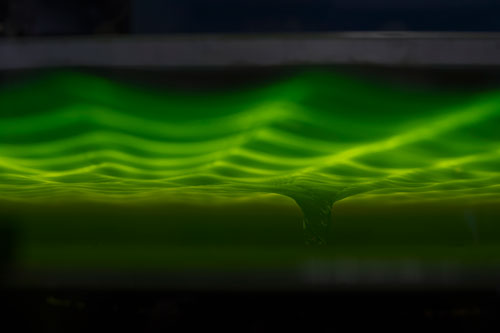
Scientists make waves with black hole research (w/video)
Scientists have made a significant leap forward in understanding the workings of one of the mysteries of the universe. They have successfully simulated the conditions around black holes using a specially designed water bath.
June 14, 2017 Read more
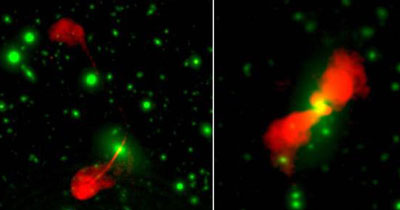
A most detailed view into distant stellar nurseries (w/video)
An international team discovered almost 11,000 galaxies over an area equivalent to about nine full moons. Thanks to these unique data the life cycle of galaxies over the past 13 billion years could be reconstructed.
June 14, 2017 Read more
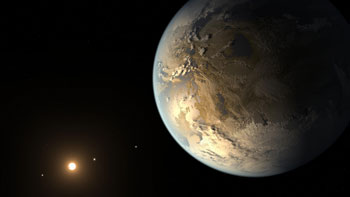
Researchers advocate statistical approach to search for Earth-like planets
A team of astronomers seeks to change the way scientists approach the search for Earth-like planets orbiting stars other than the sun. They favor taking a statistical comparative approach in seeking habitable planets and life beyond the solar system.
June 14, 2017 Read more
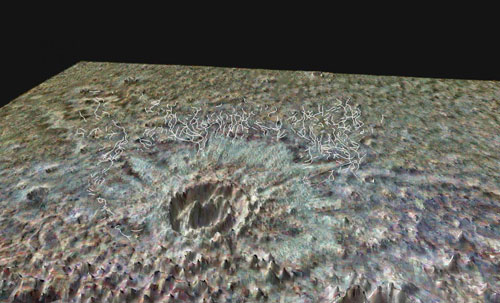
Hot rocks, not warm atmosphere, led to relatively recent water-carved valleys on Mars
New research shows that snow and ice melted by hot impact ejecta could have produced enough water to carve those valleys with no groundwater or heat wave required.
June 13, 2017 Read more
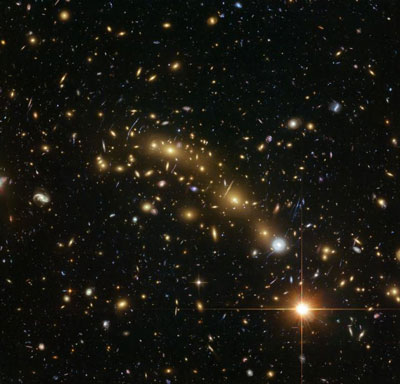
Galaxy alignments traced back 10 billion years
A new study reveals that the most massive galaxies in the universe have been aligned with their surroundings for at least ten billion years. This discovery shows that galaxies, like people, are influenced by their environment from a young age.
June 13, 2017 Read more