

Space Exploration News – Latest Headlines
 Subscribe to our Space Exploration News feed
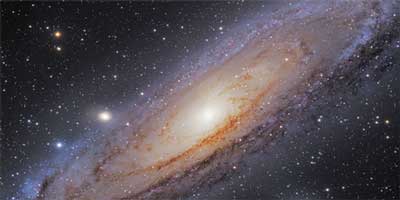
Physicists offer explanation for diverse galaxy rotations
New study invokes intriguing self-interacting dark matter theory.
September 14, 2017 Read more
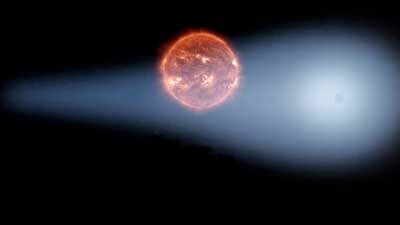
The return of the comet-like exoplanet
Astronomers focused the Hubble Space Telescope on an exoplanet that had already been seen losing its atmosphere, which forms an enormous cloud of hydrogen, giving the planet the appearance of a giant comet.
September 14, 2017 Read more
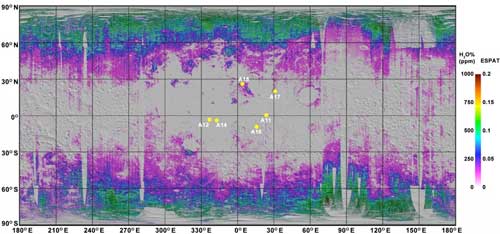
Researchers create first global map of water in Moon's soil
In research that may prove useful to future lunar explorers, scientists have created the first quantitative map of water and its chemical building blocks trapped in the uppermost portion of the Moon's soil.
September 13, 2017 Read more
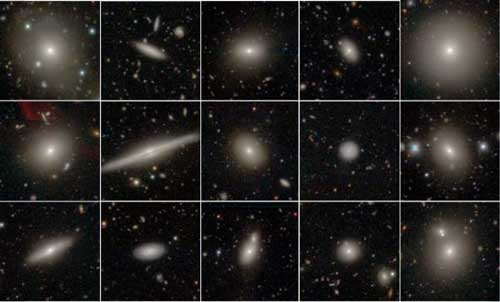
Astronomers spun up by galaxy-shape finding
For the first time astronomers have measured how a galaxy's spin affects its shape.
September 11, 2017 Read more
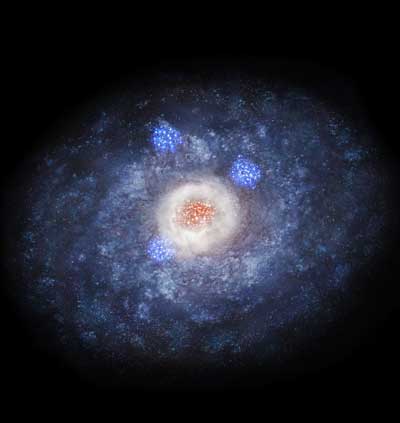
Explosive birth of stars swells galactic cores
Astronomers found that active star formation upswells galaxies, like yeast helps bread rise.
September 11, 2017 Read more
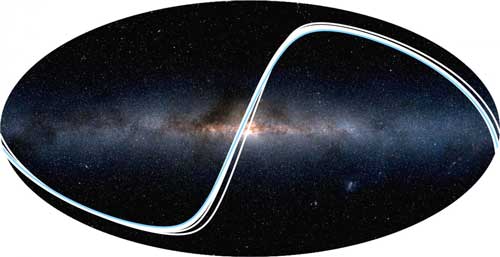
Are we being watched? Tens of other worlds could spot the Earth
A group of scientists have turned exoplanet-hunting on its head, in a study that instead looks at how an alien observer might be able to detect Earth using our own methods.
September 8, 2017 Read more
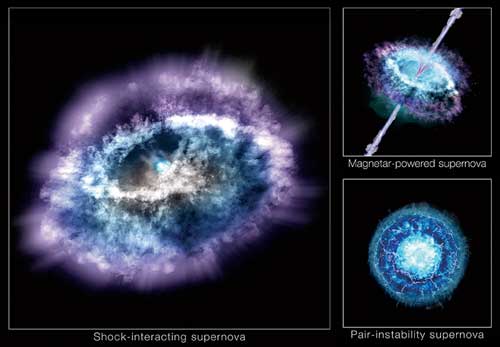
Ultraviolet light from superluminous supernova key to revealing explosion mechanism
An international team of researchers has discovered a way to use observations at ultraviolet (UV) wavelengths to uncover characteristics about superluminous supernovae previously impossible to determine.
September 7, 2017 Read more
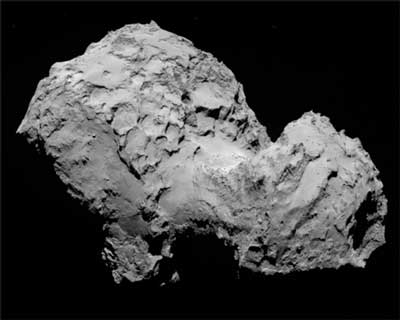
Does the organic material of comets predate our Solar System?
The Rosetta space probe discovered a large amount of organic material in the nucleus of comet 'Chury'. Two researchers advance the theory that this matter has its origin in interstellar space and predates the birth of the Solar System.
September 6, 2017 Read more
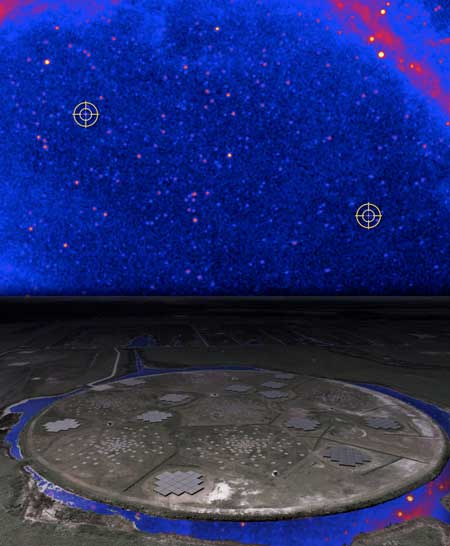
LOFAR radio telescope discovers record-breaking pulsar
Astronomers have discovered two rapidly rotating radio pulsars with the Low-Frequency Array (LOFAR) radio telescope by investigating unknown gamma-ray sources uncovered by NASA's Fermi Gamma-ray Space Telescope.
September 5, 2017 Read more
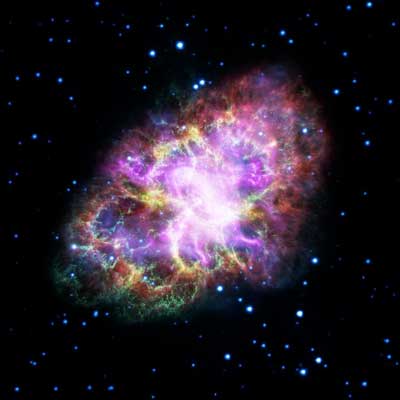
Stellar corpse sheds light on origin of cosmic rays
New research revealed that the entire zoo of electromagnetic radiation streaming from the Crab Nebula has its origin in one population of electrons and must be produced in a different way than scientists have.
September 4, 2017 Read more
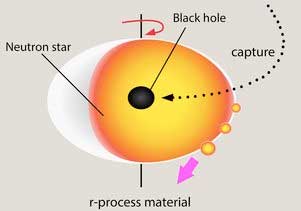
Physicists propose new theories of black holes from the very early universe
'Primordial black holes', believed to have formed shortly after the Big Bang, might explain how gold, platinum and uranium are created.
September 1, 2017 Read more
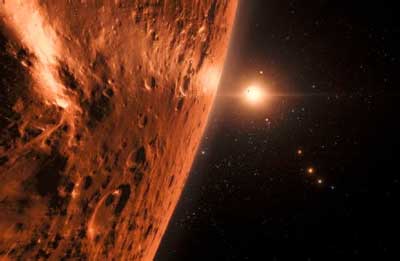
Hubble delivers first hints of possible water content of TRAPPIST-1 planets
There could be water on multiple Earth-sized planets orbiting the recently discovered TRAPPIST-1 dwarf star - making them potentially habitable - according to an international collaboration of researchers.
September 1, 2017 Read more
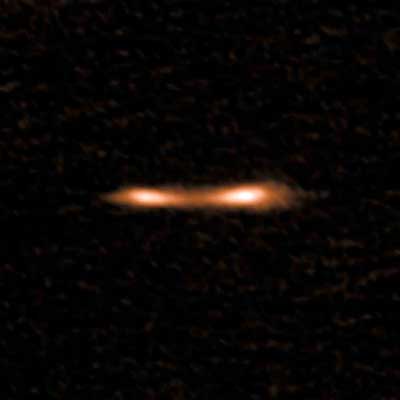
Star-formation 'fuel tanks' found around distant galaxies offer insights into history of universe
Astronomers uncovered star-forming 'fuel tanks' by the discovery of extensive regions of carbon hydride molecules in and around the galaxies.
September 1, 2017 Read more
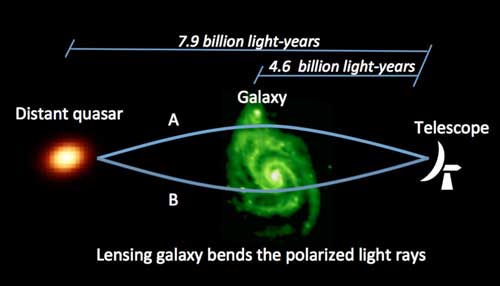
Magnetic fields in distant galaxy are new piece of cosmic puzzle
Astronomers have measured magnetic fields in a galaxy 4.6 billion light-years away - a big clue to understanding how magnetic fields formed and evolved over cosmic time.
August 30, 2017 Read more
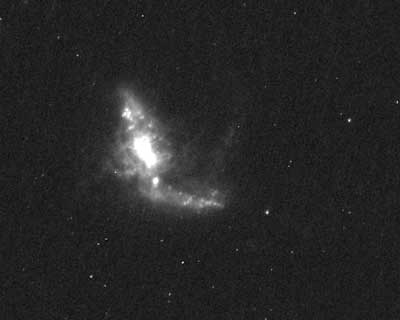
Researchers propose how the universe became filled with light
Black holes may have punctured darkened galaxies, allowing light to escape.
August 30, 2017 Read more
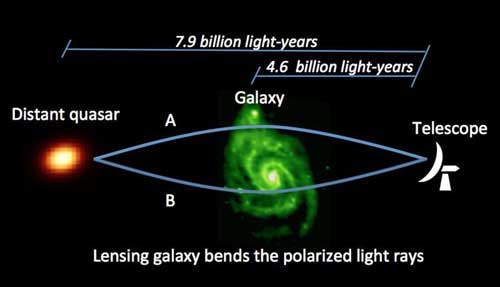
The detection of magnetic fields in a galaxy 5 billion light years away
Magnetic fields play an important role in the physics of the interstellar medium, but they are very difficult to observe at vast distances corresponding to large look-back times in the cosmic history. An international team of astronomers was able to measure the magnetic field in a galaxy beyond the local volume, as seen 4.6 billion light years away at a redshift of 0.439.
August 28, 2017 Read more
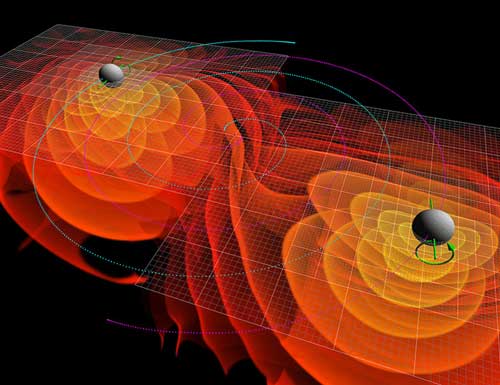
Gravitational waves are helping us crack the mystery of how pairs of black holes form
One of the key questions puzzling astrophysicists since the first gravitational wave detection is: how did these heavy black hole pairs get close enough to merge?
August 23, 2017 Read more
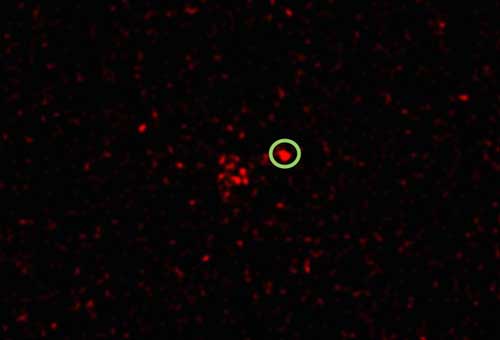
Scientists detect first X-rays from mystery supernovas
Exploding stars carry a cloak of dense material that puzzles astronomers.
August 23, 2017 Read more