

Space Exploration News – Latest Headlines
 Subscribe to our Space Exploration News feed
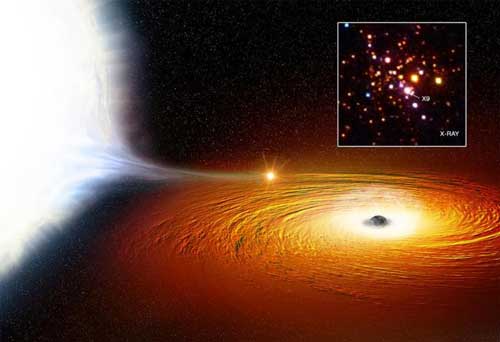
Star in closest orbit ever seen around black hole
Astronomers have found evidence of a star that whips around a likely black hole twice an hour. This could be the tightest orbital dance ever seen by a black hole and a companion star in our own Milky Way galaxy.
March 13, 2017 Read more
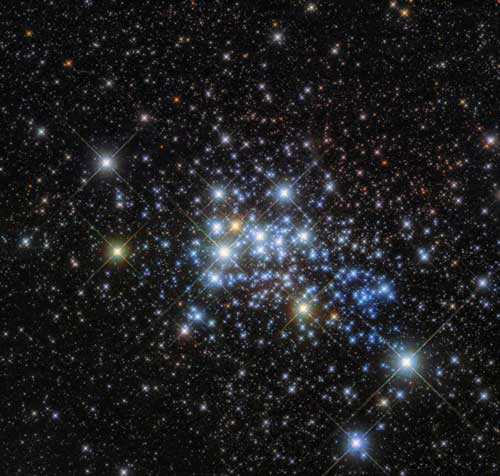
Hubble hones in on a hypergiant's home
A beautiful Hubble image reveals a young super star cluster known as Westerlund 1, only 15,000 light-years away in our Milky Way neighborhood, yet home to one of the largest stars ever discovered.
March 10, 2017 Read more
Iota Orionis: Pulsating beacon of a constellation
Using the world's smallest astronomical satellites, researchers detect the biggest stellar heartbeat ever.
March 8, 2017 Read more
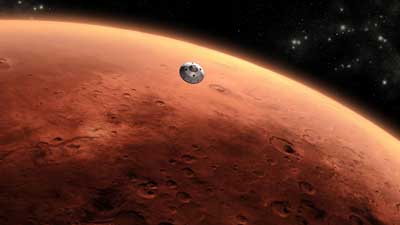
Research uncovers potential health risks of travel to Mars
Researchers are using human stem cells to measure the effects of deep space radiation.
March 8, 2017 Read more
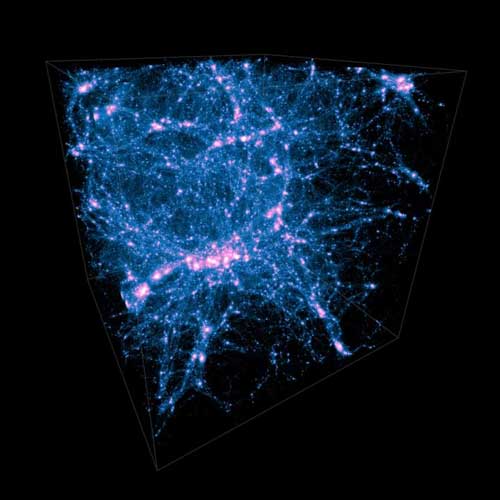
Cosmic environments and their influence in star formation
Astronomers have performed an extensive study of the properties of galaxies within filaments formed at different times during the age of the universe.
March 6, 2017 Read more
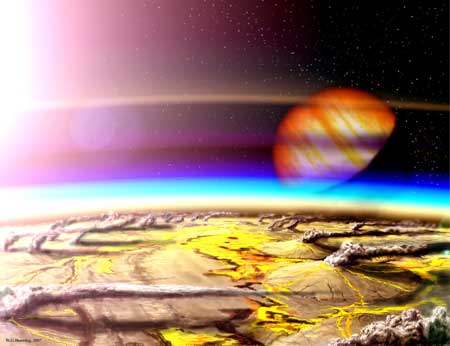
Volcanic hydrogen spurs chances of finding exoplanet life
Astronomers report that hydrogen pouring from volcanic sources on planets throughout the universe could improve the chances of locating life in the cosmos.
March 3, 2017 Read more

Is anything tough enough to survive on Mars?
Scientists recently took a step toward answering a question for the ages: Is there life on Mars? Answer: they can't rule it out.
March 2, 2017 Read more
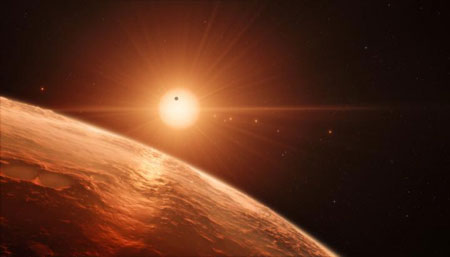
Ultracool dwarf and the seven planets
Temperate earth-sized worlds found in extraordinarily rich planetary system.
February 22, 2017 Read more
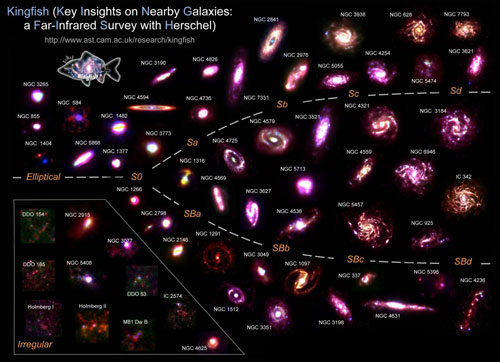
Tune your radio: Galaxies sing when forming stars
Astronomers found the most precise way ever to measure the rate at which stars form in galaxies using their radio emission at 1-10 Gigahertz frequency range.
February 21, 2017 Read more
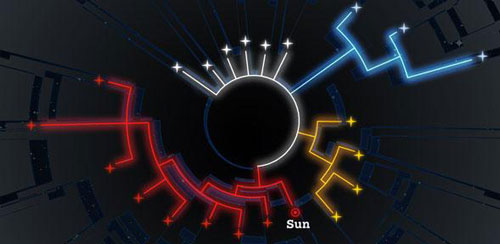
Mapping the family tree of stars
Astronomers are borrowing principles applied in biology and archaeology to build a family tree of the stars in the galaxy. By studying chemical signatures found in the stars, they are piecing together these evolutionary trees looking at how the stars formed and how they are connected to each other.
February 20, 2017 Read more
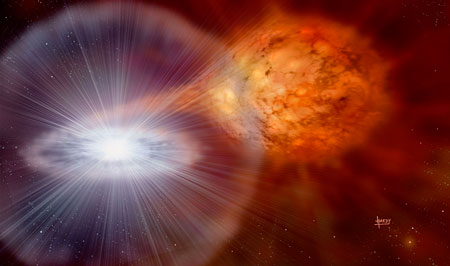
Examining exploding stars through the atomic nucleus
Imagine being able to view microscopic aspects of a classical nova, a massive stellar explosion on the surface of a white dwarf star (about as big as Earth), in a laboratory rather than from afar via a telescope.
February 20, 2017 Read more
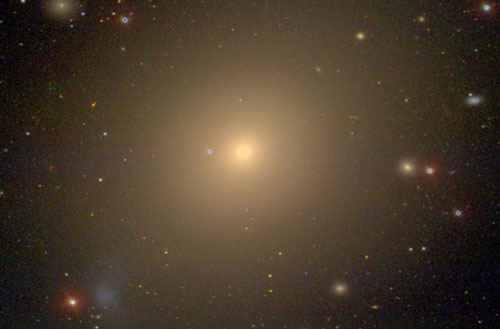
Research team finds radial acceleration relation in all common types of galaxies
The distribution of normal matter precisely determines gravitational acceleration in all common types of galaxies.
February 17, 2017 Read more
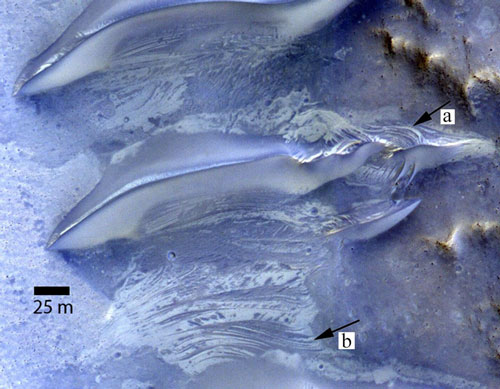
Researchers pinpoint watery past on Mars
Researchers have discovered a patch of land in an ancient valley on Mars that appears to have been flooded by water in the not-too-distant past. In doing so, they have pinpointed a prime target to begin searching for past life forms on the Red Planet.
February 15, 2017 Read more
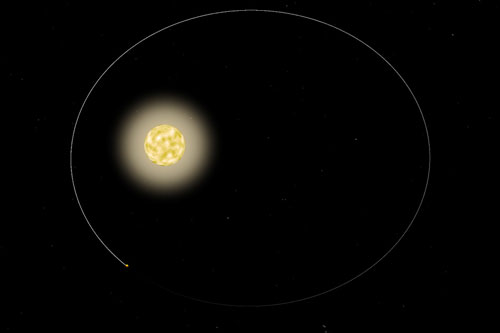
The heart of a far-off star beats for its planet
For the first time, astronomers have observed a star pulsing in response to its orbiting planet.
February 14, 2017 Read more
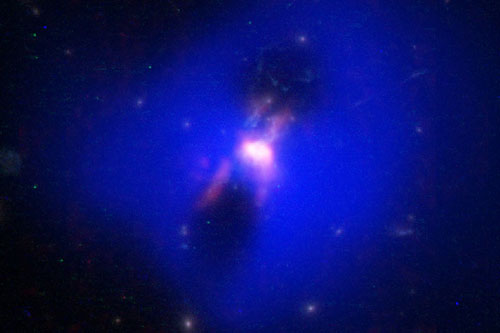
Self-made stars
Astronomers observe black hole producing cold, star-making fuel from hot plasma jets and bubbles.
February 14, 2017 Read more
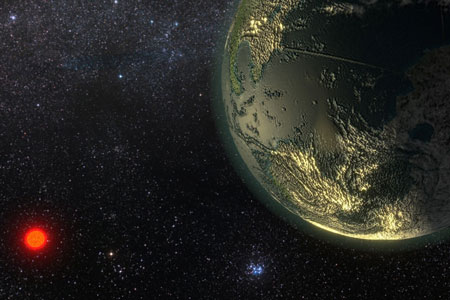
Scientists make huge dataset of nearby stars available to public
Users can search database of 1,600 stars to find signs of new exoplanets.
February 13, 2017 Read more
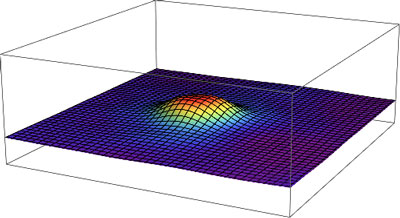
Ancient signals from the early universe
For the first time, theoretical physicists have calculated the signal of specific gravitational wave sources that emerged fractions of a second after the Big Bang.
February 10, 2017 Read more
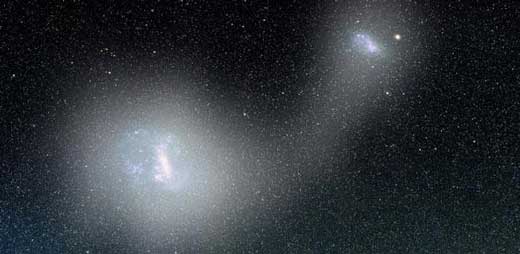
A bridge of stars connects two dwarf galaxies
The Magellanic Clouds, the two largest satellite galaxies of the Milky Way, appear to be connected by a bridge stretching across 43,000 light years, according to an international team of astronomers.
February 9, 2017 Read more