

Space Exploration News – Latest Headlines
 Subscribe to our Space Exploration News feed
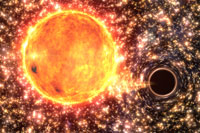
Black holes growing faster than expected
Astronomers from Swinburne University of Technology have discovered how supermassive black holes grow - and it's not what was expected.
January 17, 2013 Read more
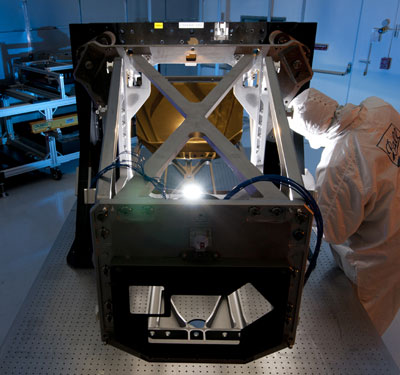
NASA'S Webb telescope team completes optical milestone
Engineers working on NASA's James Webb Space Telescope met another milestone recently with they completed performance testing on the observatory's aft-optics subsystem.
January 16, 2013 Read more
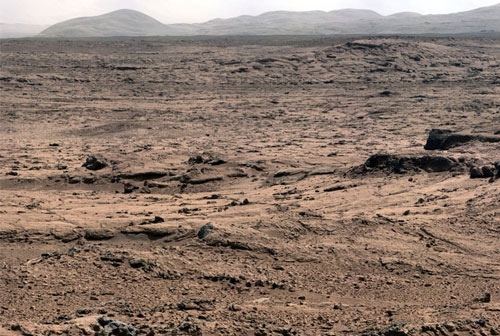
ChemCam follows the 'Yellowknife Road' to Martian wet area
Researchers have tracked a trail of minerals that point to the prior presence of water at the Curiosity rover site on Mars.
January 16, 2013 Read more
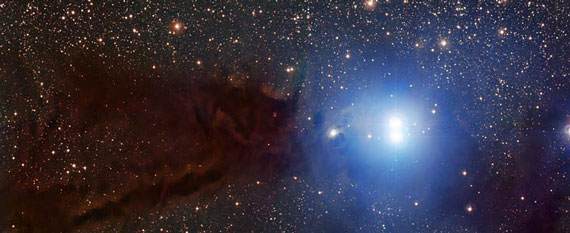
Light from the darkness
An evocative new image from ESO shows a dark cloud where new stars are forming, along with a cluster of brilliant stars that have already emerged from their dusty stellar nursery.
January 16, 2013 Read more
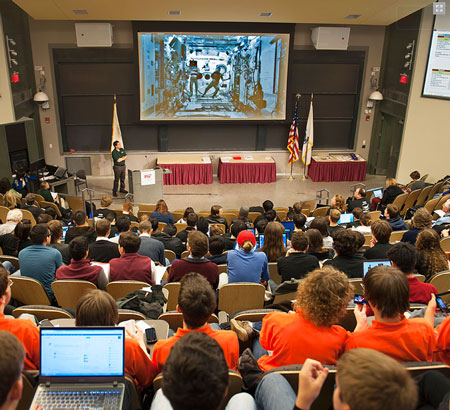
Students take control of satellites on the International Space Station
200 high-school students participate in MIT's annual Zero Robotics competition.
January 15, 2013 Read more
NASA issues 2013 call for visionary advanced technology concepts
NASA's Space Technology Program is looking for visionary advanced concepts. This year's annual call for NASA's Innovative Advanced Concepts Program (NIAC) is seeking proposals for revolutionary concepts with the potential to transform future aerospace missions. Proposed concepts should enable new missions or significantly improve current approaches to achieve aerospace objectives.
January 15, 2013 Read more
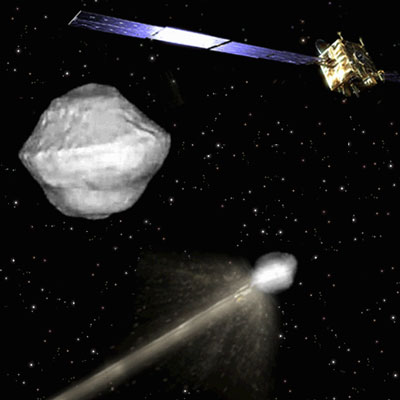
Asteroid deflection mission seeks smashing ideas
ESA is appealing for research ideas to help guide the development of a US-European asteroid deflection mission now under study.
January 15, 2013 Read more
Neon lights up exploding stars
An international team of nuclear astrophysicists has shed new light on the explosive stellar events known as novae. The team of scientists measured the nuclear structure of the radioactive neon produced through this process in unprecedented detail.
January 15, 2013 Read more
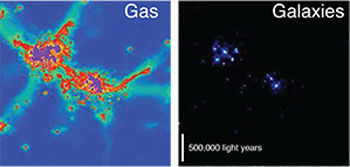
Astronomers find massive supply of gas around modern galaxies
Galaxies have a voracious appetite for fuel - in this case, fresh gas - but astronomers have had difficulty finding the pristine gas that should be falling onto galaxies. Now, scientists have provided direct empirical evidence for these gas flows using new observations from the Hubble Space Telescope.
January 14, 2013 Read more
Dynamic, dark energy in an accelerating universe
If dark energy did not exist, the gravitational pull exerted by matter would slow down the expansion of the universe, but observations have concluded that the opposite is the case.Dark energy is what makes the universe expand in an accelerating way.
January 14, 2013 Read more
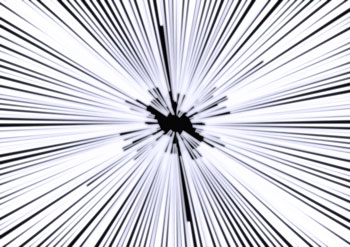
Star Wars: What would hyperspace travel really look like?
The sight of the Millennium Falcon making the "jump to lightspeed" is one of the most iconic images from the Star Wars trilogy. But University of Leicester students have calculated that - in reality - Han, Luke and Leia would not see the light from stars stretching past the ship as we are shown in the movies.
January 14, 2013 Read more
Nearby dwarf galaxy and possible protogalaxy discovered
Peering deep into the dim edges of a distorted pinwheel galaxy in the constellation Ursa Major (the Great Bear), astronomers at Case Western Reserve University and their colleagues have discovered a faint dwarf galaxy and another possible young dwarf caught before it had a chance to form any stars.
January 11, 2013 Read more
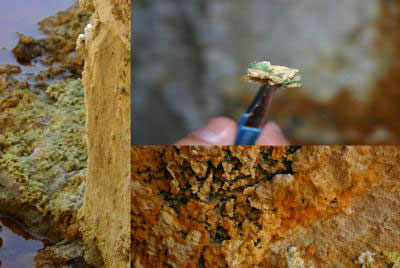
The saline hiding places for bacteria in Rio Tinto could be like those on Mars
Researchers at the Centre of Astrobiology have identified microorganisms that live inside salt deposits in the acidic and ferrous environment of the Tinto River in Huelva, Spain. The extreme conditions of these microniches appear to be similar to those of the salt deposits on Mars and Jupiter's moon, Europa.
January 11, 2013 Read more
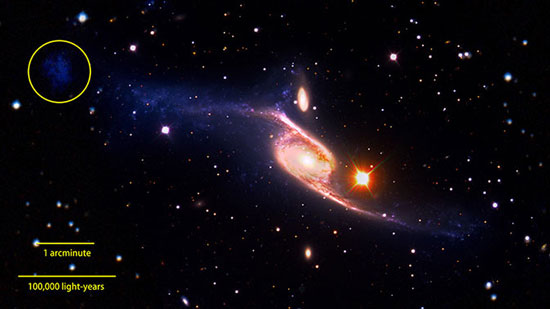
NASA's GALEX reveals the largest-known spiral galaxy
The spectacular barred spiral galaxy NGC 6872 has ranked among the biggest stellar systems for decades. Now a team of astronomers from the United States, Chile and Brazil has crowned it the largest-known spiral, based on archival data from NASA's Galaxy Evolution Explorer (GALEX) mission.
January 11, 2013 Read more
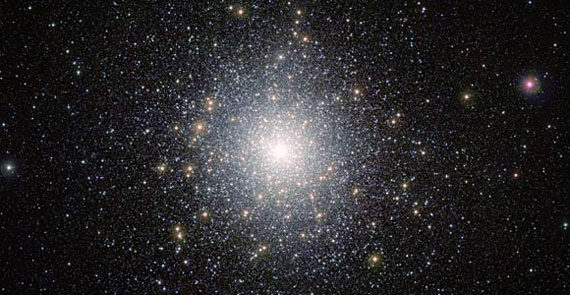
A jumble of exotic stars
A new infrared image from ESO's VISTA telescope shows the globular cluster 47 Tucanae in striking detail. This cluster contains millions of stars, and there are many nestled at its core that are exotic and display unusual properties.
January 10, 2013 Read more
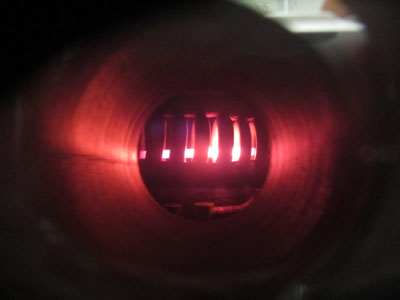
NASA researchers studying advanced nuclear rocket technologies
Advanced propulsion researchers at NASA are a step closer to solving the challenge of safely sending human explorers to Mars and other solar system destinations.
January 10, 2013 Read more
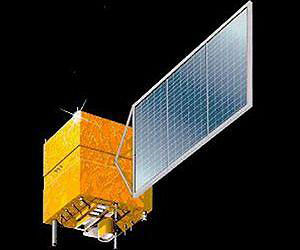
China no longer reliant on satellite image imports
China's first high-resolution, stereo mapping satellite Ziyuan III meets international standards, ridding the country of its reliance on imports of satellite images.
January 10, 2013 Read more
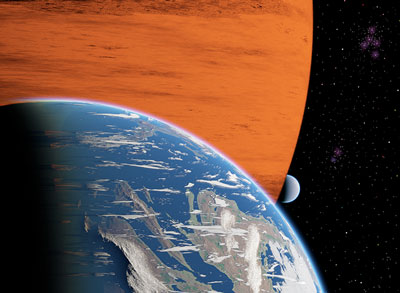
Life possible on extrasolar moons
In their search for habitable worlds, astronomers have started to consider exomoons, or those likely orbiting planets outside the solar system. In a new study, a pair of researchers has found that exomoons are just as likely to support life as exoplanets.
January 10, 2013 Read more