

Space Exploration News – Latest Headlines
 Subscribe to our Space Exploration News feed
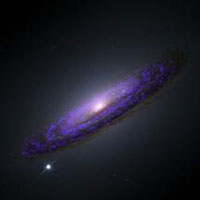
Gas promises bumper black hole 'weigh-in'
A new way of measuring the mass of supermassive black holes could revolutionise our understanding of how they form and help to shape galaxies.
January 31, 2013 Read more
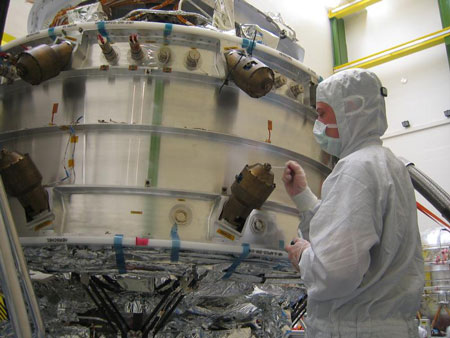
Microbes - possible hitchhikers to space?
First public collection of spacecraft-associated bacteria founded by the European Space Agency.
January 31, 2013 Read more
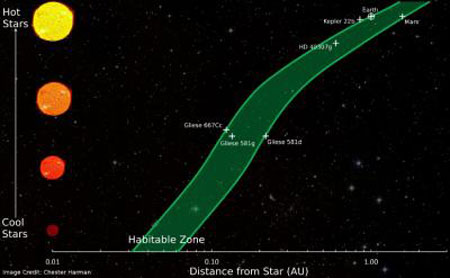
Researchers develop model for identifying habitable zones around star
Using the latest data, the Penn State Department of Geosciences team has developed an updated model for determining whether discovered planets fall within a habitable zone.
January 30, 2013 Read more
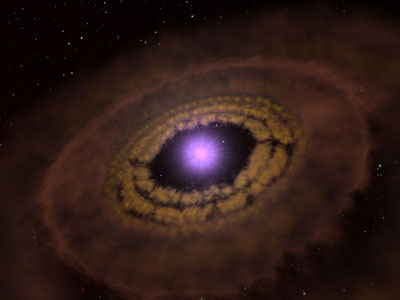
In the planetary nursery
Astronomers determine the mass of the disk of gas and dust surrounding the star TW Hydrae.
January 30, 2013 Read more
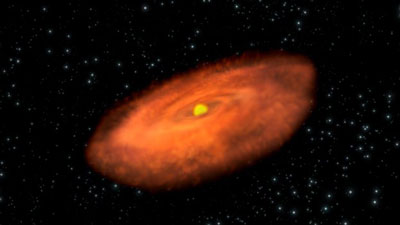
Herschel finds star possibly making planets past its prime
A star thought to have passed the age at which it can form planets may in fact be creating new worlds. The disk of material surrounding the surprising star called TW Hydrae may be massive enough to make even more planets than we have in our own solar system.
January 30, 2013 Read more
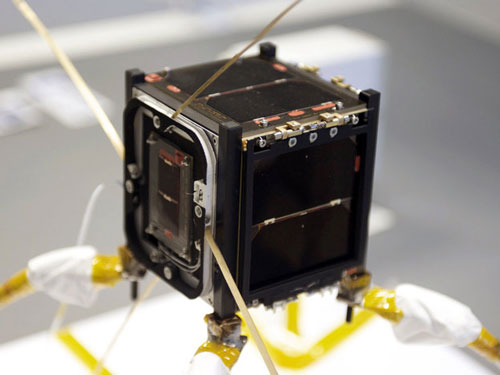
ESA is looking for the best student-built CubeSats to launch into space
They fit in your hand, weigh no more than a bag of sugar, yet fly in space and perform experiments. They are CubeSats, a new generation of miniature satellites. Now, ESA is looking for the best student-built CubeSats to launch into space.
January 30, 2013 Read more
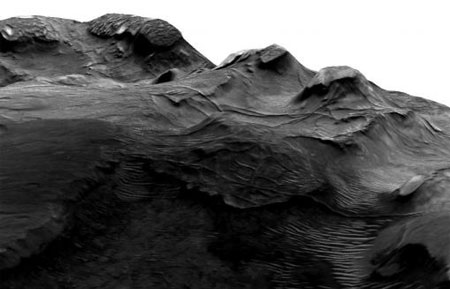
Fossilized conduits suggest water flowed beneath Martian surface
Networks of narrow ridges found in impact craters on Mars appear to be the fossilized remnants of underground cracks through which water once flowed, according to a new analysis by researchers from Brown University.
January 29, 2013 Read more
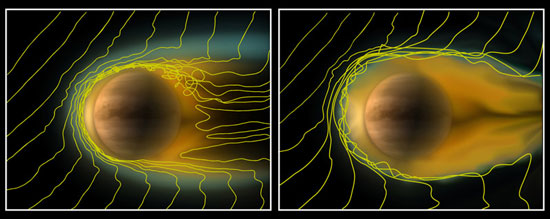
The tail of Venus
When the solar wind nearly breaks off, our neighbour's ionosphere expands into space.
January 29, 2013 Read more
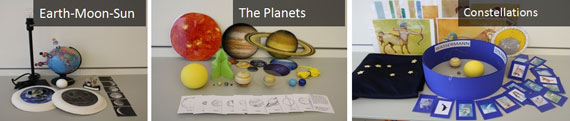
Universe in a Box: bringing astronomy to the classroom
The UNAWE (Universe Awareness) project is developing "Universe in a Box", a low-cost activity kit to help teachers introduce astronomy to their students. It provides both practical activities and the materials needed.
January 29, 2013 Read more
Satellite visualization Tool for High-Resolution Observation Review (THOR) now a web-based application
Initially only operable from a desktop computer, with the approach outlined in the study, THOR is now accessible online from NASA's Precipitation Processing System website. This allows researchers to remotely examine the 15-year archive of Tropical Rainfall Measuring Mission (TRMM) satellite data.
January 29, 2013 Read more
NASA solicits ideas for International Space Station research
NASA wants to know how you can improve the International Space Station as a technology test bed.
January 28, 2013 Read more
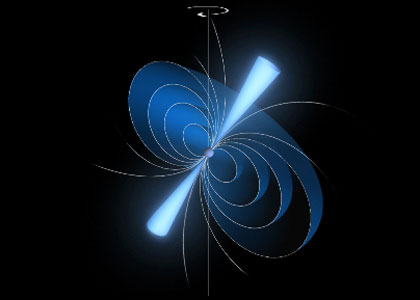
Chameleon star baffles astronomers
Pulsars - tiny spinning stars, heavier than the sun and smaller than a city - have puzzled scientists since they were discovered in 1967. Now, new observations by an international team make these bizarre stars even more puzzling.
January 25, 2013 Read more
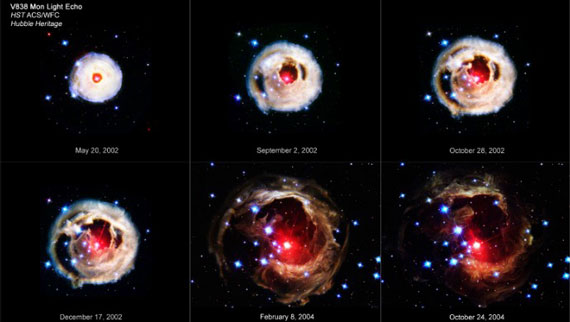
Red explosions: The secret life of binary stars is revealed
A University of Alberta professor has revealed the workings of a celestial event involving binary stars that produce an explosion so powerful its luminosity ranks close to that of a supernova, an exploding star.
January 24, 2013 Read more
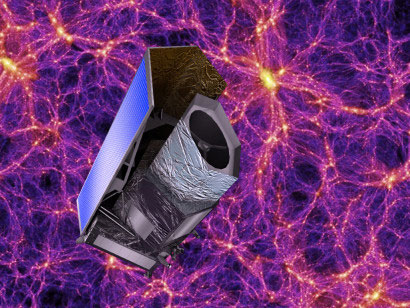
NASA joins ESA's 'Dark Universe' mission
NASA has joined the European Space Agency's (ESA's) Euclid mission, a space telescope designed to investigate the cosmological mysteries of dark matter and dark energy.
January 24, 2013 Read more
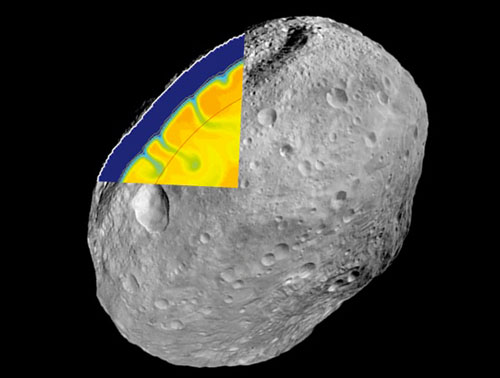
Asteroid with active past
While studying a meteorite from Vesta, geoscientists found evidence that planet-like dynamic processes also occurred in the asteroid. Simulations by scientist Gregor Golabek from ETH Zurich confirmed this assumption.
January 24, 2013 Read more
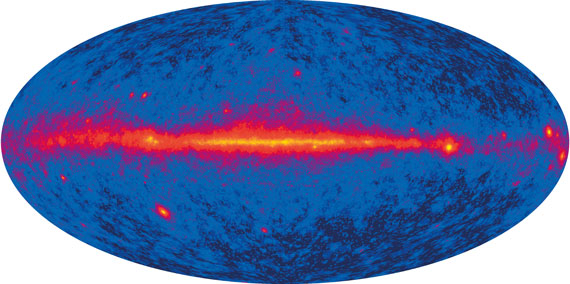
Revolutionary theory of dark matter
The universe abounds with dark matter. Nobody knows what it consists of. Physicists have now launched a very hard mathematical explanation that could solve the mystery once and for all.
January 24, 2013 Read more
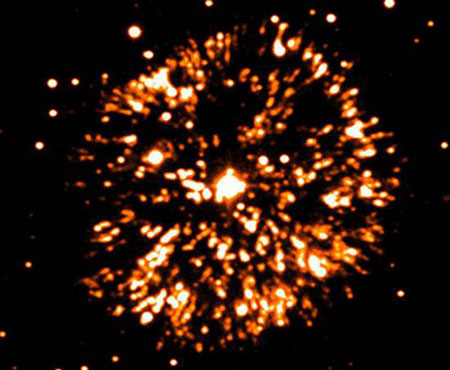
The 3D fireworks of a star
In 1901 the star GK Persei gave off a powerful explosion that has not stopped growing and astonishing ever since. Now a team of Spanish and Estonian astronomers has reconstructed the journey of the emitted gas in 3D which, contrary to predictions, has hardly slowed down its speed of up to 1,000 km/s after all this time.
January 24, 2013 Read more
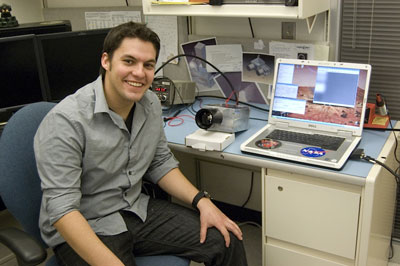
Grad student to build infrared camera for nanosatellite space mission
Michael Veto, a third-year graduate student in the School of Earth and Space Exploration (SESE) at Arizona State University, has been chosen to build an infrared and visible light camera system that will launch on a space satellite.
January 24, 2013 Read more