

Space Exploration News – Latest Headlines
 Subscribe to our Space Exploration News feed
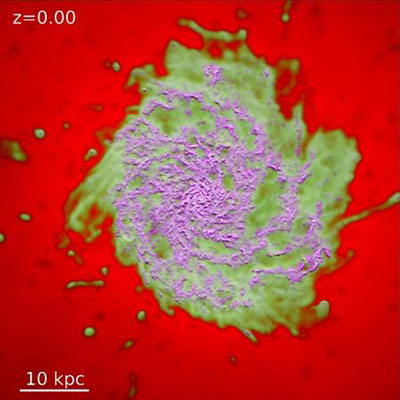
Galaxies on FIRE: Star feedback results in less massive galaxies
For decades, astrophysicists have encountered a contradiction: although many galactic-wind models - simulations of how matter is distributed in our universe - predict that most matter exists in stars at the center of galaxies, in actuality these stars account for less than 10 percent of the matter in the universe. New simulations offer insight into this mismatch between the models and reality: energy released by individual stars can have a substantial effect on where matter ends up.
January 23, 2014 Read more
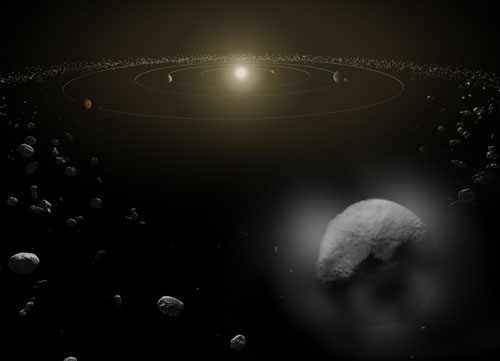
Herschel telescope detects water on dwarf planet
Scientists using the Herschel space observatory have made the first definitive detection of water vapor on the largest and roundest object in the asteroid belt, Ceres.
January 22, 2014 Read more
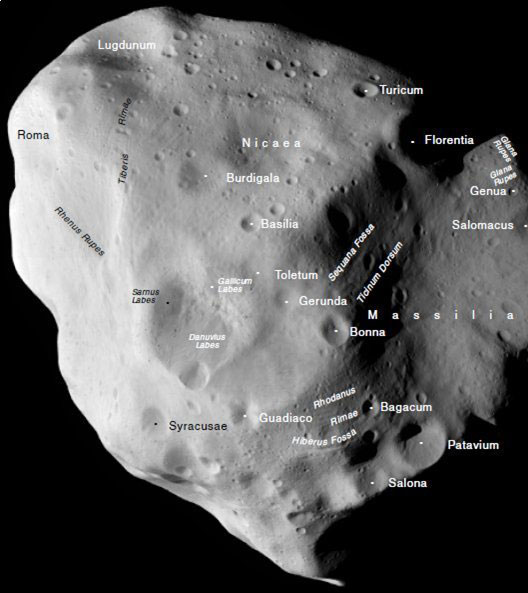
Rosetta's eyes
The development and construction of the OSIRIS onboard camera system.
January 22, 2014 Read more
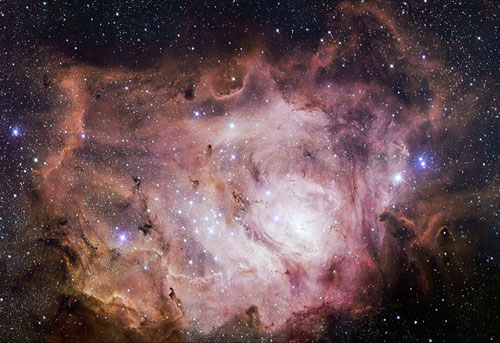
Sneak preview of Survey Telescope treasure trove
The VLT Survey Telescope (VST) at ESO's Paranal Observatory in Chile has captured this richly detailed new image of the Lagoon Nebula. This giant cloud of gas and dust is creating intensely bright young stars, and is home to young stellar clusters. This image is a tiny part of just one of eleven public surveys of the sky now in progress using ESO telescopes. Together these are providing a vast legacy of publicly available data for the global astronomical community.
January 22, 2014 Read more
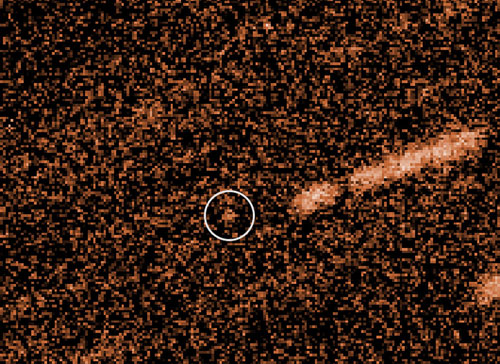
ESA/ESO collaboration successfully tracks its first potentially threatening Near-Earth Object
The first Near-Earth Object (NEO) recovery campaign has been successfully carried out by a new collaboration between the European Space Agency (ESA) and ESO. Up to now the asteroid 2009 FD had been ranked among the top five objects in a list of the most dangerous objects, but new observations with ESO's Very Large Telescope (VLT) have now shown that it is far less likely to hit the Earth than had been feared.
January 21, 2014 Read more
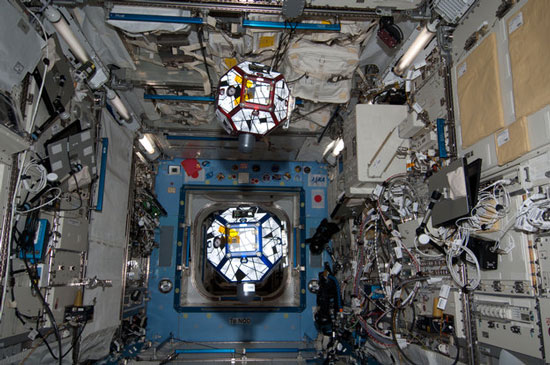
Space droids battle to save Earth from comet
A comet heading towards Earth threatens humanity's existence - that was the virtual scenario of this year's Zero Robotics tournament. Secondary-school students from across Europe controlled miniature satellites on the International Space Station in a competition to save our planet.
January 21, 2014 Read more
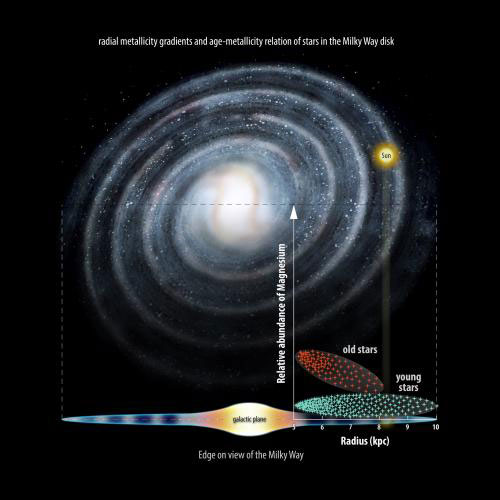
Milky Way may have formed 'inside-out': Gaia provides new insight into Galactic evolution
Research on first data release from Gaia-ESO project suggests the Milky Way formed by expanding out from the centre, and reveals new insights into the way our Galaxy was assembled.
January 20, 2014 Read more
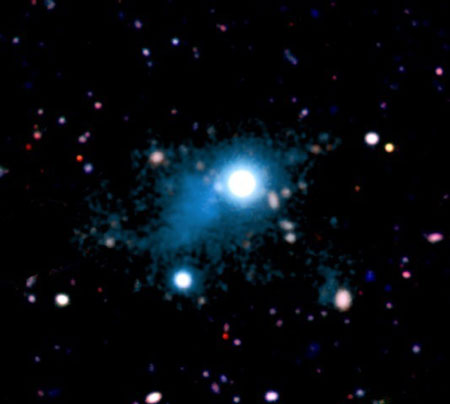
Black hole illuminates cosmic web
For the first time, astronomers capture image of the large-scale filamentary structures in space.
January 19, 2014 Read more
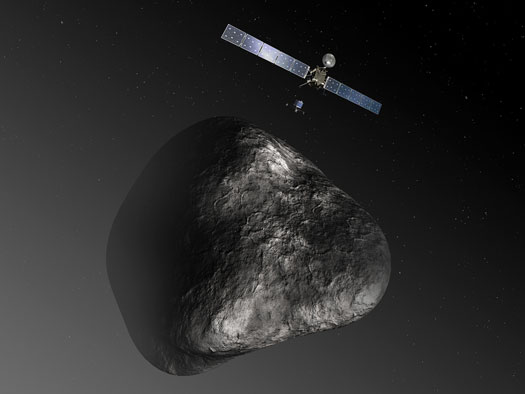
Rosetta's final sprint to the comet
After a ten-year journey and a long, deep sleep the Rosetta space probe will be awoken on 20 January. The vehicle then starts the last leg of its journey which will lead it to the 67P/Churyumov-Gerasimenko comet. The Philae lander is to descend to the comet's surface in November.
January 17, 2014 Read more
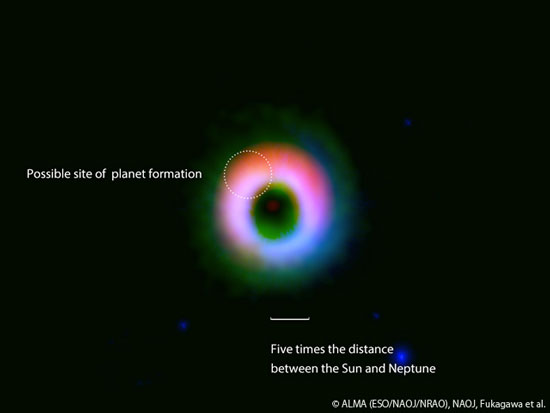
ALMA discovers a formation site of a giant planetary system
A team of Japanese astronomers has obtained a firm evidence of formatino of a giant planetary system around a young star by the observations with the Atacama Large Millimeter/submillimeter Array (ALMA). This result has a transformative impact on the theories of planet formation and gives us a clue to the origin of a wide variety of planetary systems.
January 17, 2014 Read more
Chang'e-3 probe sets out on new missions
The Chang'e-3 lunar probe has started its long-term scientific missions and will have its durability tested when it continues lunar surface surveys, sources with the Beijing Aerospace Control Center said on Thursday.
January 17, 2014 Read more
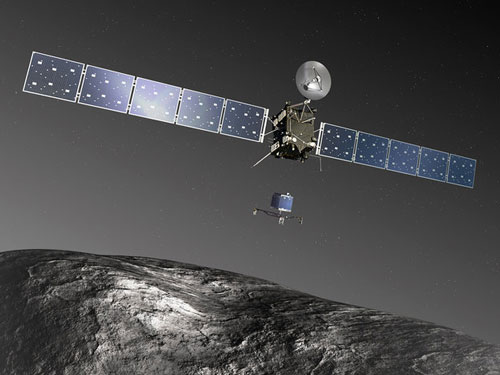
'Standing on a Comet': Rosetta mission will contribute to space weather research
A comet-bound spacecraft that's been in sleep mode for more than two years is scheduled to wake up on the morning of Jan. 20 - beginning the home stretch of its decade-long journey to a mile-wide ball of rock, dust and ice.
January 16, 2014 Read more
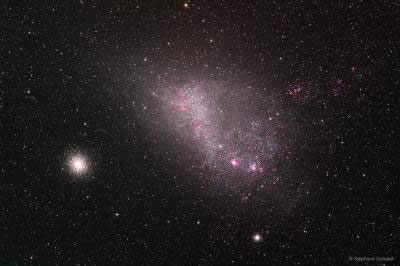
Space station MAXI-mizing our understanding of the universe
The Monitor of All-sky X-ray Image (MAXI) collects data that help researchers discover, study and understand the physics behind the lifecycle of our universe. MAXI was key in two recent publications sharing results that make strides in advancing astrophysics.
January 16, 2014 Read more
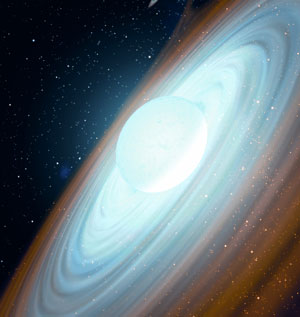
Astronomoers discover the first black hole orbiting a 'spinning' star
Spanish scientists have discovered the first binary system ever known to consist of a black hole and a 'spinning' star - or more accurately, a Be-type star. Although predicted by theory, none had previously been found.
January 16, 2014 Read more
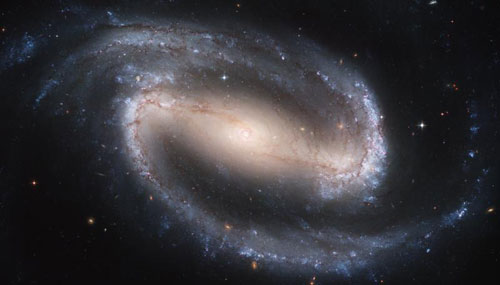
Hubble and Galaxy Zoo find Bars and baby galaxies don't mix
Harnessing the power of both the Hubble Space Telescope and the citizen science project Galaxy Zoo, scientists from the University of Portsmouth have found that bar-shaped features in spiral galaxies accelerate the galaxy aging process.
January 16, 2014 Read more
FOM awards grant for fundamental research on black holes
Physicists at Radboud University Nijmegen receive 400.000 euros from FOM, the Dutch foundation for fundamental research on matter, to address fundamental questions about black holes.
January 14, 2014 Read more
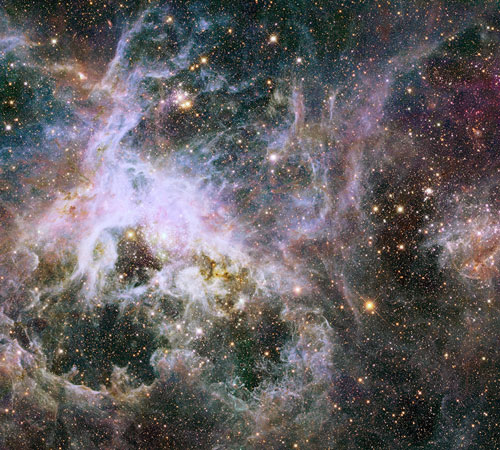
Unravelling the web of a cosmic creeply-crawly
This new Hubble image is the best-ever view of a cosmic creepy-crawly known as the Tarantula Nebula, a region full of star clusters, glowing gas, and dark dust. Astronomers are exploring and mapping this nebula as part of the Hubble Tarantula Treasury Project, in a bid to try to understand its starry anatomy.
January 9, 2014 Read more
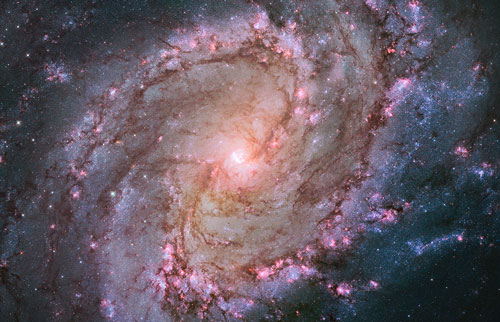
Hubble views stellar genesis in the Southern Pinwheel
A photogenic and favorite target for amateur astronomers, the full beauty of nearby barred spiral galaxy M83 is unveiled in all of its glory in this Hubble Space Telescope mosaic image. The vibrant magentas and blues reveal the galaxy is ablaze with star formation. The galaxy, also known as the Southern Pinwheel, lies 15 million light-years away in the constellation Hydra.
January 9, 2014 Read more