

Space Exploration News – Latest Headlines
 Subscribe to our Space Exploration News feed
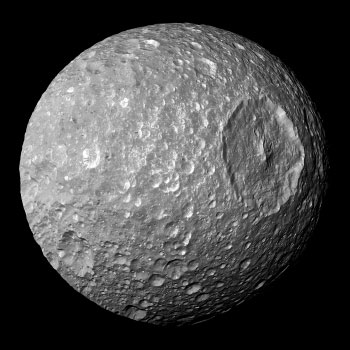
Wobbling of a Saturn moon hints at what lies beneath
Using instruments aboard the Cassini spacecraft to measure the wobbles of Mimas, the closest of Saturn's regular moons, an astronomer has inferred that this small moon's icy surface cloaks either a rugby ball-shaped rocky core or a sloshing sub-surface ocean.
October 16, 2014 Read more
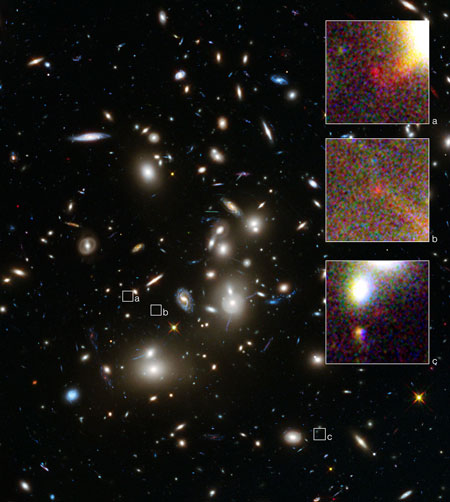
Astronomers make the most reliable remote distance measurement yet
Using the NASA/ESA Hubble Space Telescope astronomers have made what may be the most reliable distance measurement yet of an object that existed in the Universe's formative years. The galaxy is one of the faintest, smallest and most distant galaxies ever seen and measuring its distance with this accuracy was possible due only to the incredibly detailed mapping of how giant galaxy clusters warp the space-time around them.
October 16, 2014 Read more
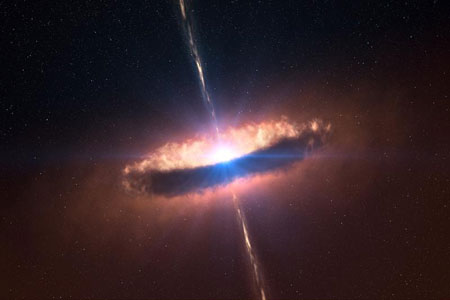
Cosmic jets of young stars formed by magnetic fields
Astrophysical jets are counted among our Universe's most spectacular phenomena: From the centers of black holes, quasars, or protostars, these rays of matter sometimes protrude several light years into space. Now, for the first time ever, an international team of researchers has successfully tested a new model that explains how magnetic fields form these emissions in young stars.
October 16, 2014 Read more
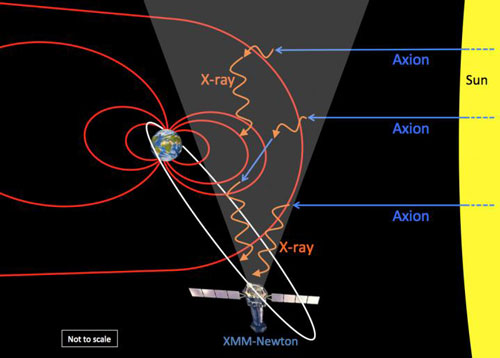
Curious signal hints at dark matter
Space scientists have detected a curious signal in the X-ray sky - one that provides a tantalising insight into the nature of mysterious Dark Matter.
October 16, 2014 Read more
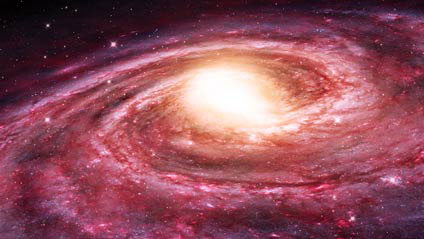
Milky Way ransacks nearby dwarf galaxies
Astronomers have discovered that our nearest galactic neighbors, the dwarf spheroidal galaxies, are devoid of star-forming gas, and that our Milky Way Galaxy is to blame.
October 15, 2014 Read more
Astronomers spot faraway Uranus-like planet
Our view of other solar systems just got a little more familiar, with the discovery of a planet 25,000 light-years away that resembles our own Uranus.
October 15, 2014 Read more
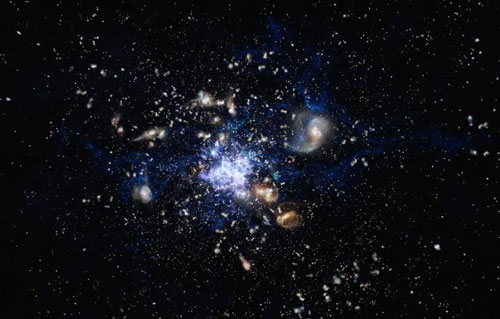
Construction secrets of a galactic metropolis
Astronomers have used the APEX telescope to probe a huge galaxy cluster that is forming in the early Universe and revealed that much of the star formation taking place is not only hidden by dust, but also occurring in unexpected places. This is the first time that a full census of the star formation in such an object has been possible.
October 15, 2014 Read more
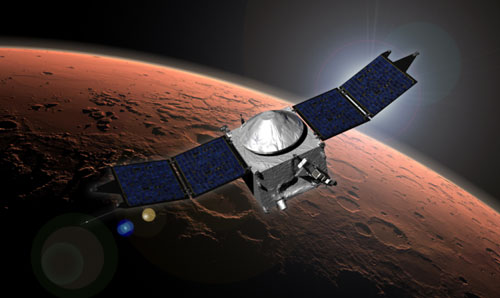
MAVEN spacecraft's first look at Mars holds surprises
NASA's MAVEN spacecraft has provided scientists their first look at a storm of energetic solar particles at Mars and produced unprecedented ultraviolet images of the tenuous oxygen, hydrogen and carbon coronas surrounding the Red Planet.
October 15, 2014 Read more
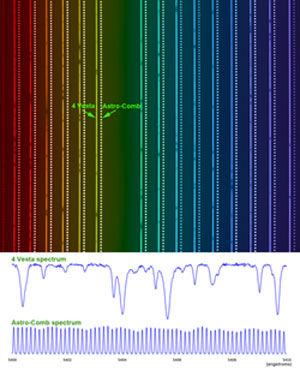
Rediscovering Venus to find faraway earths
As the search for Earth-like planets wages on, a team of researchers may have found a way to speed up the process. The team is developing a new laser-based technology known as the green astro-comb to obtain information about the mass of a distant planet. Using this information, astronomers will be able to determine whether distant exoplanets are rocky worlds like Earth or less dense gas giants like Jupiter.
October 14, 2014 Read more
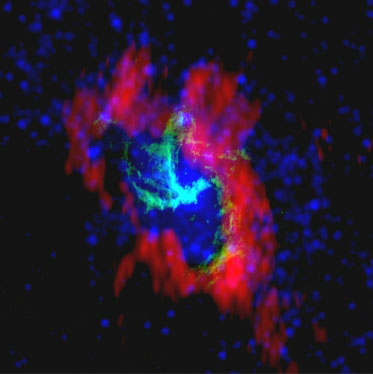
Inside the Milky Way
Is matter falling into the massive black hole at the center of the Milky Way or being ejected from it? No one knows for sure, but an astrophysicist is searching for an answer.
October 14, 2014 Read more

Mars One (and done?)
MIT team independently assesses the technical feasibility of the proposed Mars One mission.
October 14, 2014 Read more
Leaky galaxies lead researchers to better understand the universe
Focusing on large, star-forming galaxies, researchers were able to measure radiation leaks in an effort to better understand how the universe evolved as the first stars were formed.
October 10, 2014 Read more
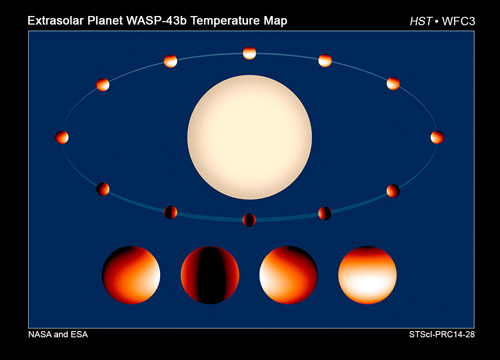
Hubble Maps the temperature and water vapor on an exoplanet
A team of scientists using the Hubble Space Telescope has made the most detailed global map yet of the glow from a planet orbiting another star, revealing secrets of air temperatures and water.
October 9, 2014 Read more
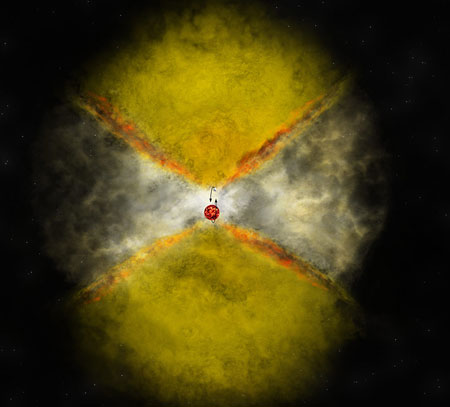
Zeroing in on a source of gamma rays
Gamma rays are the highest-energy form of radioactive waves known in the universe. However, how they're made and where they come from have been a bit of a mystery. But now a team of researchers has made a discovery that may shed some light on the subject.
October 9, 2014 Read more
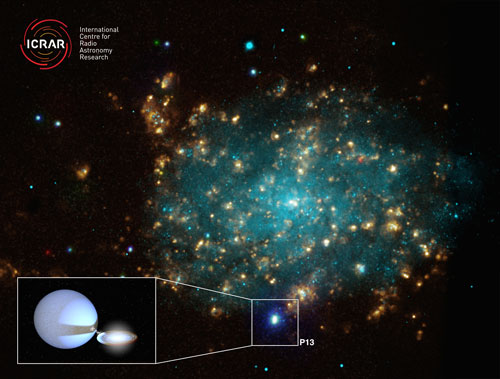
Hungry black hole eats faster than thought possible
Astronomers have discovered a black hole that is consuming gas from a nearby star 10 times faster than previously thought possible. The black hole - known as P13 - lies on the outskirts of the galaxy NGC7793 about 12 million light years from Earth and is ingesting a weight equivalent to 100 billion billion hot dogs every minute.
October 9, 2014 Read more
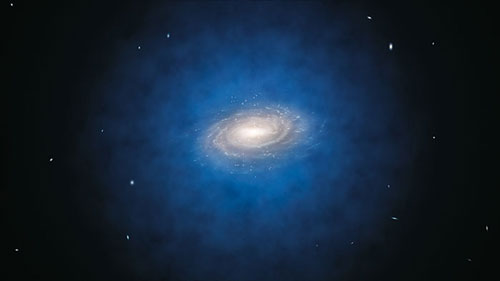
Dark matter half what we thought, say scientists
A new measurement of dark matter in the Milky Way has revealed there is half as much of the mysterious substance as previously thought.
October 9, 2014 Read more
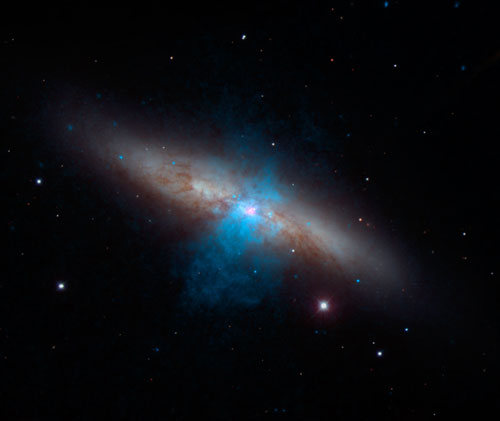
Astronomers discover shockingly bright dead star
Astronomers have found a pulsating, dead star beaming with the energy of about 10 million suns. This is the brightest pulsar ever recorded.
October 8, 2014 Read more
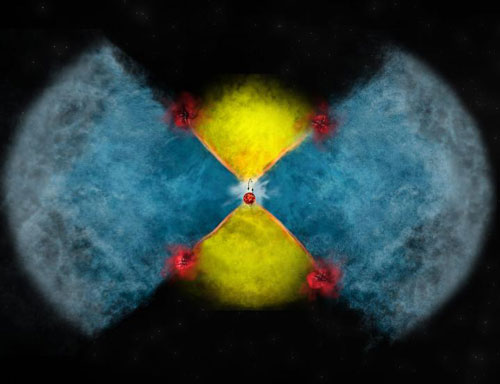
Astronomers see right into heart of exploding star
An international team of astronomers has been able to see into the heart of an exploding star, by combining data from telescopes that are hundreds or even thousands of kilometers apart.
October 8, 2014 Read more