

Space Exploration News – Latest Headlines
 Subscribe to our Space Exploration News feed
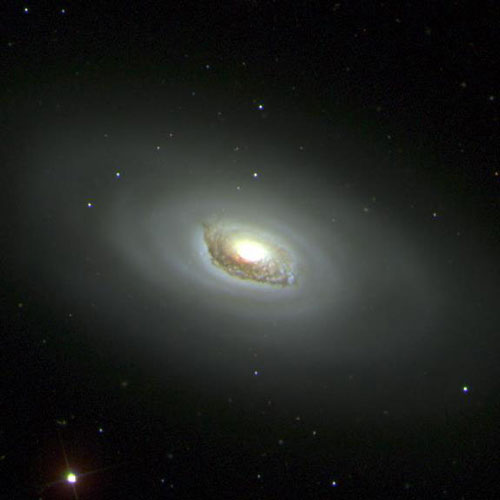
Universe may face a darker future
New research offers a novel insight into the nature of dark matter and dark energy and what the future of our Universe might be.
October 31, 2014 Read more
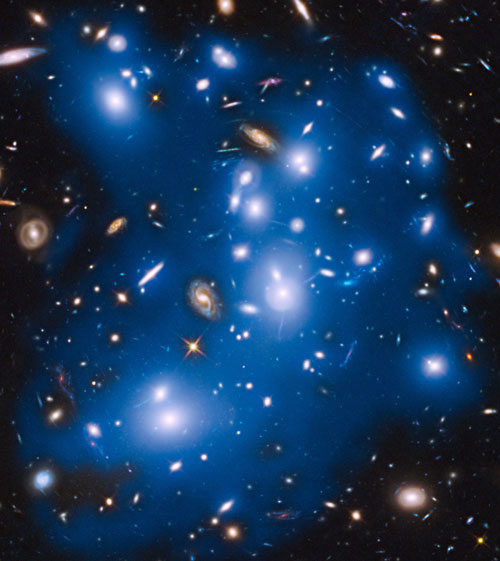
Hubble sees 'ghost light' from dead galaxies
The Hubble Space Telescope has picked up the faint, ghostly glow of stars ejected from ancient galaxies that were gravitationally ripped apart several billion years ago. The mayhem happened 4 billion light-years away, inside an immense collection of nearly 500 galaxies nicknamed 'Pandora's Cluster', also known as Abell 2744
October 31, 2014 Read more
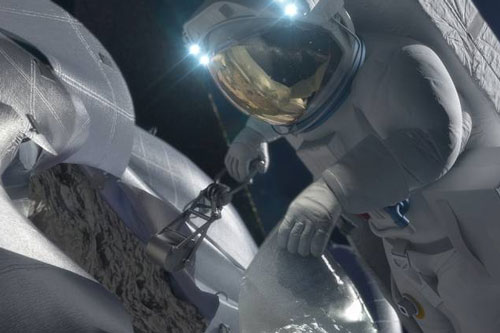
Asteroid redirection
Better options available in thousands of near-Earth asteroids, expert says.
October 31, 2014 Read more
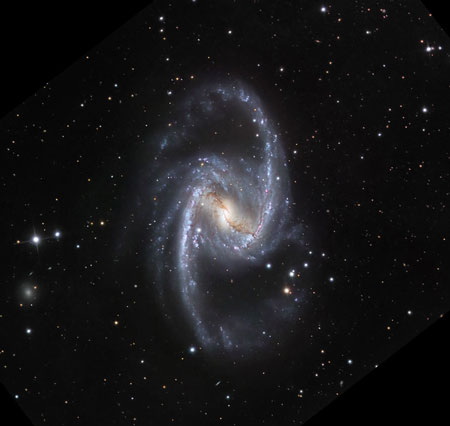
When did galaxies settle down?
Astronomers have long sought to understand exactly how the universe evolved from its earliest history to the cosmos we see around us in the present day. In particular, the way that galaxies form and develop is still a matter for debate. Now a group of researchers have used the collective efforts of the hundreds of thousands of people that volunteer for the Galaxy Zoo project to shed some light on this problem.
October 30, 2014 Read more
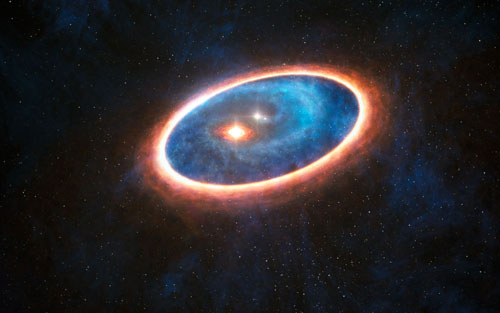
Planet-forming lifeline discovered in a binary star system
Astronomers have detected a streamer of dust and gas flowing from a massive outer disk toward the inner reaches of a binary star system. This never-before-seen feature may be responsible for sustaining a second, smaller disk of planet-forming material that otherwise would have disappeared long ago.
October 29, 2014 Read more
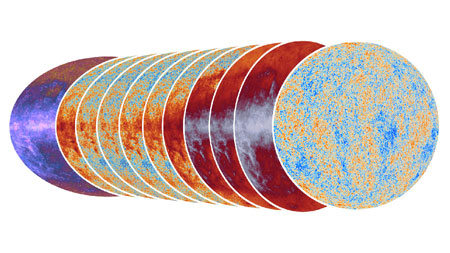
Planck 2013 results
Astronomy and Astrophysics is publishing a special feature of 31 articles describing the data gathered by Planck over 15 months of observations and released by ESA and the Planck Collaboration in March 2013. This series of papers presents the initial scientific results extracted from this first Planck dataset.
October 29, 2014 Read more
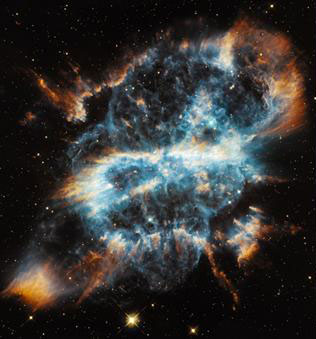
Laser experiments mimic cosmic explosions and planetary cores
Researchers are finding ways to understand some of the mysteries of space without leaving earth. Using high-intensity lasers focused on targets smaller than a pencil's eraser, they conducted experiments to create colliding jets of plasma knotted by plasma filaments and self-generated magnetic fields, reaching pressures a billion times higher than seen on earth.
October 28, 2014 Read more
First time-lapse images of exploding fireball from a 'nova' star
Astronomers have captured images of a thermonuclear fireball exploding from a star.
October 27, 2014 Read more
Thermodiffusion in weightlessness
Thermodiffusion, also called the Soret effect, is a mechanism by which an imposed temperature difference establishes a concentration difference within a mixture. Two recent studies provide a better understanding of such effects. They build on recent experimental results from the Influence Vibration on Diffusion in Liquids research project performed on the International Space Station under microgravity to avoid motion in the liquids.
October 27, 2014 Read more
NASA seeks ultra-lightweight materials to help enable journey to Mars
NASA is seeking proposals to develop and manufacture ultra-lightweight materials for aerospace vehicles and structures of the future. Proposals will demonstrate lower-mass alternatives to honeycomb or foam cores currently used in composite sandwich structures.
October 27, 2014 Read more
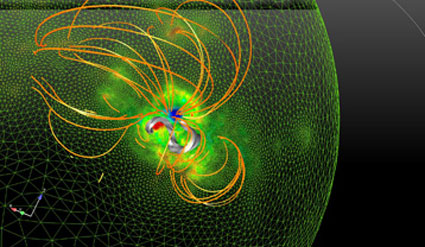
Understanding and predicting solar flares
Scientists have identified a key phenomenon in the triggering of solar flares. Using satellite data and models, the scientists were able to monitor the evolution of the solar magnetic field in a region with eruptive behavior.
October 23, 2014 Read more
Intelligent materials that work in space
ARQUIMEA will be testing technology it has developed in the International Space Station. The technology is based on intelligent materials that allow objects to be sent into orbit without the use of explosives.
October 23, 2014 Read more
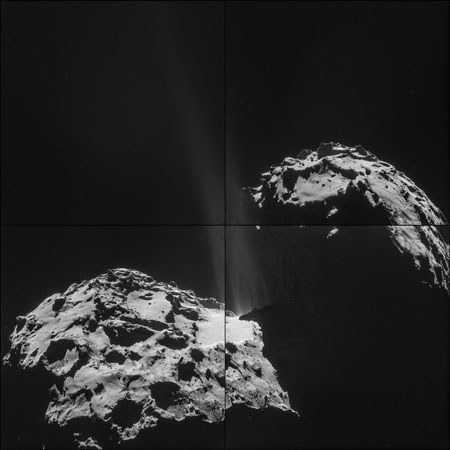
The perfume of the comet Churyumov-Gerasimenko
How does a comet smell? Since early August the Rosetta Orbiter Sensor for Ion and Neutral Analysis (ROSINA) is sniffing the fumes of the comet Churyumov-Gerasimenko with its two mass spectrometers. The detected chemistry in the coma of the comet is surprisingly rich already at more than 400 million kilometres from the Sun.
October 23, 2014 Read more
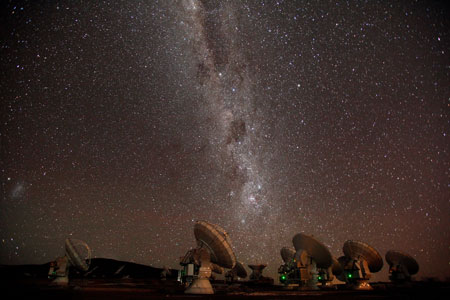
New window on the early Universe
Scientists see good times approaching for astrophysicists after hatching a new observational strategy to distill detailed information from galaxies at the edge of the Universe. Using two world-class supercomputers, the researchers were able to demonstrate the effectiveness of their approach by simulating the formation of a massive galaxy at the dawn of cosmic time.
October 22, 2014 Read more
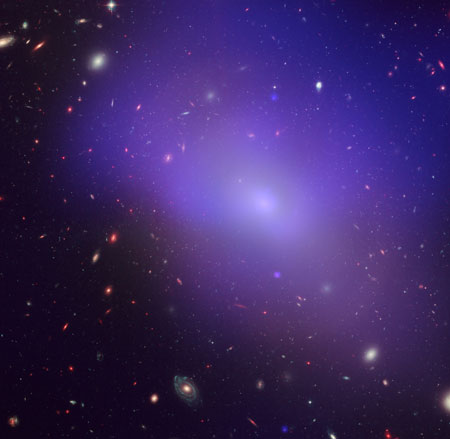
Big black holes can block new stars
Massive black holes spewing out radio-frequency-emitting particles at near-light speed can block formation of new stars in aging galaxies, a study has found.
October 22, 2014 Read more

Heavy metal frost? A new look at a Venusian mystery
Venus is hiding something beneath its brilliant shroud of clouds: a first order mystery about the planet that researchers may be a little closer to solving because of a new re-analysis of twenty-year-old spacecraft data.
October 20, 2014 Read more
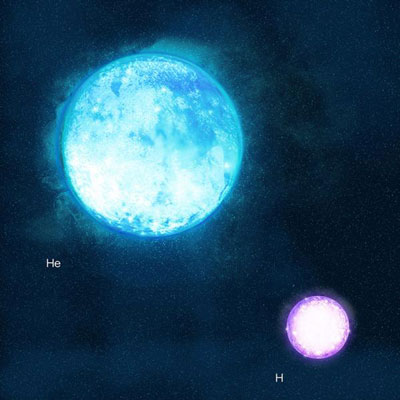
Explosion first evidence of a hydrogen-deficient supernova progenitor
A new model provides the first characterization of the progenitor for a hydrogen-deficient supernova. The model predicts that a bright hot star, which is the binary companion to an exploding object, remains after the explosion.The findings have important implications for the evolution of massive stars.
October 17, 2014 Read more
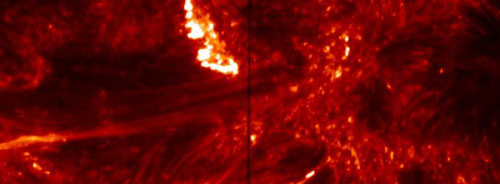
Tiny 'nanoflares' might heat the Sun's corona
Why is the Sun's million-degree corona, or outermost atmosphere, so much hotter than the Sun's surface? This question has baffled astronomers for decades. Researchers have now found that miniature solar flares called 'nanoflares' - and the speedy electrons they produce - might partly be the source of that heat, at least in some of the hottest parts of the Sun's corona.
October 16, 2014 Read more