

Space Exploration News – Latest Headlines
 Subscribe to our Space Exploration News feed
Theorists propose a new method to probe the beginning of the universe
The beginning of the cosmos is cloaked and hidden from the view of our most powerful telescopes. Yet observations we make today can give clues to the universe's origin. New research suggests a novel way of probing the beginning of space and time to determine which of the competing theories is correct.
January 25, 2016 Read more
The aliens are silent because they're dead
Life on other planets would probably go extinct soon after its origin, due to runaway heating or cooling on their fledgling planets.
January 21, 2016 Read more
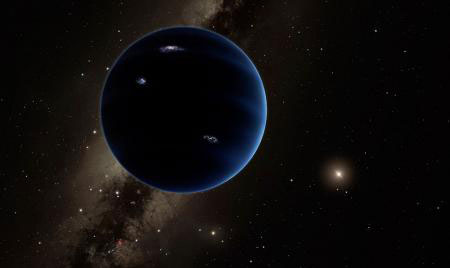
Researchers find evidence of a real ninth planet
Researchers have found evidence of a giant planet tracing a bizarre, highly elongated orbit in the outer solar system. The object, which the researchers have nicknamed Planet Nine, has a mass about 10 times that of Earth and orbits about 20 times farther from the sun on average than does Neptune.
January 20, 2016 Read more
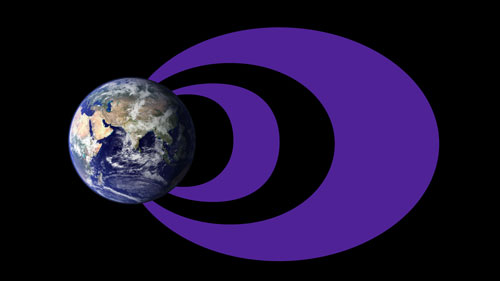
Van Allen probes revolutionize view of radiation belts
NASA's Van Allen Probes revealed that the shape of the radiation belts is actually quite different depending on what type of electron you're looking at.
January 20, 2016 Read more
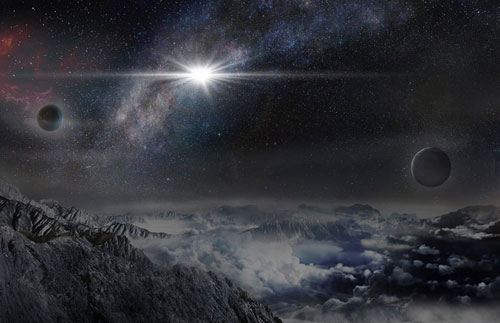
What Is 10 miles across, but powers an explosion brighter than the Milky Way?
Right now, astronomers are viewing a ball of hot gas billions of light years away that is radiating the energy of hundreds of billions of suns. At its heart is an object a little larger than 10 miles across. And astronomers are not entirely sure what it is.
January 14, 2016 Read more
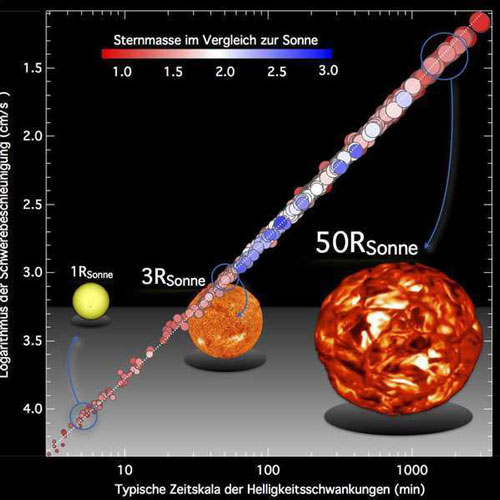
The habitability of other worlds
New methods allow precise measurements of the gravity of stars and the size of exoplanets.
January 14, 2016 Read more
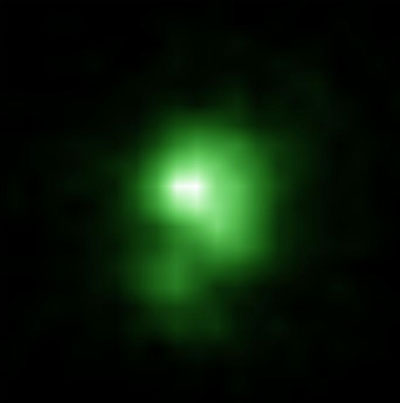
Green pea galaxy provides insights to early universe evolution
Newly formed dwarf galaxies were likely the reason that the universe heated up about 13 billion years ago, according to new work by an international team of scientists. The finding opens an avenue for better understanding the early period of the universe's 14 billion year history.
January 14, 2016 Read more
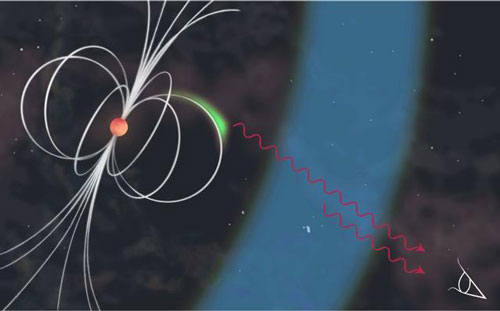
The most energetic light ever observed from a few kilometers large star
Scientists working with the Major Atmospheric Gamma-ray Imaging Cherenkov (MAGIC) observatory have reported the discovery of the most energetic pulsed emission radiation ever detected from the neutron star in the center of the supernova of 1054 A.D., known as the Crab pulsar.
January 12, 2016 Read more
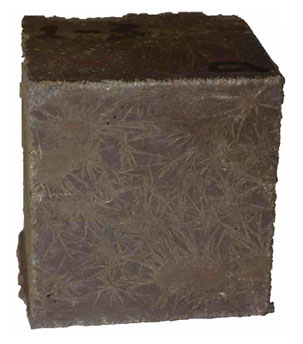
Building concrete shelters on Mars
Researchers developed a Martian concrete using materials naturally found on the planet. The high-strength concrete can be quickly created and is durable enough to withstand meteorite impacts - a key element needed to create viable shelters for humans.
January 8, 2016 Read more
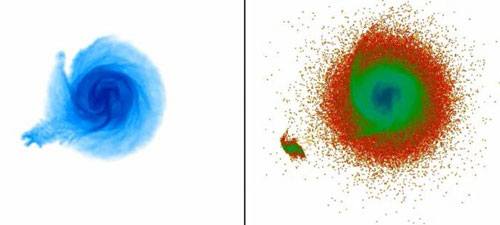
Galaxy quakes could improve hunt for dark matter
A trio of brightly pulsating stars at the outskirts of the Milky Way is racing away from the galaxy and may confirm a method for detecting dwarf galaxies dominated by dark matter and explain ripples in the outer disk of the galaxy.
January 8, 2016 Read more
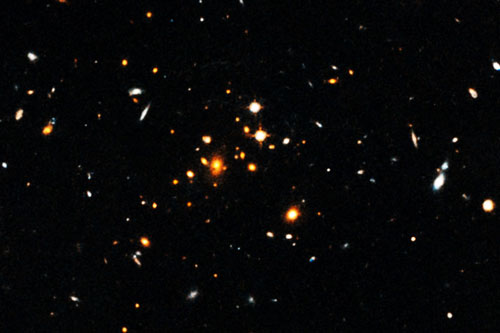
Most distant massive galaxy cluster identified
Formed in the first 4 billion years of the universe, cluster is 1,000 times more massive than the Milky Way.
January 8, 2016 Read more
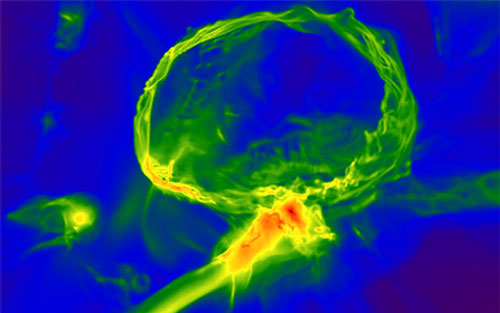
Ancient gas cloud may be a relic from the death of first stars
Researchers have discovered a distant, ancient cloud of gas that may contain the signature of the very first stars that formed in the Universe.
January 7, 2016 Read more
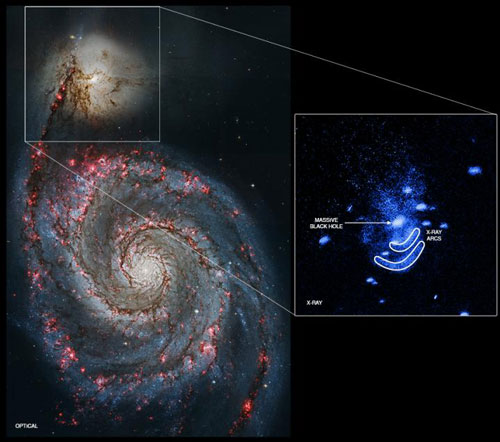
Astronomers find black hole affecting galactic climate
Researchers have discovered a powerful galactic blast produced by a giant black hole about 26 million light years from Earth. The black hole is the nearest supermassive black hole to Earth that is currently undergoing such violent outbursts.
January 6, 2016 Read more
Rotational clock for stars needs recalibration
New work indicates that one recently developed method for determining a star's age needs to be recalibrated for stars that are older than our Sun. This is due to new information about the way older stars spin, as spin rate is one of the few windows into stellar ages.
January 4, 2016 Read more
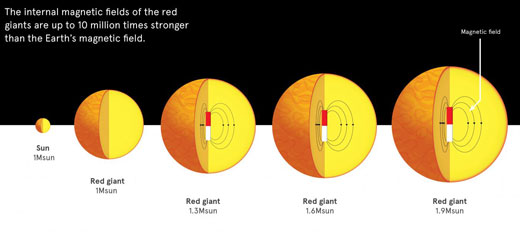
Strong magnetic fields discovered in majority of stars
An international group of astronomers has discovered strong magnetic fields are common in stars, not rare as previously thought, which will dramatically impact our understanding of how stars evolve.
January 4, 2016 Read more
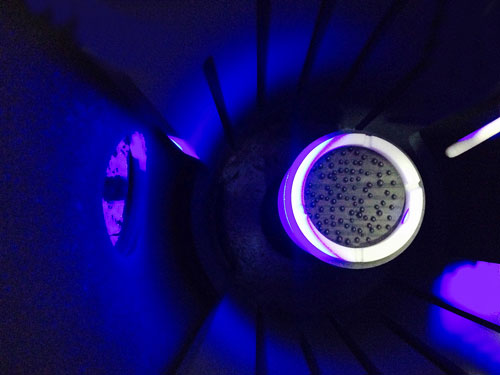
Cosmic glasses for space exploration
How are asteroids and planets formed from stony particles? This question is being explored in an experiment by scientists who have developed beads made of a special type of glass. They form the composition of the rock particles as naturally as possible on a small scale.
January 4, 2016 Read more
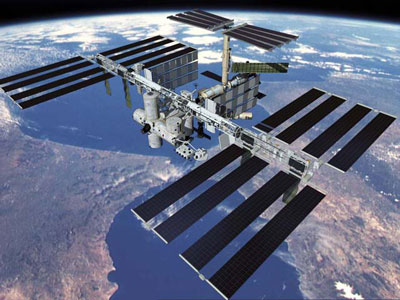
Five key findings from 15 years of the International Space Station
The International Space Station is the longest-running continuously inhabited human outpost in space - this year it celebrated its 15th anniversary. As the ISS orbits the Earth it is essentially in a state of free fall, counteracting the Earth's gravity and providing an ideal platform for science in space.
December 30, 2015 Read more
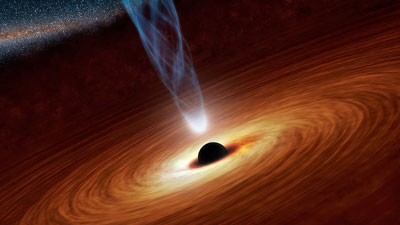
Black holes could grow as large as 50 billion suns before their food crumbles into stars
Black holes at the heart of galaxies could swell to 50 billion times the mass of the sun before losing the discs of gas they rely on to sustain themselves.
December 18, 2015 Read more