

Space Exploration News – Latest Headlines
 Subscribe to our Space Exploration News feed
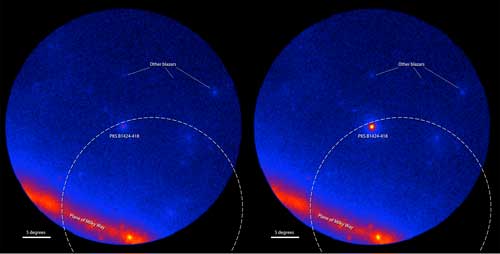
Possible extragalactic source of high-energy neutrinos
Astronomers have shown that a record-breaking neutrino seen around the same time likely was born in the same event.
April 29, 2016 Read more
Nearby massive star explosion 30 million years ago equaled detonation of 100 million suns
Analysis of exploding star's light curve and color spectrum reveal spectacular demise of one of the closest supernova to Earth in recent years; its parent star was so big it's radius was 200 times larger than our sun.
April 27, 2016 Read more
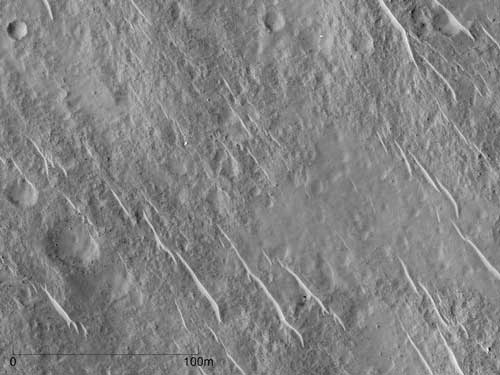
Mars' surface revealed in unprecedented detail
The surface of Mars has been shown in unprecedented detail by scientists using a revolutionary image stacking and matching technique.
April 26, 2016 Read more
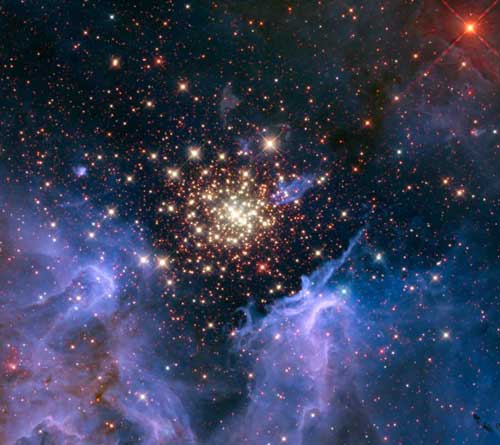
Microscopic 'timers' reveal likely source of galactic space radiation
Most of the cosmic rays that we detect at Earth originated relatively recently in nearby clusters of massive stars, according to new results from NASA's Advanced Composition Explorer (ACE) spacecraft.
April 22, 2016 Read more
Numerical simulations shed new light on early universe
BURST code probes first minutes after the Big Bang for fundamental insights.
April 21, 2016 Read more
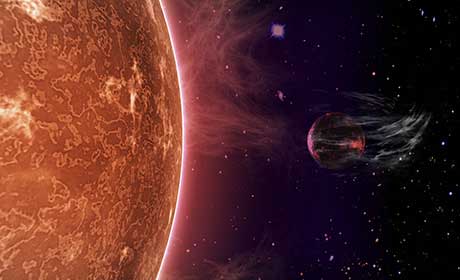
Planetary striptease
Astronomers show that the atmospheres of super-Earths are blown away by radiation from their host stars.
April 18, 2016 Read more
Fermi telescope poised to pin down gravitational wave sources (w/video)
NASA's Fermi Gamma-ray Space Telescope has made a tantalizing discovery associated with the first-ever detection of gravitational waves. A burst of X-ray light may have been the flash produced when two black holes collided.
April 18, 2016 Read more
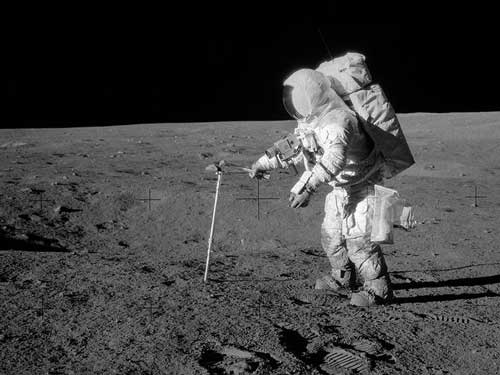
Confirmation of supernova explosion in the neighborhood of our solar system
Approximately two million years ago a star exploded in a supernova close to our solar system: Its traces can still be found today in the form of an iron isotope found on the ocean floor. Now scientists have found increased concentrations of this supernova-iron in lunar samples as well.
April 14, 2016 Read more
Cosmic rays: The key to galaxy formation?
Understanding the physics of galaxy formation is arguably among the greatest problems in modern astrophysics. A newly formed research group investigates the impact of cosmic rays on galaxy and cluster formation.
April 13, 2016 Read more
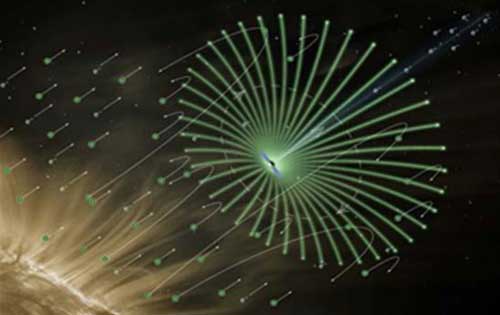
New, fast solar wind propulsion system Is aim of new study
Scientists are set to use computer models to investigate the results of experimental testing at NASA's Marshall Space Flight Center in Huntsville to develop an engineering tool to design missions using a new type of long-distance space propulsion.
April 12, 2016 Read more
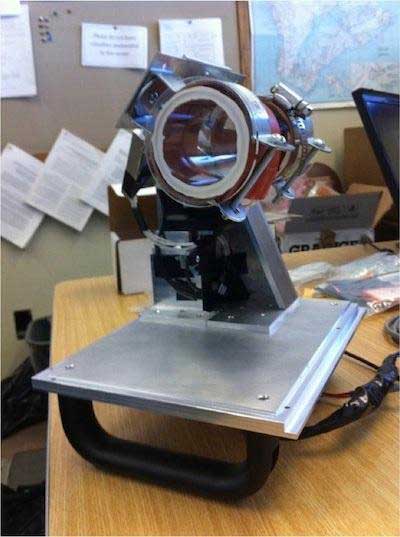
New tool refines exoplanet search
Astronomers report on a technological upgrade for one method of finding planets or confirming other planetary detections.
April 11, 2016 Read more
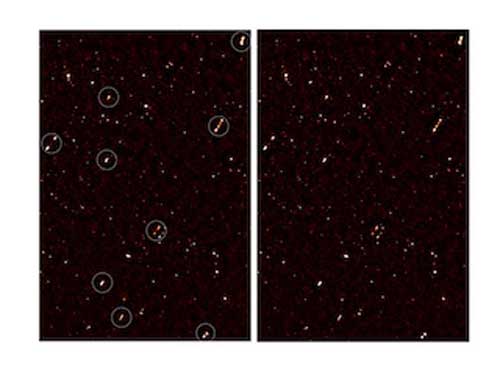
Astronomers discover mysterious alignment of black holes
Deep radio imaging has revealed that supermassive black holes in a region of the distant universe are all spinning out radio jets in the same direction - most likely a result of primordial mass fluctuations in the early universe.
April 11, 2016 Read more
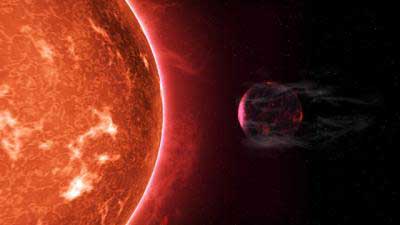
Hot super-Earths stripped by host stars: 'Cooked' planets shrink due to radiation
Astrophysicists have used data from the NASA Kepler space telescope to discover a class of extrasolar planets whose atmospheres have been stripped away by their host stars.
April 11, 2016 Read more
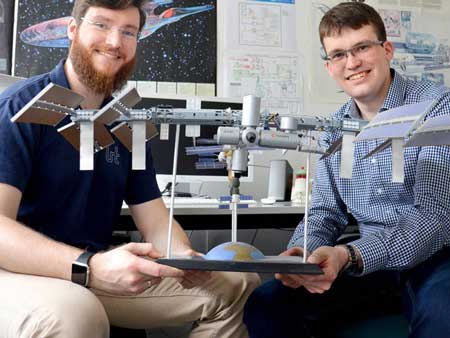
'Virtual Habitat' software - to Mars and back
Researchers simulate life support systems in space travel.
April 11, 2016 Read more
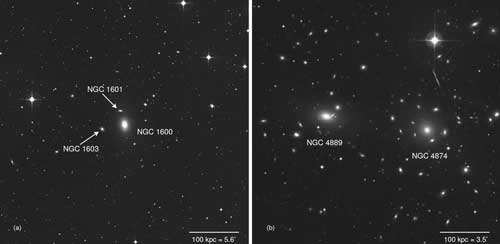
Black hole in a lonely galaxy
Astronomers find unusual descendant of a quasar.
April 7, 2016 Read more
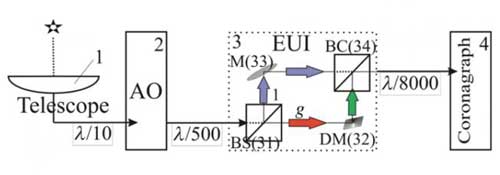
'Smoothed' light will help search for Earth's twins
Physicists have developed optical technology for the 'correction' of light coming from distant stars, which will significantly improve the 'seeing' of telescopes and therefore will enable us to directly observe exoplanets as Earth-twins.
March 30, 2016 Read more
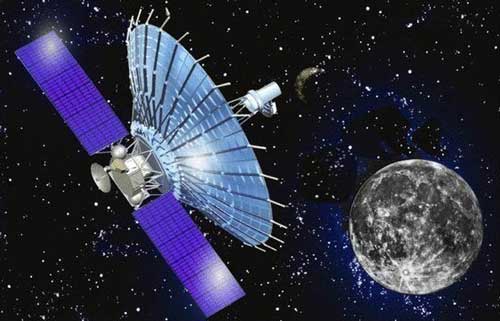
Earth-space telescope system produces hot surprise
Astronomers using an orbiting radio telescope in conjunction with four ground-based radio telescopes have achieved the highest resolution, or ability to discern fine detail, of any astronomical observation ever made. Their achievement produced a pair of scientific surprises that promise to advance the understanding of quasars, supermassive black holes at the cores of galaxies.
March 30, 2016 Read more
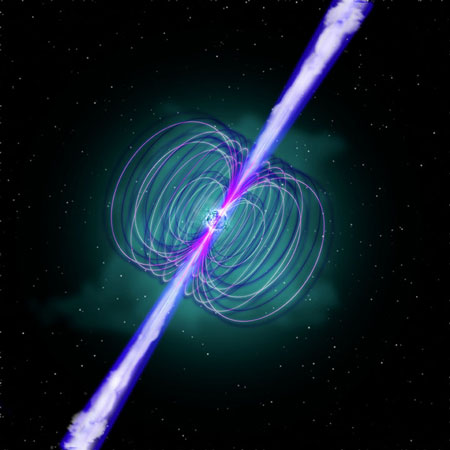
Magnetar could have boosted explosion of extremely bright supernova
Calculations by scientists have found highly magnetized, rapidly spinning neutron stars called magnetars could explain the energy source behind two extremely unusual stellar explosions.
March 24, 2016 Read more