

Space Exploration News – Latest Headlines
 Subscribe to our Space Exploration News feed
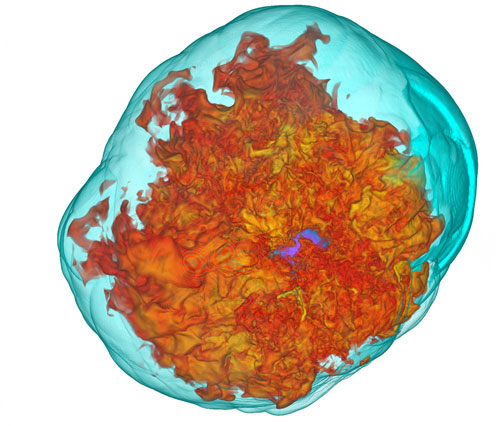
3-D simulations illuminate supernova explosions
While the 3-D simulation approach is still in its infancy, early results indicate that the models are providing a clearer picture than ever before of the mechanisms that drive supernova explosions.
June 3, 2016 Read more
Elliptical galaxies not formed by merging
Using an 'intuitive' approach, a new study confirms a recent hypothesis on the formation of galaxies, according to which the larger elliptical galaxies formed in very ancient times through a process of local (in situ) star formation. This contradicts the current paradigm that they formed through the merging of spiral galaxies.
June 1, 2016 Read more
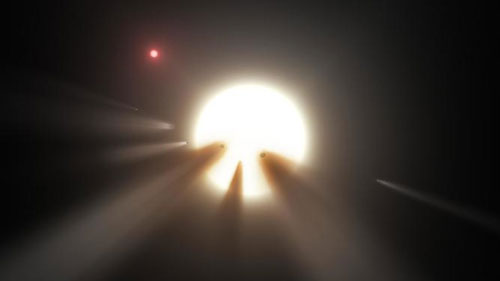
How to tell the world you've discovered an alien civilisation
After countless fictional scenarios of humans making contact with alien civilisations, you'd think we'd be prepared for actually discovering one. But finding intelligent life beyond the Earth is clearly likely to be one of the most shattering moments in the history of our species.
May 26, 2016 Read more
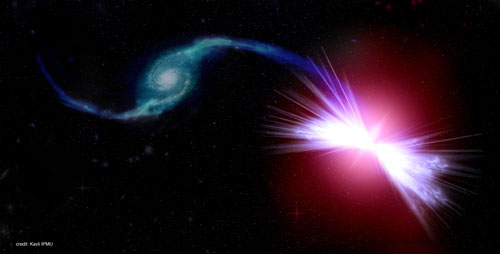
Supermassive black hole wind can stop new stars from forming
Scientists have uncovered a new class of galaxies with supermassive black hole winds that are energetic enough to suppress future star formation.
May 26, 2016 Read more
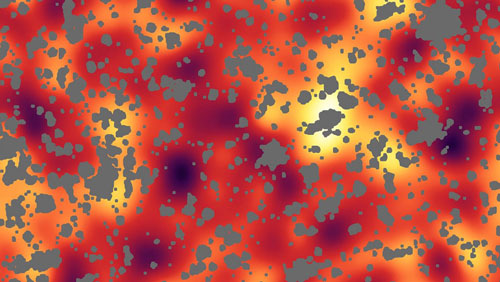
Scientist suggests possible link between primordial black holes and dark matter
An intriguing alternative view is that dark matter is made of black holes formed during the first second of our universe's existence, known as primordial black holes. A scientist suggests that this interpretation aligns with our knowledge of cosmic infrared and X-ray background glows and may explain the unexpectedly high masses of merging black holes detected last year.
May 25, 2016 Read more
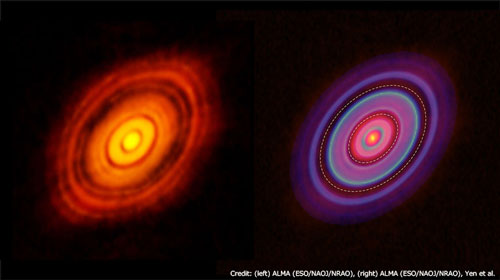
Footprints of baby planets in a gas disk
A new analysis of the ALMA data for a young star HL Tauri provides yet more firm evidence of baby planets around the star. Researchers uncovered two gaps in the gas disk around HL Tauri.
May 25, 2016 Read more
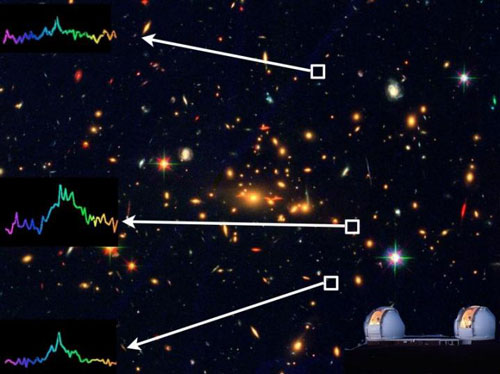
Astronomers confirm faintest early-universe galaxy ever seen
An international team of scientists has detected and confirmed the faintest early-universe galaxy ever. Using the W. M. Keck Observatory on the summit on Mauna Kea in Hawaii, the researchers detected the galaxy as it was 13 billion years ago.
May 24, 2016 Read more

We'll leave the lights on for you
Photonics advances allow us to be seen across the universe, with major implications for the search for extraterrestrial intelligence.
May 18, 2016 Read more
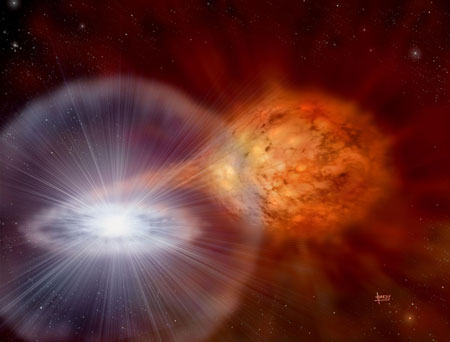
Supernova reserve fuel tank clue to big parents
Some supernovae have a reserve tank of radioactive fuel that cuts in and powers their explosions for three times longer than astronomers had previously thought.
May 18, 2016 Read more
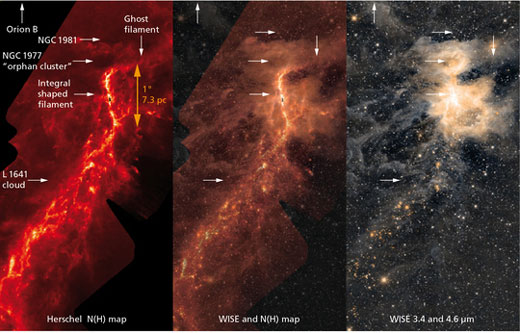
The secret life of the Orion nebula
The interplay of magnetic fields and gravitation in the gas cloud lead to the birth of new stars.
May 16, 2016 Read more
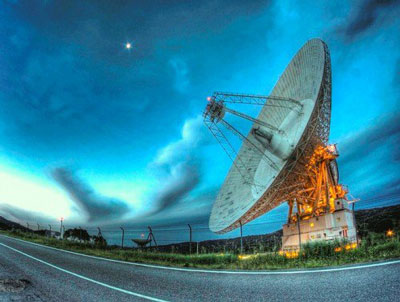
Astronomers detect precious element in space
Astronomers have detected a rare gas 4000 light years away from Earth. The discovery, made using the largest antenna of NASA's Madrid Deep Space Communication Complex, could help scientists to understand more about the history of this important element.
May 13, 2016 Read more
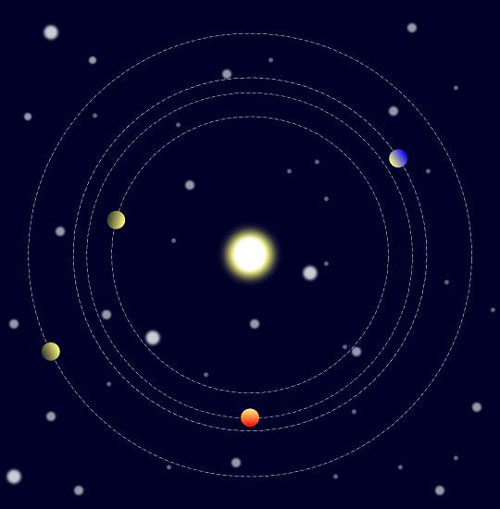
Four synchronized planets reveal clues to how planets form (w/video)
The search for planets orbiting other stars in our galaxy has revealed an extraordinary family of planets whose orbits are so carefully timed that they provide long-term stability for their planetary system.
May 12, 2016 Read more
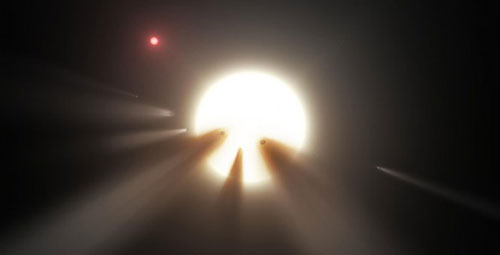
Study supports natural causes, not alien activity, to explain mystery star's behavior
Sorry, E.T. lovers, but the results of a new study make it far less likely that KIC 8462852, popularly known as Tabby's star, is the home of industrious aliens who are gradually enclosing it in a vast shell called a Dyson sphere.
May 9, 2016 Read more
Bright dusty galaxies are hiding secret companions
A new study has cleared the air on what lies behind hot dust visible in the distant universe.
May 6, 2016 Read more
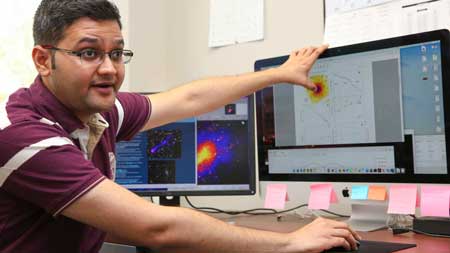
Second strongest shock wave found in merging galaxy clusters
The discovery by a physics doctoral student of the second-strongest merger shock in clusters of galaxies ever observed has generated excitement that is opening doors to further scientific exploration.
May 4, 2016 Read more
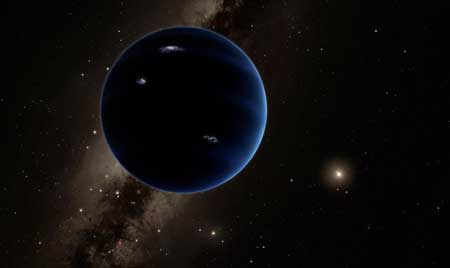
Planet Nine: A world that shouldn't exist
Earlier this year scientists presented evidence for Planet Nine, a Neptune-mass planet in an elliptical orbit 10 times farther from our Sun than Pluto. Since then theorists have puzzled over how this planet could end up in such a distant orbit.
May 3, 2016 Read more
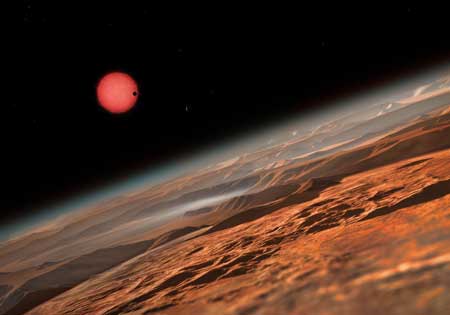
Three potentially habitable worlds found around nearby ultracool dwarf star
Currently the best place to search for life beyond the solar system.
May 3, 2016 Read more
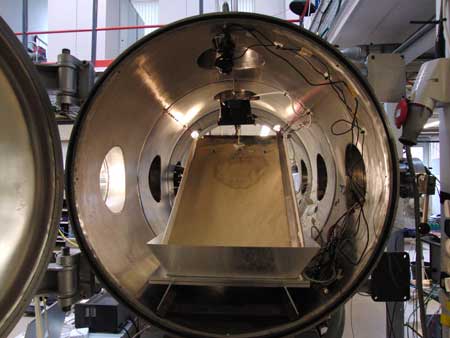
Mars: Boiling water could be carving slopes into the planet's surface
Active features observed on the surface of Mars could be the result of liquid water boiling whilst flowing under the low pressure of a thin atmosphere, according to a new study.
May 3, 2016 Read more