

Nanotechnology News – Latest Headlines
Super-resolution live video imaging of nanostructures
A team of scientists has developed a microscope that is capable of live imaging at double the resolution of fluorescence microscopy using structured illumination.
May 4, 2009 Read more

Particles and molecules prefer not to mix
In the world of small things, shape, order and orientation are surprisingly important, according to findings from a new study by chemists at Washington University in St. Louis.
May 4, 2009 Read more

Research gives clues for self-cleaning materials, water-striding robots
Self-cleaning walls, counter tops, fabrics, even micro-robots that can walk on water -- all those things and more could be closer to reality thanks to research recently completed by scientists at the University of Nebraska-Lincoln (UNL) and at Japan's RIKEN institute.
May 4, 2009 Read more

Scientists determine the structure of light-harvesting molecules
An international team of scientists has determined the structure of the chlorophyll molecules in green bacteria that are responsible for harvesting light energy.
May 4, 2009 Read more
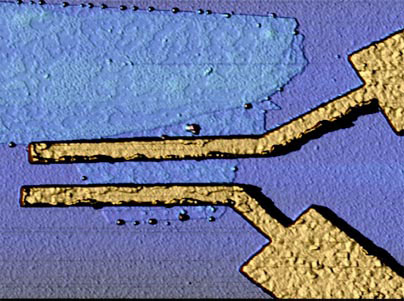
MIT teams finding many uses for graphene, the newest form of carbon
MIT has become a major center of work on graphene, with several different research groups pursuing various aspects -- including physical, chemical, electronic and engineering -- of the novel material.
May 4, 2009 Read more
Nano-sandwich triggers novel electron behavior
A material just six atoms thick in which electrons appear to be guided by conflicting laws of physics depending on their direction of travel has been discovered by a team of physicists at the University of California, Davis.
May 4, 2009 Read more
New, non-viral technology could lead to safer gene therapy
EU-funded scientists have developed a new, non-viral way of getting genes into a cell. The technique appears to avoid the side-effects, such as cancer, which can occur when viruses are used to smuggle genes into a cell.
May 4, 2009 Read more
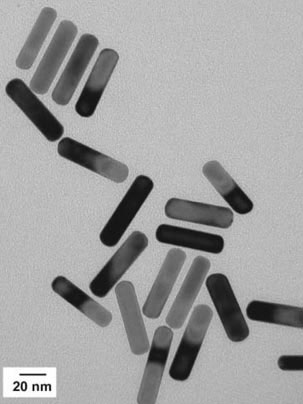
Gold nanorods could detect, treat cancer
MIT researchers have developed tiny gold particles that can home in on tumors, and then, by absorbing energy from near-infrared light and emitting it as heat, destroy tumors with minimal side effects.
May 4, 2009 Read more
Shanghai synchrotron radiation facility ready for service
Shanghai Synchrotron Radiation Facility (SSRF), a third-generation of synchrotron radiation light source, is completed and ready for use.
May 4, 2009 Read more
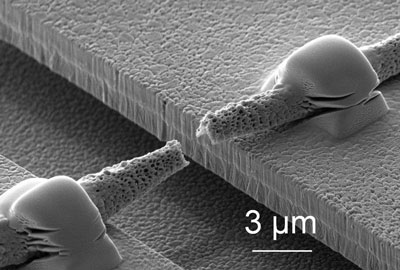
Non-wovens as scaffolds for artificial tissue
In future, cartilage, tendon and blood vessel tissue will be produced in the laboratory, with cells being grown on a porous frame, such as non-wovens. A new software program helps to characterize and optimize the non-wovens.
May 4, 2009 Read more
Scientists develop first fully automated pipeline for multiprotein complex production
In a new paper, researchers describe ACEMBL, the first fully automated pipeline for the production of multiprotein complexes.
May 4, 2009 Read more
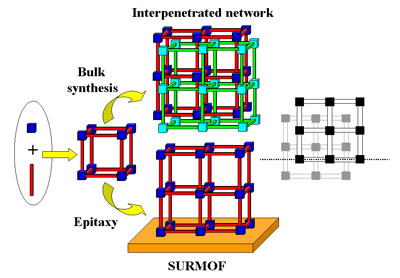
Chemists develop new preparation process for metal-organic frameworks
Void spaces are too small for metals.
May 4, 2009 Read more
Nanoparticles show promise for treating high grade glioma brain tumors
Researchers at the University of Virginia Health Science Center evaluated a novel glioma therapy through the targeted delivery of controlled-release nanoparticles to an immunocompromised mouse model.
May 4, 2009 Read more
When atoms are getting close - shortest carbon-chlorine single bond detected
Chemists at Ludwig-Maximilians-University Munich have analyzed a molecule, which has an extremely short bond length. As reported by the researchers in Nature Chemistry, the carbon atom and the chlorine atom in the so-called chlorotrinitromethane molecule are only 1.69 Angstroms apart from one another.
May 4, 2009 Read more
Carbon nanotubes and their environmental impact in water
Carbon nanotubes have made a meteoric career in the past 15 years, even if their applications are still limited. One aspect which has rarely been considered so far is now addressed by researchers of the research center Forschungszentrum Dresden-Rossendorf.
May 4, 2009 Read more
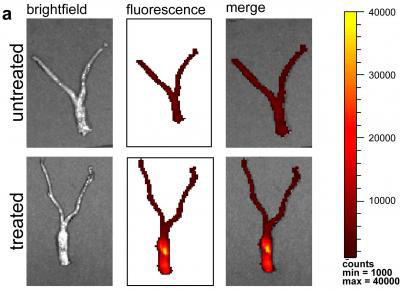
Nanotechnology holds promise for STD drug delivery
Yale researchers describe a breakthrough in safe and effective administration of potential antiviral drugs - small interfering RNA (siRNA) molecules that silence genes - the first step in development of a new kind of treatment for sexually transmitted diseases (STDs).
May 3, 2009 Read more
 Subscribe to our Nanotechnology News feed