

Space Exploration News – Latest Headlines
 Subscribe to our Space Exploration News feed
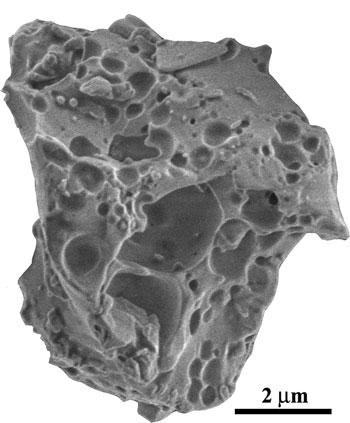
Solar wind particles likely source of water locked inside lunar soils
The most likely source of the water locked inside soils on the moon's surface is the constant stream of charged particles from the sun known as the solar wind, a University of Michigan researcher and his colleagues have concluded.
October 15, 2012 Read more
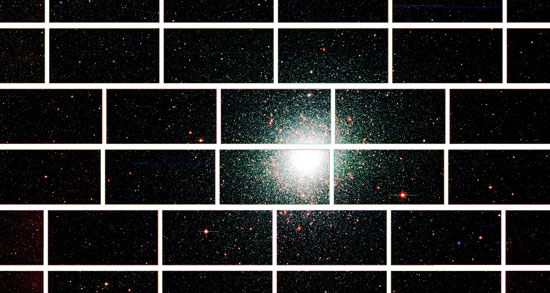
Dark energy camera to probe universe?s biggest mysteries
Eight billion years ago, rays of light from distant galaxies began their long journey to Earth. On Sept. 12, that ancient starlight found its way to a mountaintop in Chile, where the newly-constructed Dark Energy Camera - the most powerful sky-mapping machine ever created - captured and recorded it for the first time.
September 20, 2012 Read more
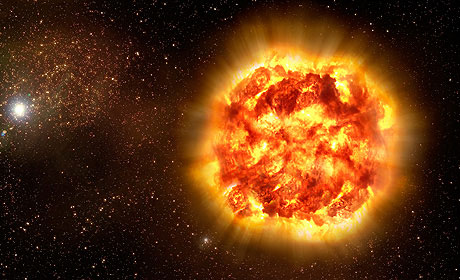
In quest of the cosmic origins of silver
Heidelberg scientist shows that silver and gold materialised in different stellar explosions
September 6, 2012 Read more
Space-age food served up with seeds of success
An eggplant the size of a basketball, and a cucumber half a meter long seem, at first glance, out of this world. They are, literally. Chinese scientists have created more than 120 varieties of plants by sending seeds into space over the past 25 years.
September 3, 2012 Read more
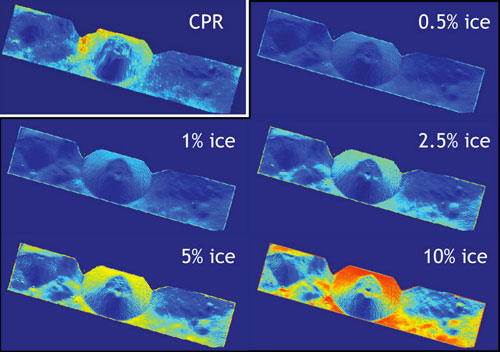
Walls of lunar crater may hold patchy ice, LRO radar finds
Small patches of ice could make up at most five to ten percent of material in walls of Shackleton crater.
August 30, 2012 Read more
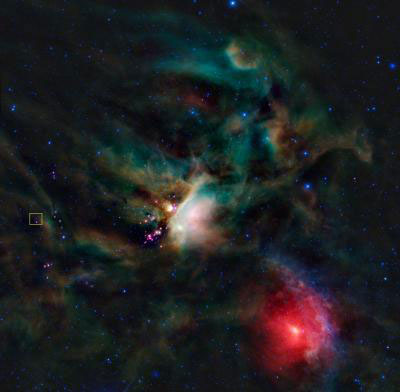
Sweet building blocks of life found around young star
Life is made up of a series of complex organic molecules, including sugars. A team of astronomers led by researchers from the Niels Bohr Institute, have now observed a simple sugar molecule in the gas surrounding a young star and this discovery proves that the building blocks of life were already present during planet formation.
August 29, 2012 Read more
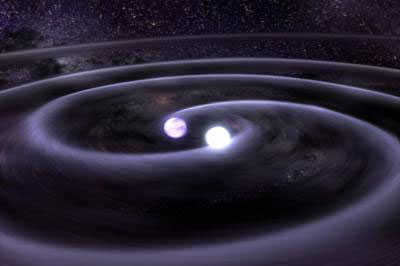
Space-warping white dwarfs produce gravitational waves
Gravitational waves, much like the recently discovered Higgs boson, are notoriously difficult to observe. Scientists first detected these ripples in the fabric of space-time indirectly, using radio signals from a pulsar-neutron star binary system. The find, which required exquisitely accurate timing of the radio signals, garnered its discoverers a Nobel Prize. Now a team of astronomers has detected the same effect at optical wavelengths, in light from a pair of eclipsing white dwarf stars.
August 28, 2012 Read more
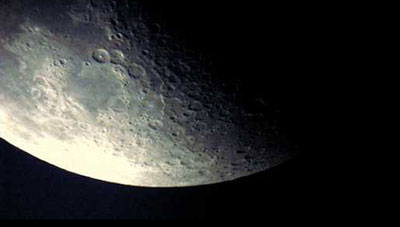
Scientists surprised by what's under Moon's surface
Immersed deep within the moon is much more water - maybe 100 times more - than scientists ever suspected. This finding by a team of researchers means the moon's interior may resemble the Earth's.
August 27, 2012 Read more
Supernovae of the same brightness, cut from vastly different cosmic cloth
Berkeley Lab researchers make historic observation of rare Type 1a Supernova.
August 24, 2012 Read more
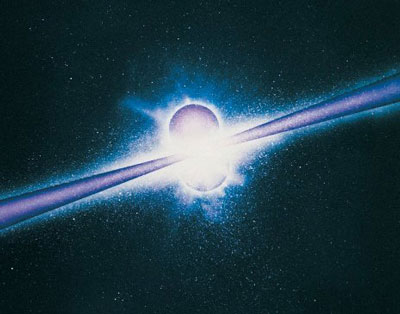
Spacetime: A smoother brew than we knew
Spacetime may be less like beer and more like sipping whiskey. Or so an intergalactic photo finish would suggest.
August 23, 2012 Read more
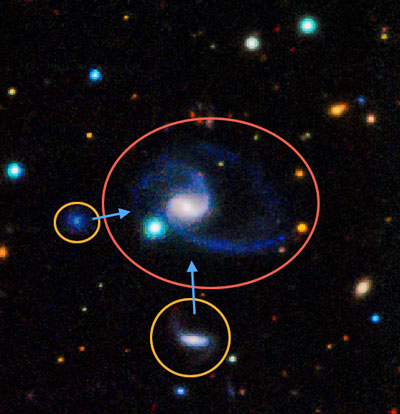
The Milky Way now has a twin (or two)
Research presented today at the International Astronomical Union General Assembly in Beijing has found the first group of galaxies that is just like ours, a rare sight in the local Universe.
August 23, 2012 Read more
NASA Mars Rover begins driving at Bradbury Landing
NASA's Mars rover Curiosity has begun driving from its landing site, which scientists announced today they have named for the late author Ray Bradbury.
August 22, 2012 Read more
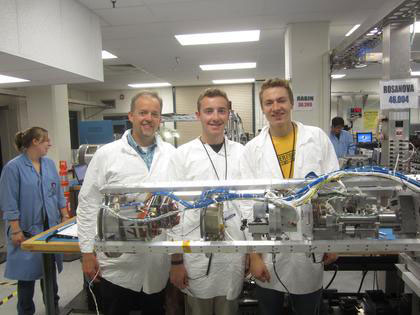
Two student rocket payloads set for launch on Aug. 23
A sounding rocket launching from NASA?s Wallops Flight Facility in Virginia Aug. 23 will be carrying two University of Colorado Boulder student-built payloads and a pair of other payloads developed by students from Virginia Tech, Baylor University and the University of Puerto Rico.
August 21, 2012 Read more
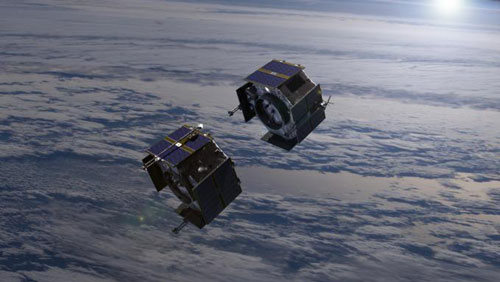
Researchers gear up for NASA radiation belt space mission
The University of Colorado Boulder will play a key role in a NASA mission launching this week to study how space weather affects Earth?s two giant radiation belts known to be hazardous to satellites, astronauts and electronics systems on Earth.
August 20, 2012 Read more
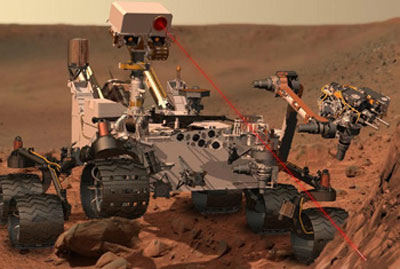
ChemCam laser sets its sights on first Martian target
Rock zapper ready after beaming back images of calibration targets.
August 17, 2012 Read more
Magnetic turbulence trumps collisions to heat solar wind
New research led by University of Warwick physicist Dr Kareem Osman has provided significant insight into how the solar wind heats up when it should not. The solar wind rushes outwards from the raging inferno that is our Sun, but from then on the wind should only get cooler as it expands beyond our solar system since there are no particle collisions to dissipate energy.
August 17, 2012 Read more
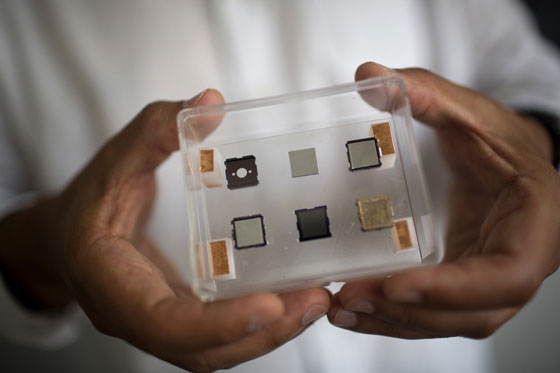
MIT-developed 'microthrusters' could propel small satellites
As small as a penny, these thrusters run on jets of ion beams.
August 17, 2012 Read more
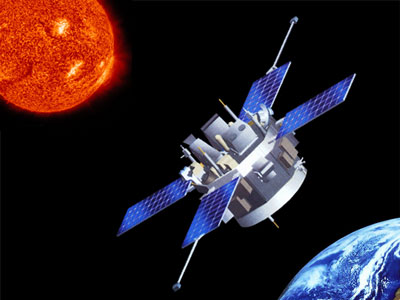
NASA is tracking electron beams from the Sun
In the quest to understand how the world's weather moves around the globe, scientists have had to tease apart different kinds of atmospheric movement, such as the great jet streams that can move across a whole hemisphere versus more intricate, localized flows. Much the same must currently be done to understand the various motions at work in the great space weather system that links the sun and Earth as the sun shoots material out in all directions, creating its own version of a particle sea to fill up the solar system.
August 16, 2012 Read more