

Space Exploration News – Latest Headlines
 Subscribe to our Space Exploration News feed
Meteorites reveal warm water existed on Mars
Hydrothermal fractures around Martian impact craters may have been a habitable environment for microbial life.
November 15, 2012 Read more
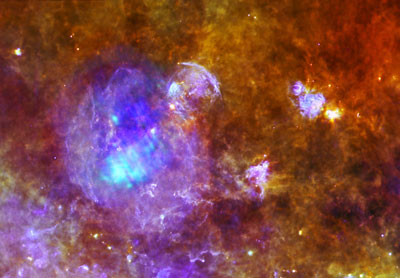
Life and death in a star-forming cloud
The aftershock of a stellar explosion rippling through space is captured in this new view of supernova remnant W44, which combines far-infrared and X-ray data from ESA's Herschel and XMM-Newton space observatories.
November 14, 2012 Read more
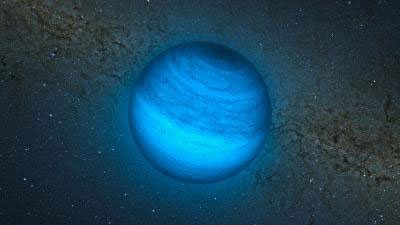
Lost in space: Rogue planet spotted?
Astronomers using ESO's Very Large Telescope and the Canada-France-Hawaii Telescope have identified a body that is very probably a planet wandering through space without a parent star. This is the most exciting free-floating planet candidate so far and the closest such object to the Solar System at a distance of about 100 light-years.
November 14, 2012 Read more
Student teams to build and fly rockets with onboard payloads for NASA rocketry challenge
Organizers of the NASA Student Launch Projects have announced the 57 student teams whose inventive creations will soar skyward in April during the space agency's 2012-13 rocketry challenge.
November 13, 2012 Read more
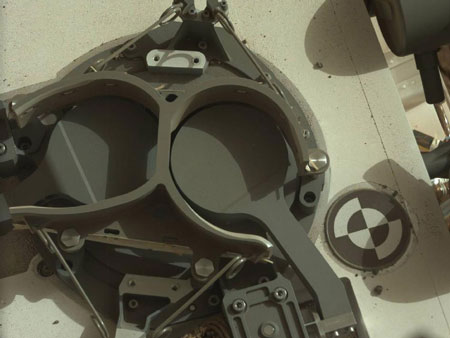
Mars Rover's 'SAM' lab instrument suite tastes soil
A pinch of fine sand and dust became the first solid Martian sample deposited into the biggest instrument on NASA's Mars rover Curiosity: the Sample Analysis at Mars, or SAM.
November 13, 2012 Read more
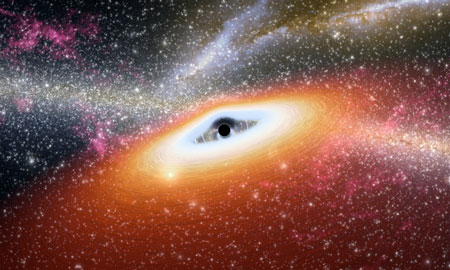
Missing hydrogen problem solved
The mystery of why scientists cannot detect hydrogen in the most distant regions of the universe has been addressed by University of Sydney research.
November 13, 2012 Read more
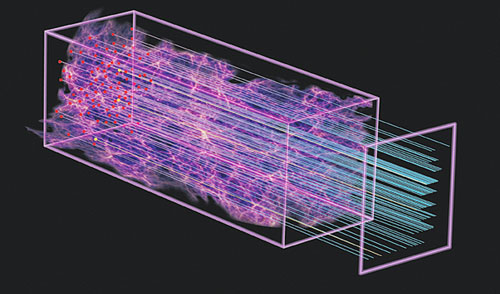
The great space coaster: Astronomers measure the deceleration of the universe before dark energy
For the past five billion years, the expansion of the Universe has been speeding up, powered by the mysterious repulsive force known as 'dark energy'. But thanks to a new technique for measuring the three-dimensional structure of the distant Universe, astronomers from the Sloan Digital Sky Survey (SDSS-III) have made the first measurement of the cosmic expansion rate just three billion years after the Big Bang.
November 13, 2012 Read more
China to launch manned spaceship in June
Like in the Shenzhou-9 mission, the crew might include two men astronauts and a woman, who are scheduled to enter the Tiangong-1 space lab module, Niu Hongguang, deputy commander-in-chief of China's manned space program, said on the sidelines of the 18th National Congress of the Communist Party of China.
November 12, 2012 Read more
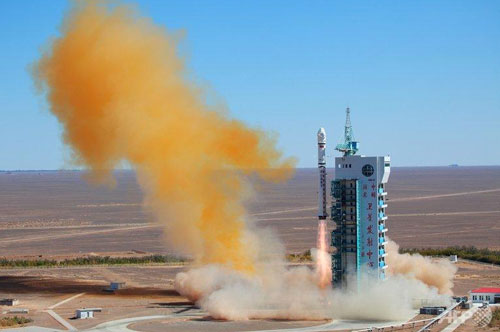
China plans manned space launch in 2013
China is aiming to launch its next manned space mission as early as June 2013, state media reported Saturday, as the country steps up its ambitious exploration programme.
November 10, 2012 Read more
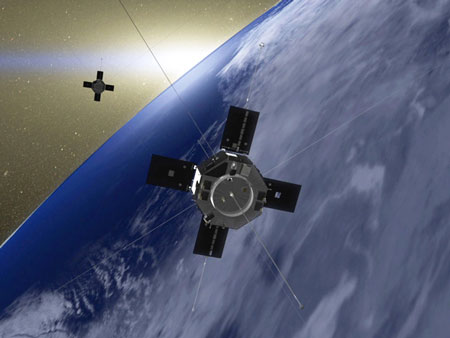
The Van Allen probes: Honoring the origins of magnetospheric science
In 1958, the first US rocket - known as Explorer 1 and led by James Van Allen at the University of Iowa - was launched. By providing observations of a giant swath of magnetized radiation trapped around Earth, now known as the Van Allen Belts, Explorer 1 confirmed that Earth's magnetic environment, the magnetosphere, was not a simple place.
November 9, 2012 Read more
DARPA unveils SpaceView program to engage amateur astronomers in helping to protect satellites
DARPA has created SpaceView, a space debris tracking project that provides amateur astronomers with the means to make a difference. Amateur astronomers will have their first opportunity to sign up in person for the program at the Arizona Science and Astronomy Expo in Tucson, November 10-11, 2012.
November 9, 2012 Read more
Comet collisions every six seconds explain 17-year-old stellar mystery
Every six seconds, for millions of years, comets have been colliding with one another near a star in the constellation Cetus called 49 CETI, which is visible to the naked eye.
November 9, 2012 Read more
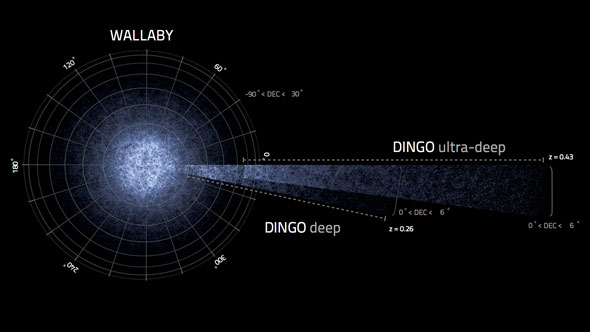
New Australian telescope set to find 700,000 galaxies
Australia?s newest radio telescope is predicted to find an unprecedented 700,000 new galaxies, say scientists planning for CSIRO?s next-generation Australian Square Kilometre Array Pathfinder (ASKAP).
November 9, 2012 Read more
On the hunt for dark matter
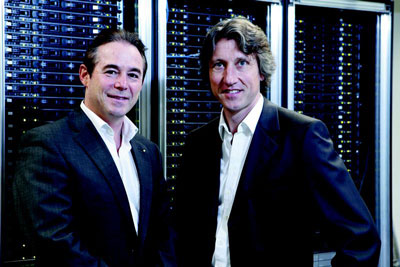
Ceremonial dedication of the PRISMA Cluster of Excellence / EUR 35 million to promote top-level research in particle and hadron physics.
November 9, 2012 Read more
A clean-up for space
Space is becoming increasingly polluted by man-made debris. New EU guidelines and standards will help mitigate the problem and make the space industry cleaner.
November 9, 2012 Read more
Propulsion chips for miniature satellites
Miniature satellites weighing under 100 kilograms (kg) are a less expensive and easier-to-launch alternative to large spacecraft. EU-funded scientists are developing a "thruster-on-a-chip" to provide the necessary boost.
November 9, 2012 Read more
New technique to protect astronauts from space radiation
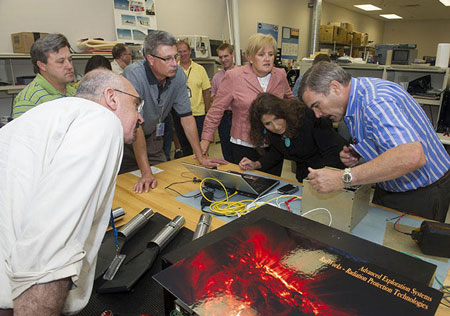
The complexities of traveling to and working in space present challenges to astronauts that NASA scientists and engineers have been working on since Neil Armstrong and Buzz Aldrin first stepped on the moon more than 43 years ago.
November 8, 2012 Read more
NASA's space launch system using futuristic technology to build the next generation of rockets (w/video)
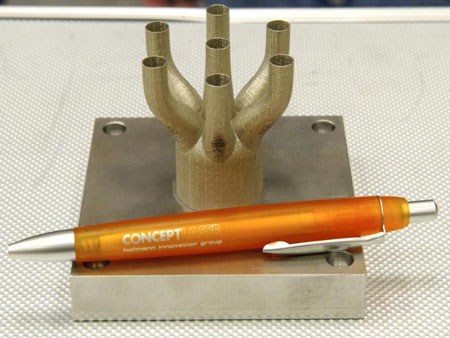
NASA's Marshall Space Flight Center in Huntsville, Ala. is using a method called selective laser melting, or SLM, to create intricate metal parts for America's next heavy-lift rocket. Using this state-of-the-art technique will benefit the agency by saving millions in manufacturing costs.
November 8, 2012 Read more