

Space Exploration News – Latest Headlines
 Subscribe to our Space Exploration News feed
Providing a clearer view of our early Universe
A new data analysis tool will be used by researchers of the ARC Centre of Excellence for All-sky Astrophysics (CAASTRO) at Curtin University to handle large quantities of data coming in from the new low frequency radio telescope, the Murchison Widefield Array (MWA).
December 12, 2012 Read more
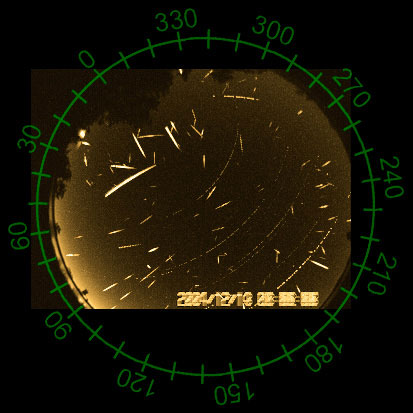
Geminid meteors set to light up winter sky
On the evening of 13 and the morning of 14 December, skywatchers across the world will be looking up as the Geminid meteor shower reaches its peak, in potentially one of the best night sky events of the year.
December 12, 2012 Read more
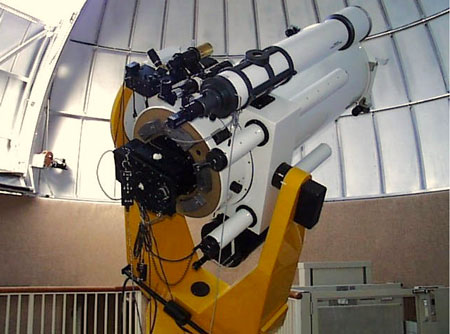
Student team provides real-time video of asteroid Toutatis
An asteroid that some day might threaten Earth is passing relatively close by on the night of December 11-12, and its gliding path among the stars will be tracked by a team of high-school students at the Clay Center Observatory in Brookline, Massachusetts.
December 11, 2012 Read more
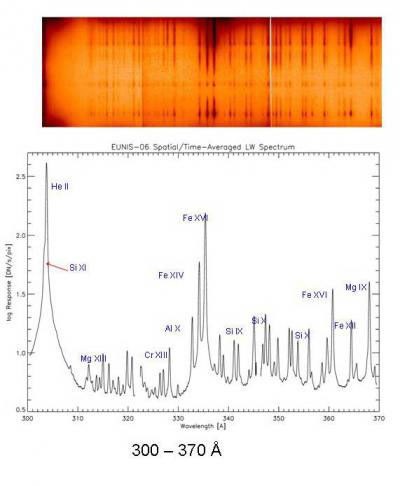
EUNIS mission: 6 minutes in the life of the sun
In December, a NASA mission to study the sun will make its third launch into space for a six-minute flight to gather information about the way material roils through the sun's atmosphere, sometimes causing eruptions and ejections that travel as far as Earth.
December 11, 2012 Read more
An older Vega: New insights about the star all others are measured by
Vega, a star astronomers have used as a touchstone to measure other stars' brightness for thousands of years, may be more than 200 million years older than previously thought.
December 11, 2012 Read more
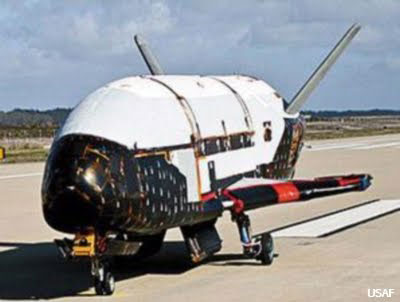
Air Force sends mystery X-37B mini-shuttle back to space (w/video)
A top-secret mini-space shuttle has blasted off from Cape Canaveral.
December 11, 2012 Read more
New knowledge about the remarkable properties of black holes
Black holes are surrounded by many mysteries, but now researchers from the Niels Bohr Institute, among others, have come up with new groundbreaking theories that can explain several of their properties. The research shows that black holes have properties that resemble the dynamics of both solids and liquids.
December 11, 2012 Read more
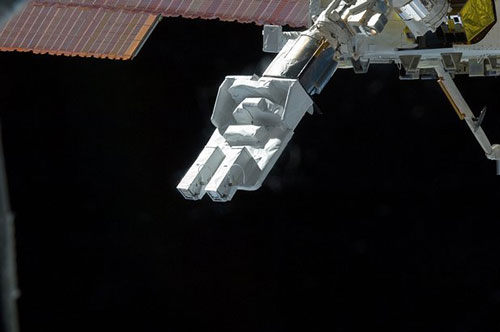
CubeSats in orbit after historic Space Station deployment
Typically satellites launch from Earth, requiring dedicated launch vehicles to propel them into the proper orbit. The cost for this launch scenario could be reduced considerably if there was another way to get the satellites into their optimal orbit. The Japan Aerospace and Exploration Agency (JAXA) found a way to cut the costs of this activity by designing a small satellite launcher, installed recently on the International Space Station.
December 11, 2012 Read more
An elusive effect measured during the last Venus transit
The challenge was the observation of effect occurred during the transit of Venus across the Sun on June 6th, dubbed "Rossiter-McLaughlin effect". This is a phenomenon that occurs when a celestial body passes in front of a star, hiding a part of its rotating surface and that produces a temporary distortion in the profiles of the spectral lines of light coming from the eclipsed star.
December 11, 2012 Read more
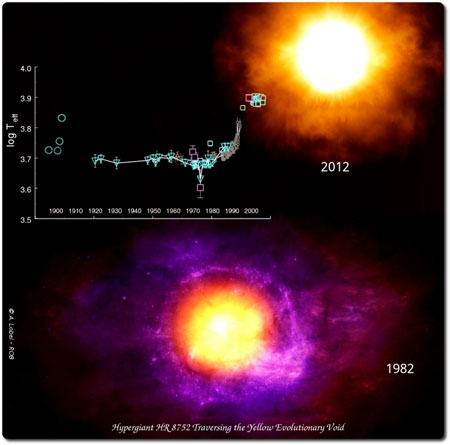
Hypergiant star amazes for 30 years
A European research team has published the results of a 30-year study of an extraordinary hypergiant star.
December 9, 2012 Read more
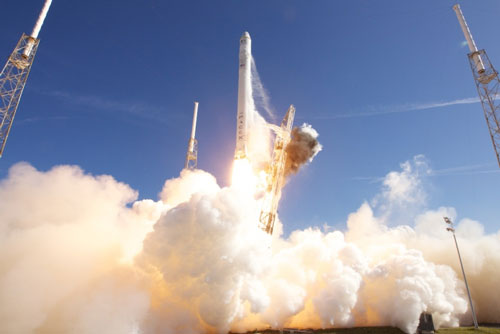
SpaceX wins first U.S. military launch contracts
The United States Air Force Space and Missile Systems Center has awarded SpaceX two Evolved Expendable Launch Vehicle (EELV)-class missions: DSCOVR (Deep Space Climate Observatory) and STP-2 (Space Test Program 2)
December 7, 2012 Read more
X-ray vision can reveal the moment of birth of violent supernovae
A team of astronomers led by the University of Leicester has uncovered new evidence that suggests that X-ray detectors in space could be the first to witness new supernovae that signal the death of massive stars.
December 7, 2012 Read more
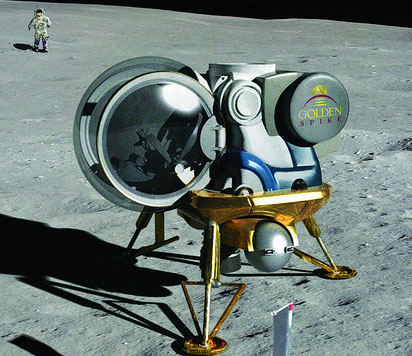
Private firm plans to offer Moon trips for $1.4billion (w/video)
A team of former Nasa executives has launched a private venture to send two people to the Moon for $1.4bn.
December 7, 2012 Read more
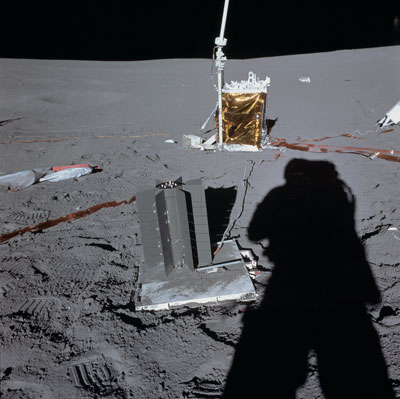
Apollo's lunar dust data being restored
Forty years after the last Apollo spacecraft launched, the science from those missions continues to shape our view of the moon. In one of the latest developments, readings from the Apollo 14 and 15 dust detectors have been restored by scientists at NASA
December 7, 2012 Read more
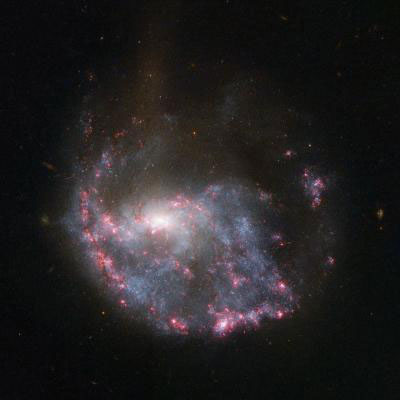
Hubble sees a galaxy hit a bullseye
NGC 922's current unusual form is a result of a cosmic bullseye millions of years ago. A smaller galaxy, catalogued as 2MASXI J0224301-244443, plunged right through the heart of NGC 922 and shot out the other side.
December 6, 2012 Read more
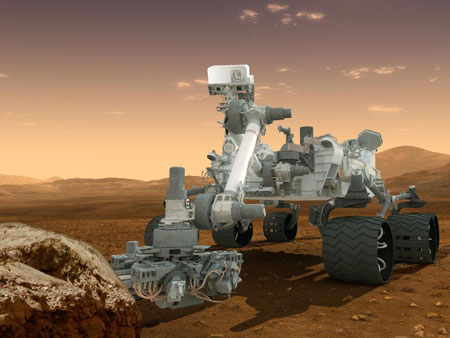
NASA is planning a new robotic Mars mission by 2020
Building on the success of Curiosity's Red Planet landing, NASA has announced plans for a robust multi-year Mars program, including a new robotic science rover set to launch in 2020.
December 6, 2012 Read more
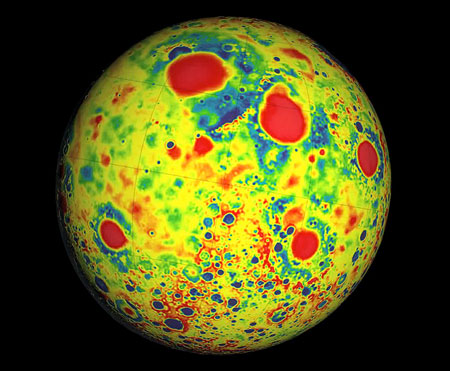
GRAIL reveals a battered lunar history
Twin spacecraft create a highly detailed gravity map of the moon, finding an interior pulverized by early impacts.
December 6, 2012 Read more
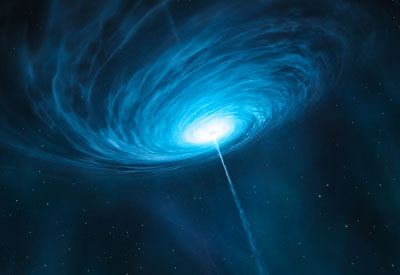
When the first stars blinked on
The very first stars may have turned on when the universe was 750 million years old.
December 6, 2012 Read more