

Space Exploration News – Latest Headlines
 Subscribe to our Space Exploration News feed
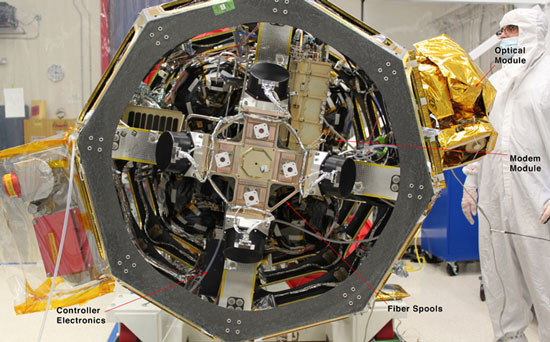
First laser space communication system integrated, ready for launch
A new NASA-developed, laser-based space communication system will enable higher rates of satellite communications similar in capability to high-speed fiber optic networks on Earth.
March 15, 2013 Read more
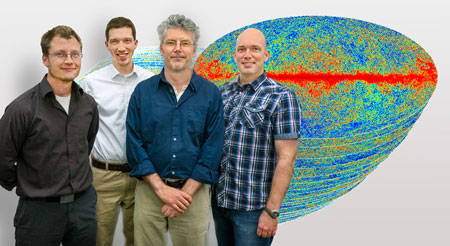
Building the massive simulation sets essential to Planck results
Using NERSC supercomputers, Berkeley Lab scientists generate thousands of simulations to analyze the flood of data from the Planck mission.
March 15, 2013 Read more
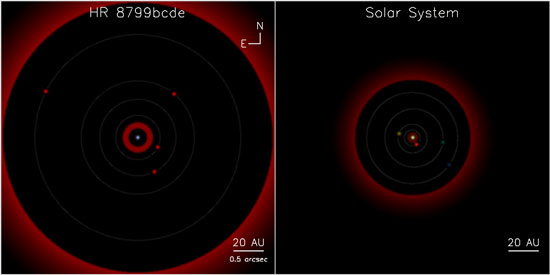
Distant planetary system Is a super-sized solar system
A team of astronomers has made the most detailed examination yet of the atmosphere of a Jupiter-like planet beyond our Solar System.
March 14, 2013 Read more
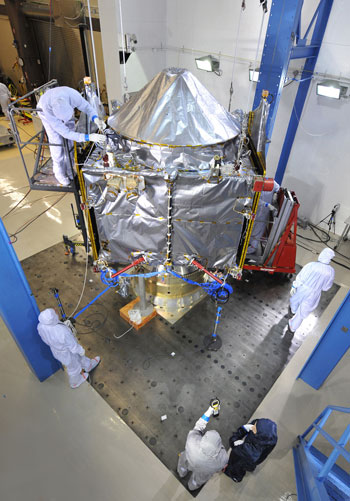
Particles and fields package integrated on upcoming Mars-bound spacecraft
The six science instruments that comprise the Particles and Fields Package that will characterize the solar wind and ionosphere of Mars have been integrated aboard NASA's Mars Atmosphere and Volatile EvolutioN spacecraft. The spacecraft is on track for launch later this year.
March 14, 2013 Read more
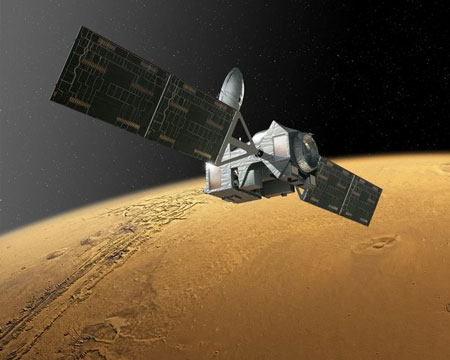
ExoMars: ESA and Roscosmos set for joint Mars missions
ESA and the Russian federal space agency, Roscosmos, have signed a formal agreement to work in partnership on the ExoMars programme towards the launch of two missions in 2016 and 2018.
March 14, 2013 Read more
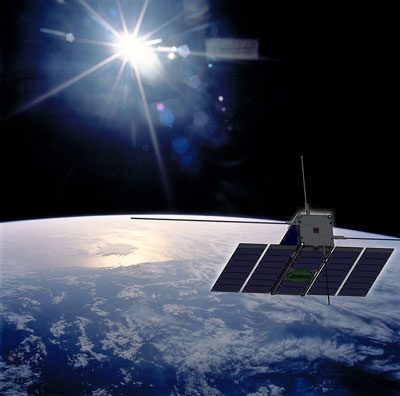
ESA seeks software innovators for orbiting laboratory
ESA is offering software developers the opportunity to use its new testbed in space. The robust nanosat will allow individuals, companies and institutions to try out pioneering software without the danger of losing a mission.
March 14, 2013 Read more
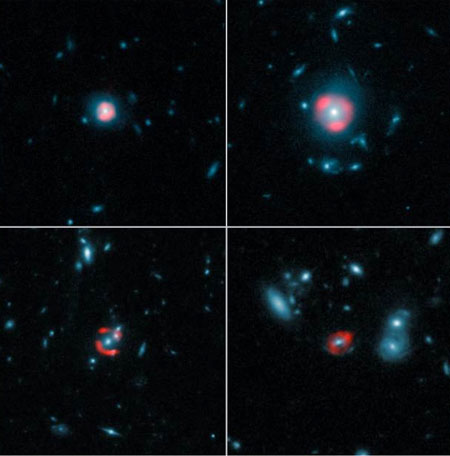
Stellar baby boom
Astronomers observe starburst galaxies in early space with the ALMA telescope - and discover the most distant detection of water published to date
March 13, 2013 Read more

Research team wants to find asteroids that threaten Earth
Several large asteroids have zipped dangerously close to Earth in the past month. Scott Hubbard is part of a team that plans to track down future threats.
March 13, 2013 Read more
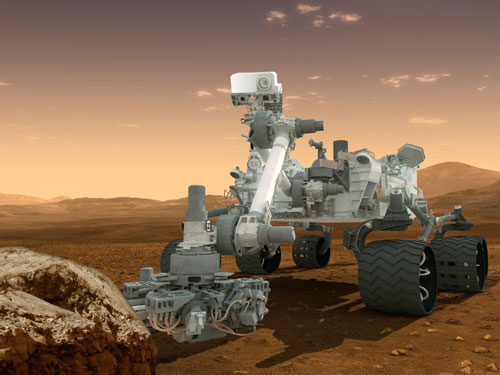
NASA's Curiosity rover finds conditions once suited for ancient life on Mars
An analysis of a rock sample collected by NASA's Curiosity rover shows ancient Mars could have supported living microbes.
March 12, 2013 Read more
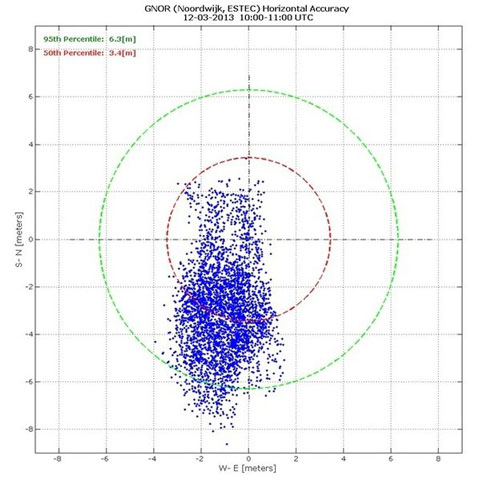
Europe's new age of satellite navigation passes a historical milestone
Europe's new age of satellite navigation has passed a historic milestone - the very first determination of a ground location using the four Galileo satellites currently in orbit together with their ground facilities.
March 12, 2013 Read more
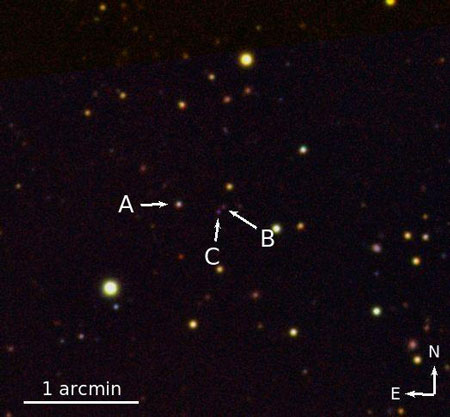
Extremely rare triple quasar found
For only the second time in history, a team of scientists--including Carnegie's Michele Fumagalli--have discovered an extremely rare triple quasar system.
March 12, 2013 Read more
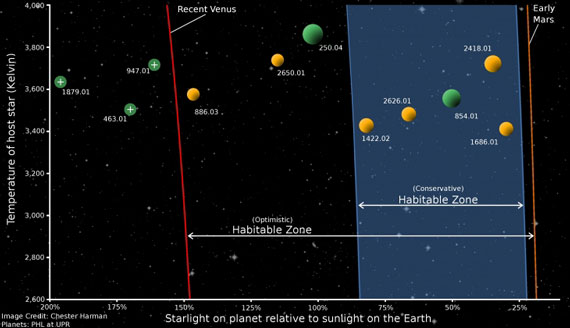
Earth-sized planets in habitable zones are more common than previously thought
The number of potentially habitable planets is greater than previously thought, according to a new analysis by a Penn State researcher, and some of those planets are likely lurking around nearby stars.
March 12, 2013 Read more
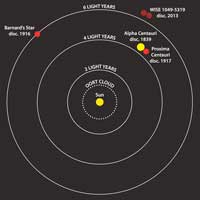
The closest star system found in a century
A pair of newly discovered stars is the third-closest star system to the Sun. The duo is the closest star system discovered since 1916.
March 11, 2013 Read more
Astronomers conduct first remote reconnaissance of another solar system (w/video)
Researchers have conducted a remote reconnaissance of a distant solar system with a new telescope imaging system that sifts through the blinding light of stars. Using a suite of high-tech instrumentation and software called Project 1640, the scientists collected the first chemical fingerprints, or spectra, of this system's four red exoplanets, which orbit a star 128 light years away from Earth.
March 11, 2013 Read more
Space Research Postdoctoral Fellowship Program soliciting applications
The application period for the National Space Biomedical Research Institute's (NSBRI) Postdoctoral Fellowship Program is now open. The two-year fellowships are available in any U.S. laboratory carrying out space-related biomedical or biotechnological research.
March 8, 2013 Read more
NASA supports Extreme Universe Space Observatory
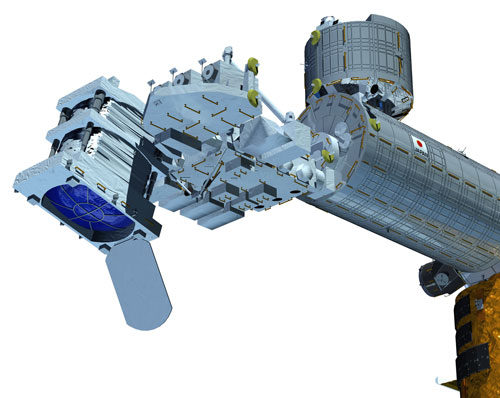
The National Aeronautics and Space Administration has awarded $4.4 million to a collaboration of scientists at five US universities and NASA's Marshall Space Flight Center to help build a telescope for deployment on the International Space Station in 2017.
March 8, 2013 Read more
China to Launch Quantum Experiment Satellite in 2016
China has initiated to launch a satellite for quantum information and technology experiments in 2016, a leading quantum physicist said.
March 8, 2013 Read more
Hubble finds birth certificate of oldest known star
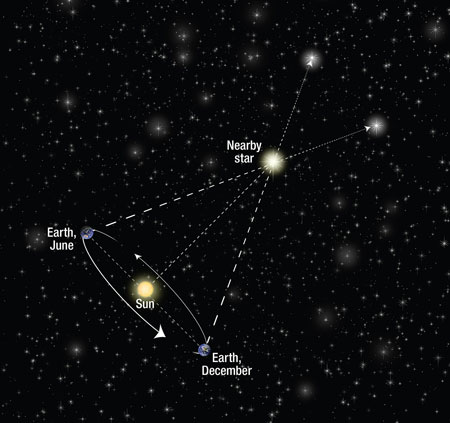
A team of astronomers using NASA's Hubble Space Telescope has taken an important step closer to finding the birth certificate of a star that's been around for a very long time.
March 7, 2013 Read more