

Space Exploration News – Latest Headlines
 Subscribe to our Space Exploration News feed
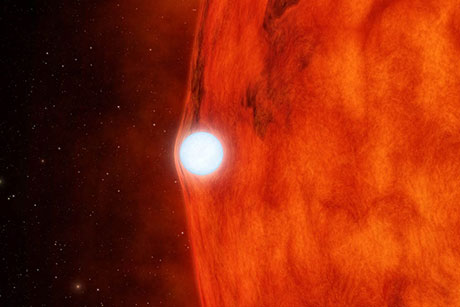
Dead star warps its partner's light, astronomers say
NASA's Kepler space telescope, in concert with Cornell-led measurements of stars' ultraviolet activity, has observed the effects of a dead star bending the light of its companion red star.
April 4, 2013 Read more
Hubble breaks record in search for farthest supernova
NASA's Hubble Space Telescope has found the farthest supernova so far of the type used to measure cosmic distances. Supernova UDS10Wil, nicknamed SN Wilson after American President Woodrow Wilson, exploded more than 10 billion years ago.
April 4, 2013 Read more
Registration opens for NASA Night Rover Energy Challenge
Registration is open for teams seeking to compete in the $1.5 million energy storage competition known as the Night Rover Challenge, sponsored by NASA and the Cleantech Open of Palo Alto, Calif.
April 4, 2013 Read more
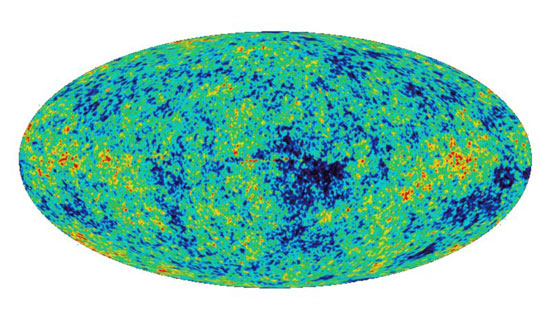
Listening to the Big Bang - in high fidelity
A decade ago, spurred by a question for a fifth-grade science project, physicist John Cramer devised an audio recreation of the Big Bang that started our universe nearly 14 billion years ago. Now, armed with more sophisticated data from a satellite mission observing the cosmic microwave background, Cramer has produced new recordings that fill in higher frequencies to create a fuller and richer sound.
April 4, 2013 Read more
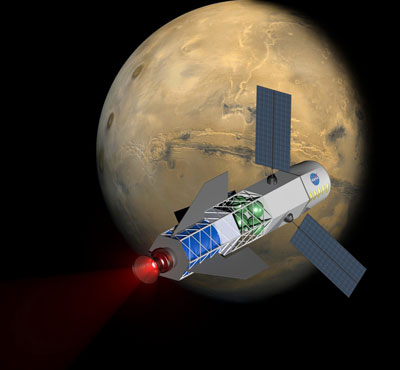
Rocket powered by nuclear fusion could send humans to Mars (w/video)
University of Washington researchers and scientists at a Redmond-based space-propulsion company are building components of a fusion-powered rocket aimed to clear many of the hurdles that block deep space travel, including long times in transit, exorbitant costs and health risks.
April 4, 2013 Read more
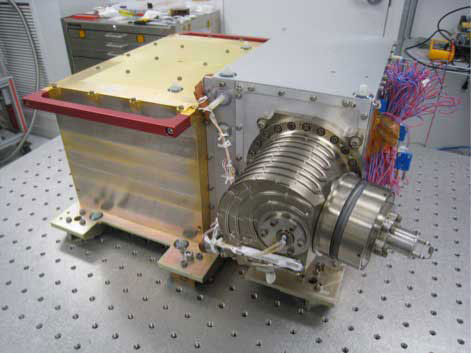
Final MAVEN instrument integrated to spacecraft
An instrument that will measure the composition of Mars' upper atmosphere has been integrated into NASA's Mars Atmosphere and Volatile EvolutioN (MAVEN) spacecraft. MAVEN has a scheduled launch date of Nov. 18.
April 4, 2013 Read more
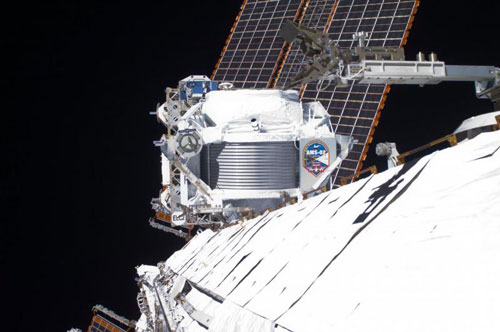
CERN announces measurement of antimatter excess in space
The international team running the Alpha Magnetic Spectrometer (AMS) announces the first results in its search for dark matter.
April 4, 2013 Read more
First data released from the Alpha Magnetic Spectrometer
The first published results from the Alpha Magnetic Spectrometer (AMS), a major physics experiment operating on the International Space Station, were announced today by the AMS collaboration spokesman, Nobel Laureate Samuel Ting. The result is the most precise measurement to date of the ratio of positrons to electrons in cosmic rays. Measurements of this key ratio may eventually provide the world with our first glimpse into dark matter.
April 3, 2013 Read more
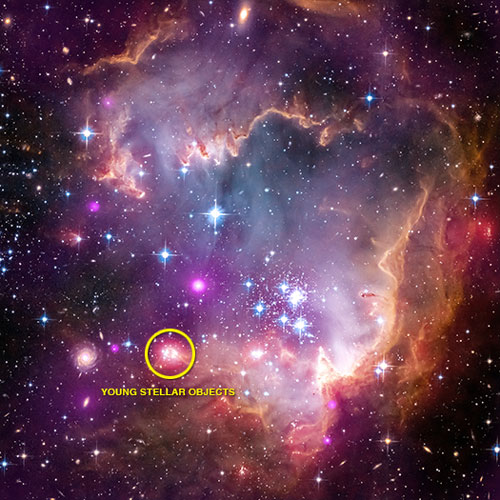
Taken under the 'wing' of the small magellanic cloud
The Small Magellanic Cloud (SMC) is one of the Milky Way's closest galactic neighbors. In fact, it was so bright that many navigators used this object to make their way across the oceans. A new composite image from three NASA telescopes - Chandra, Hubble, and Spitzer - shows this galaxy like Ferdinand Magellan, who lends his name to the SMC, could never have imagined.
April 3, 2013 Read more
Shape from sound - new methods to probe the universe
As the universe expands, it is continually subjected to energy shifts, or 'quantum fluctuations', that send out little pulses of 'sound' into the fabric of spacetime. In fact, the universe is thought to have sprung from just such an energy shift. Scientists reports a new mathematical tool that should allow one to use these sounds to help reveal the shape of the universe.
April 3, 2013 Read more
Near-Earth objects and recent asteroid events top the agenda for planetary defense conference
The conference brings together world experts on subjects related to planetary defense, including what we currently know about potentially threatening asteroids and comets, techniques that might be used to deflect a threatening object, and political and policy issues that might affect a decision to take action.
April 3, 2013 Read more
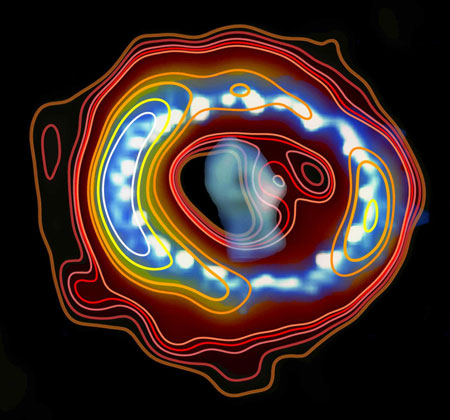
Supernova remnant 1987A continues to reveal its secrets
A team of astronomers led by the International Centre for Radio Astronomy Research (ICRAR) have succeeded in observing the death throws of a giant star in unprecedented detail.
April 3, 2013 Read more
Puzzle of how spiral galaxies set their arms comes into focus (w/video)
As the shapes of galaxies go, the spiral disk -- with its characteristic pinwheel profile - is by far the most pedestrian.
April 3, 2013 Read more
NASA's Swift sizes up comet ISON (w/video)
Astronomers from the University of Maryland at College Park (UMCP) and Lowell Observatory have used NASA's Swift satellite to check out comet C/2012 S1 (ISON), which may become one of the most dazzling in decades when it rounds the sun later this year.
March 29, 2013 Read more
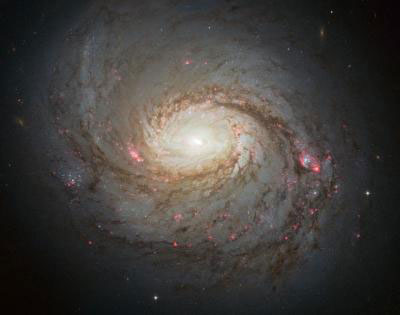
Hubble observes the hidden depths of Messier 77
Messier 77 is a galaxy in the constellation of Cetus, some 45 million light-years away from us. Also known as NGC 1068, it is one of the most famous and well-studied galaxies. It is a real star among galaxies, with more papers written about it than many other galaxies put together.
March 28, 2013 Read more
Growing plants on Mars
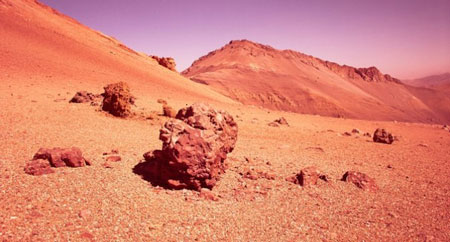
Concrete plans for a one-way ticket to Mars have been forged. Food will have to be grown on location. Is this a distant future scenario? Not for Wieger Wamelink, ecologist at Alterra Wageningen UR, for whom the future will begin on 2 April. He will be researching whether or not it is possible to grow plants on the moon.
March 28, 2013 Read more
Sun block for the 'Big Dog'
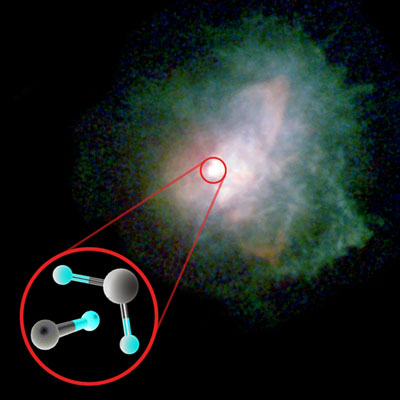
An international team of astronomers, including researchers from the Max Planck Institute for Radio Astronomy and from the University of Cologne, successfully identified two titanium oxides in the extended atmosphere around a giant star. The object VY Canis Major is one of the largest stars in the known universe and close to the end of its life.
March 27, 2013 Read more
Young, hot and blue - Stars in the cluster NGC 2547
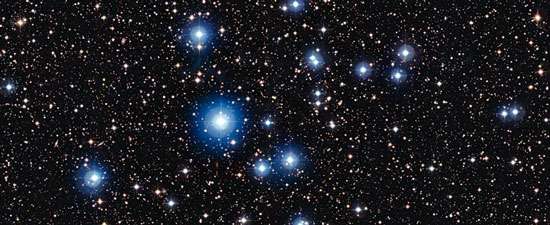
The Universe is an old neighbourhood - roughly 13.8 billion years old. Our galaxy, the Milky Way, is also ancient- some of its stars are more than 13 billion years old. Nevertheless, there is still a lot of action: new objects form and others are destroyed.
March 27, 2013 Read more