

Nanotechnology News – Latest Headlines
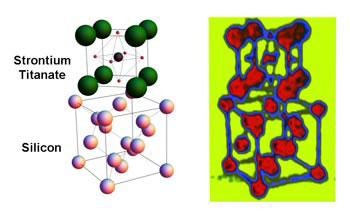
Materials researchers say rebooting your computer soon may be a thing of the past
The ferroelectric materials found in today's 'smart cards' used in subway, ATM and fuel cards soon may eliminate the time-consuming booting and rebooting of computer operating systems by providing an 'instant-on' capability as well as preventing losses from power outages.
April 17, 2009 Read more
New book covers physical and chemical aspects of organic electronics
In this book the principle problems related to using organic materials as semiconductors and to construct functioning devices will be addressed.
April 17, 2009 Read more
Salmonella uses 'nano-syringe' in its stealth attack
A single crafty protein allows the deadly bacterium Salmonella enterica to both invade cells lining the intestine and hijack cellular functions to avoid destruction.
April 17, 2009 Read more
Nanotechnology gets wooden planes airborne again
Wired is carrying a story on how researchers in Canada have unveiled plans for a factory that will use nanotechnology to extract cellulose from wood and use it to form composite materials for airplanes.
April 17, 2009 Read more
DOE makes supercomputer resources available to support high-impact science
The U.S. Department of Energy (DOE) announced today it is accepting proposals for a program to support high-impact scientific advances through the use of some of the world's most powerful supercomputers located at DOE national laboratories.
April 17, 2009 Read more
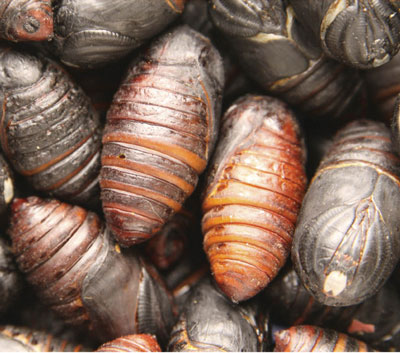
Metabolic fingerprinting
Recent advances in DNA sequencing have made it relatively easy to acquire the full genotype of an individual, but it is equally important to match those genes to their functions. One useful step is to build up a 'metabolic phenotype' outlining all the processes operating to sustain the individual?s life.
April 16, 2009 Read more
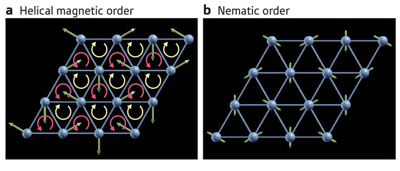
Researchers unveil the possible existence of a new magnetic phase in the spatial arrangements of electron spins
RIKEN scientists, in collaboration with researchers at the University of Tokyo, Japan, and Sungkyunkwan University, Korea, have unveiled the possible existence of a new magnetic phase in the spatial arrangements of electron spins.
April 16, 2009 Read more
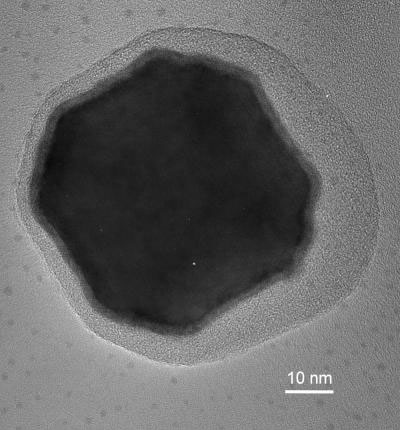
Magnetic nanoparticles offer new cancer breakthrough hope
A multi-disciplinary team of scientists from the University of Leicester could be potentially paving the way for the development of a powerful new strategy for both the early diagnosis and treatment of prostate cancer.
April 16, 2009 Read more
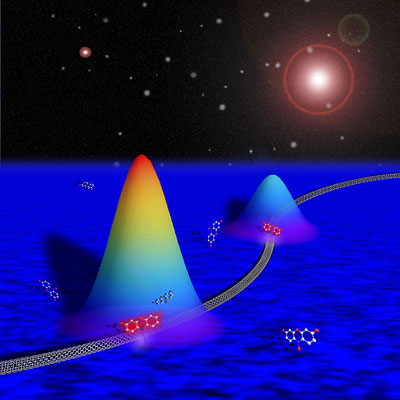
Carbon nanotubes catalyst research could lead to cleaner fuels
Among their many other interesting properties, carbon nanotubes have been found to act as catalysts for some important chemical reactions, including some that could be used to make cleaner fuels. Researchers have now pinpointed unique sites where the reactions take place on single-walled nanotubes.
April 16, 2009 Read more
'Ballistic spin resonance' offers innovative approach to flipping spin
Researchers in Germany and Canada have developed a new technique called ballistic spin resonance that 'flips the spin' of unpaired electrons without using oscillating fields, which are cumbersome to generate on microchips.
April 16, 2009 Read more
Scientists get a grip on colliding fermions to enhance atomic clock accuracy
Physicists have measured and controlled seemingly forbidden collisions between neutral strontium atoms - a class of antisocial atoms known as fermions, which are not supposed to collide when in identical energy states.
April 16, 2009 Read more
Putting the squeeze on an old material could lead to 'instant on' electronic memory
New research involves taking a well-known oxide, strontium titanate, and depositing it on silicon in such a way that the silicon squeezes it into a special state called ferroelectric - a result that could prove key to next-generation memory devices.
April 16, 2009 Read more
Using separate colors of light can shrink nanoelectronics circuitry
A University of Colorado at Boulder team has developed a new method of shrinking the size of circuitry used in nanotechnology devices like computer chips and solar cells by using two separate colors of light.
April 16, 2009 Read more
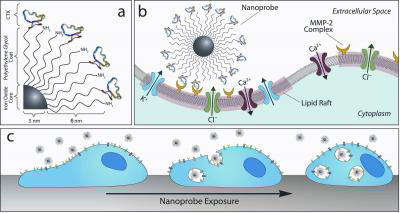
Combining nanoparticles with a scorpion venom slows brain cancer
By combining nanoparticles with a scorpion venom compound already being investigated for treating brain cancer, University of Washington researchers found they could cut the spread of cancerous cells by 98 percent, compared to 45 percent for the scorpion venom alone.
April 16, 2009 Read more
Phantoms Foundation coordinates the first Spain Pavilion at NSTI Nanotech 2009
The Phantoms Foundation in collaboration with The Spanish Institute for Foreign Trade (ICEX) will bring together for the first time a nanoscience and nanotechnology Spanish Pavilion at NSTI.
April 16, 2009 Read more
University College London receives GBP 5m for nanotechnology healthcare research
University College London (UCL) has won four grants worth a total of just over GBP5million from the Engineering and Physical Sciences Research Council (EPSRC) to support research into large-scale integrated projects that exploit nanotechnology for healthcare purposes.
April 16, 2009 Read more
 Subscribe to our Nanotechnology News feed