

Space Exploration News – Latest Headlines
 Subscribe to our Space Exploration News feed
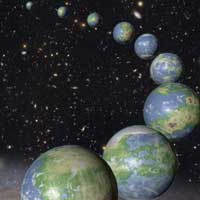
The Milky Way may be swarming with planets with oceans and continents like here on Earth
According to a new study, Earth, Venus and Mars were created from small dust particles containing ice and carbon. The discovery opens up the possibility that the Milky Way may be filled with aquatic planets.
February 23, 2021 Read more
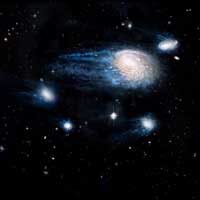
Big galaxies steal star-forming gas from their smaller neighbors
Large galaxies are known to strip the gas that occupies the space between the stars of smaller satellite galaxies. Astronomers have discovered that these small satellite galaxies also contain less 'molecular' gas at their centres.
February 22, 2021 Read more
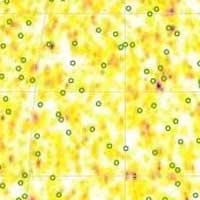
Astrophysicists propose that all high-energy cosmic neutrinos are born by quasars
Scientists studied the arrival directions of astrophysical neutrinos with energies more than a trillion electronvolts (TeV) and came to an unexpected conclusion: all of them are born near black holes in the centers of distant active galaxies powerful radio sources. Previously, only neutrinos with the highest energies were assumed to be obtained in sources of this class.
February 22, 2021 Read more
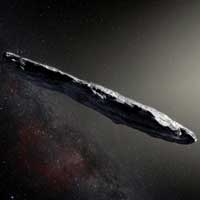
Has Earth been visited by an alien spaceship? Harvard professor Avi Loeb vs everybody else
Avi Loeb, a Harvard professor of astronomy, suggested in a recent book that asteroid Oumuamua is indeed an alien spaceship. But how feasible is this? And how come most scientists disagree with the claim?
February 18, 2021 Read more

New metamaterials for studying the oldest light in the universe
To capture the ancient, cold light from the cosmic microwave background, researchers use specialized telescopes equipped with ultrasensitive cameras for detecting millimeter-wavelength signals. The next-generation cameras will contain up to 100,000 superconducting detectors.Scientists have developed a new type of metamaterials-based antireflection coating for the silicon lenses used in these cameras.
February 17, 2021 Read more

Removing space debris with gecko technology
Researchers have developed a mechanism for capturing space debris. This has now been successfully tested under space conditions onboard the International Space Station.
February 17, 2021 Read more
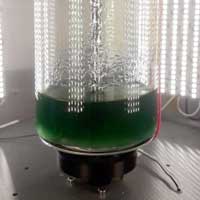
Biotechnology fit for the Red Planet
New method for growing cyanobacteria under Mars-like conditions.
February 16, 2021 Read more
The smallest galaxies in our universe bring more about dark matter to light
A team of researchers has investigated the strength of dark matter scattered across the smallest galaxies in the universe using stellar kinematics. They discovered that the strength of dark matter is quite small, suggesting that dark matter does not easily scatter together.
February 16, 2021 Read more
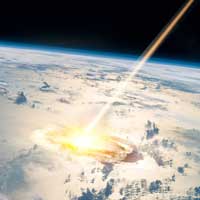
Comet or asteroid: What killed the dinosaurs and where did it come from?
New theory explains possible origin of the Armageddon-causing object.
February 15, 2021 Read more
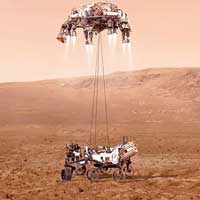
Mars: Perseverance rover set for nail-biting landing - here's the rocket science
Following 'seven minutes of terror' after it reaches Mars' upper atmosphere, NASA's Perseverance rover is expected to land on the surface of the red planet at 20:55 GMT on February 18. This is incredibly hard to do, with only about 40% of missions succeeding.
February 15, 2021 Read more
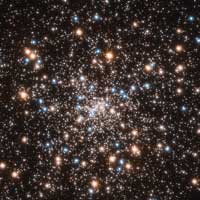
Hubble uncovers concentration of small black holes
Astronomers found something they weren't expecting at the heart of the globular cluster NGC 6397: a concentration of smaller black holes lurking there instead of one massive black hole.
February 12, 2021 Read more
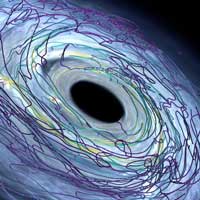
A new way of forming planets
Astrophysicists suggest a new explanation for the abundance in intermediate-mass exoplanets - a long-standing puzzle in astronomy.
February 11, 2021 Read more
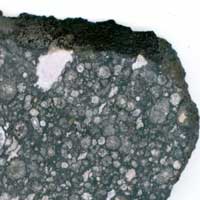
Ceramic chips inside meteorites hint at wild days of the early solar system
A new analysis of ceramic chips embedded in meteorites suggests the formation of our solar system was not as quiet and orderly as we once thought.
February 11, 2021 Read more
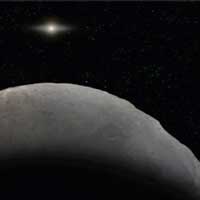
Astronomers confirm orbit of most distant object ever observed in our solar system
Astronomers have confirmed a planetoid that is almost four times farther from the Sun than Pluto, making it the most distant object observed in our solar system. The planetoid, which has been nicknamed 'Farfarout', was first detected in 2018, and the team has now collected enough observations to pin down its orbit.
February 11, 2021 Read more
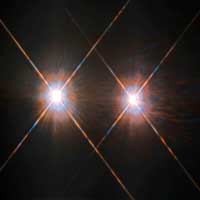
A new way to look for life-sustaining planets
New capabilities developed by an international team of astronomers make it possible to directly image planets that could potentially harbor life within the habitable zone of a neighboring star system.
February 10, 2021 Read more
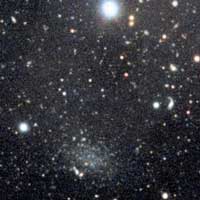
Astronomers offer possible explanation for elusive dark-matter-free galaxies
A study has found that some dwarf galaxies may today appear to be dark-matter free even though they formed as galaxies dominated by dark matter in the past.
February 9, 2021 Read more
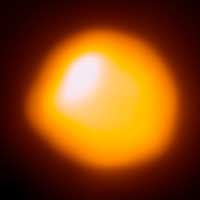
Study of supergiant star Betelgeuse unveils the cause of its pulsations
Betelgeuse is normally one of the brightest, most recognizable stars of the winter sky, marking the left shoulder of the constellation Orion. But lately, it has been behaving strangely: an unprecedentedly large drop in its brightness has been observed in early 2020, which has prompted speculation that Betelgeuse may be about to explode.
February 8, 2021 Read more
Mathematicians developed new classes of stellar dynamics systems solutions
Scientists suggest a new method to obtain stationary solutions for a system of Vlasov-Poisson equations in a three-dimensional case.
February 5, 2021 Read more