

Space Exploration News – Latest Headlines
 Subscribe to our Space Exploration News feed
Scientists discover cosmic factory for making building blocks of life
Scientists have discovered a 'cosmic factory' for producing the building blocks of life, amino acids.
September 15, 2013 Read more
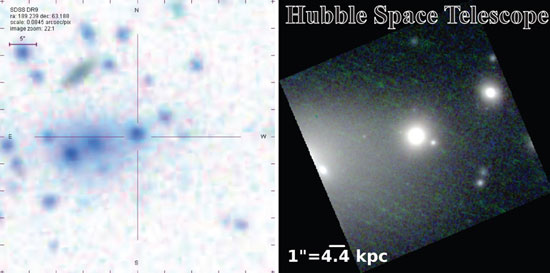
'Red nugget' galaxies were hiding in plain sight
In 2005 the Hubble Space Telescope spotted unusually small galaxies densely packed with red stars in the distant, young universe. They were nicknamed "red nuggets." Since no "red nuggets" were seen nearby, astronomers wondered why they had disappeared over time. New research shows that they didn't disappear completely. In fact, they were simply hidden within the data of previous surveys.
September 13, 2013 Read more
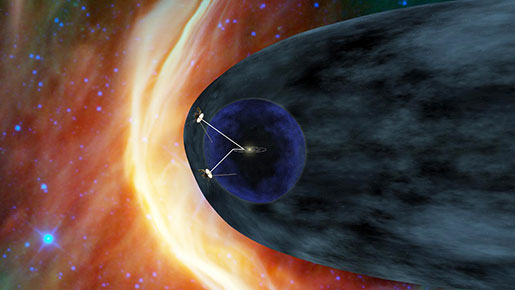
Voyager's departure from the heliosphere
New data from NASA's Voyager 1 spacecraft, which has been hurtling away from the sun since it was launched in 1977, indicates that the spacecraft has indeed left the comfort of the heliosphere and entered into a region of cold, dark space, known as interstellar space.
September 12, 2013 Read more
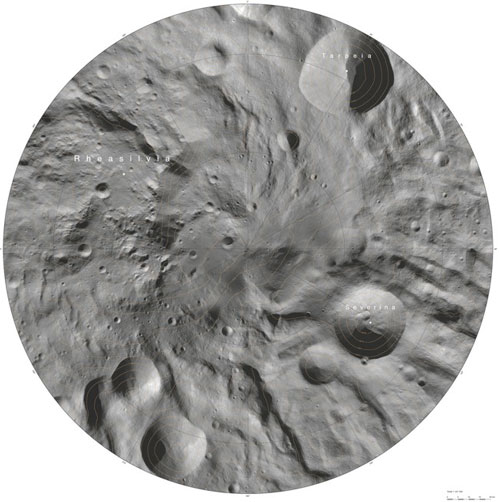
Take a virtual tour of Vesta with new high resolution atlases
An atlas of the asteroid, Vesta, created from images taken during the Dawn Mission's Low Altitude Mapping Orbit (LAMO), is now accessible for the public to explore online. The set of maps has been created from mosaics of 10 000 images from Dawn's framing camera (FC) instrument, taken at an average altitude of about 210 kilometres.
September 12, 2013 Read more
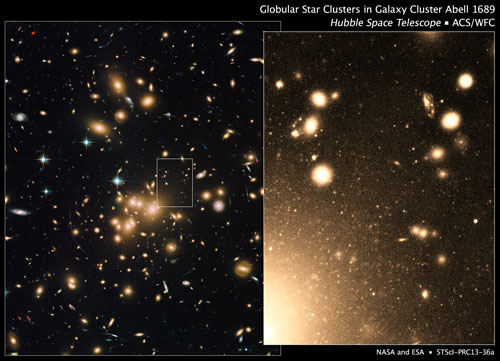
Hubble uncovers largest known population of star clusters
NASA's Hubble Space Telescope has uncovered the largest known population of globular star clusters, an estimated 160,000, swarming like bees inside the crowded core of the giant grouping of galaxies Abell 1689. By comparison, our Milky Way galaxy hosts about 150 such clusters.
September 12, 2013 Read more
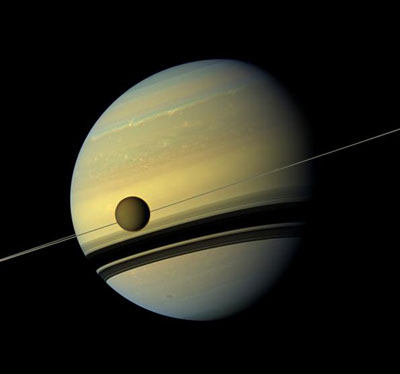
Insights into evolution of life on Earth from one of Saturn's moons
Glimpses of the nursery of life on Earth more than 3.5 billion years ago are coming from an unlikely venue almost 1 billion miles away, according to the leader of an effort to understand Titan, one of the most unusual moons in the solar system.
September 12, 2013 Read more
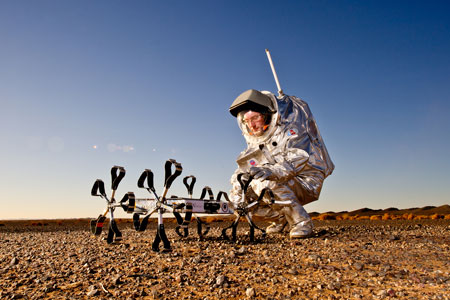
Planetary science meets the NewSpace entrepreneurs
Sessions at the European Planetary Science Congress (EPSC) 2013 today encouraged dialogue between the entrepreneurs who are exploring alternative ways to reach the Moon, Mars and beyond and the scientists that may become their future potential customers for the commercial flight of science instrumentation, as well as providing key data to enable the missions.
September 12, 2013 Read more
Detecting biomarkers on faraway planets
While biomarkers have never been spotted in observations of an exoplanet, because their signal is so faint, the new generation of telescopes being planned today, such as the European Extremely Large Telescope, may be sensitive enough to detect them. New research presented to the European Planetary Science Congress at UCL by Lee Grenfell (DLR) aims to explore how such biomarkers might be detected in future.
September 12, 2013 Read more
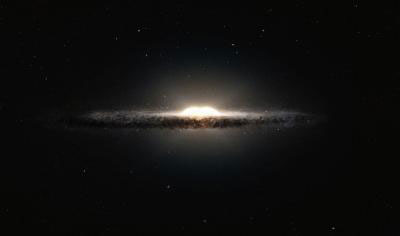
The peanut at the heart of our galaxy
Two groups of astronomers have used data from ESO telescopes to make the best three-dimensional map yet of the central parts of the Milky Way. They have found that the inner regions take on a peanut-like, or X-shaped, appearance from some angles. This odd shape was mapped by using public data from ESO's VISTA survey telescope along with measurements of the motions of hundreds of very faint stars in the central bulge.
September 12, 2013 Read more
Pulsating dust cloud dynamics modeled
New research outlines a new design of spatio-temporal models of astrophysical plasmas.
September 12, 2013 Read more
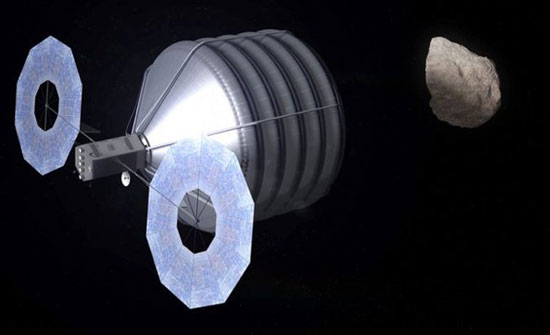
NASA identifies three asteroids for potential capture
The US space agency has narrowed its hunt for an asteroid to capture to three, NASA said. The asteroids fit the requirements of being between seven to 10 meters in size, and further study should be able to narrow the choice even more.
September 12, 2013 Read more
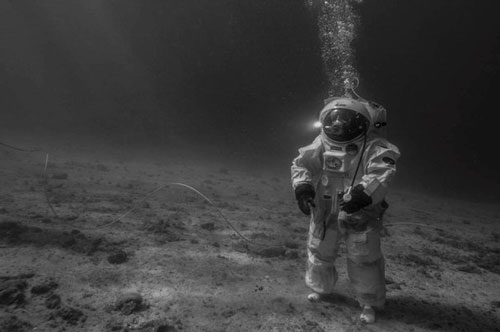
Underwater astronaut on the Moon
ESA astronaut Jean-François Clervoy and ESA astronaut instructor Hervé Stevenin slipped into the roles of Neil Armstrong and Buzz Aldrin last week for an underwater simulation of the historic mission to the Moon.
September 12, 2013 Read more
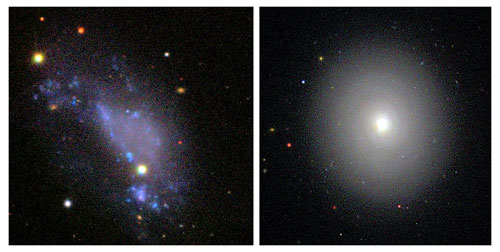
Astronomers explain why disk galaxies eventually look alike
Astronomers have discovered the fundamental process responsible for the smooth, steady fade of older disk galaxies. They say the key is the clumps of interstellar gases and new stars within young galaxy disks.
September 11, 2013 Read more
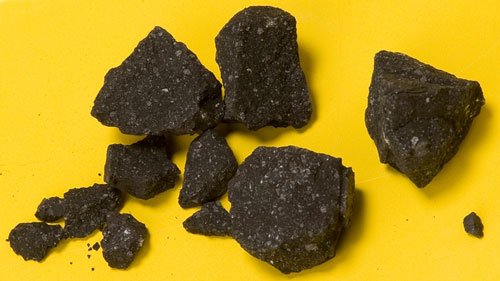
Scientists strike scientific gold with meteorite
An important discovery has been made concerning the possible inventory of molecules available to the early Earth. Scientists found that the Sutter's Mill meteorite, which exploded in a blazing fireball over California last year, contains organic molecules not previously found in any meteorites. These findings suggest a far greater availability of extraterrestrial organic molecules than previously thought possible, an inventory that could indeed have been important in molecular evolution and life itself.
September 10, 2013 Read more
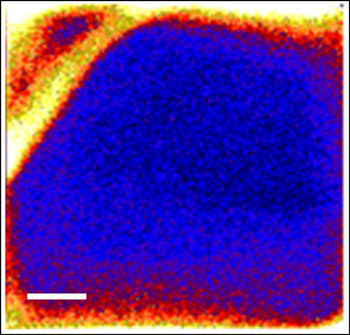
Water hidden in the Moon may have proto-Earth origin
Water found in ancient Moon rocks might have actually originated from the proto-Earth and even survived the Moon-forming event.
September 10, 2013 Read more
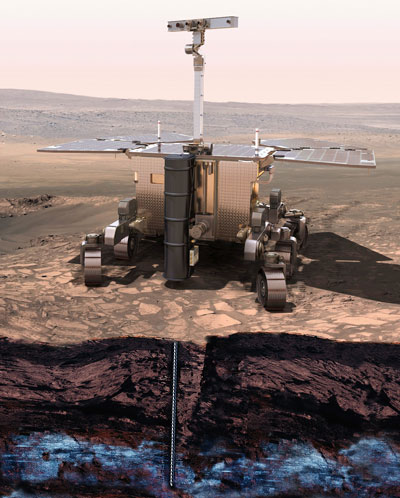
Microscopic signs of life shown to survive the harsh environment on Mars
An instrument similar to those used on Earth by art detectives and to sense explosives at airports will be taken into space for the first time by ExoMars, the European Space Agency's mission to Mars in 2018. This Raman spectrometer will help space scientists to hunt for traces of Martian life.
September 10, 2013 Read more
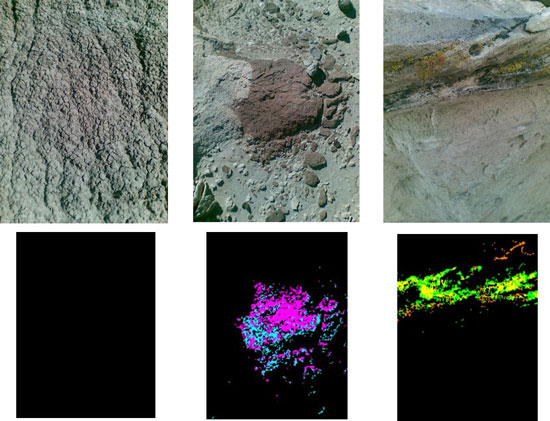
Cyborg astrobiologist uses phone-cam to search for signs of life
A novel, hybrid part-human, part-machine visual system that uses a simple mobile phone camera has been developed to search for evidence of past or present life in planetary analogue sites on Earth.
September 10, 2013 Read more
Scientists are still in the dark understanding how the biggest black holes were born
Unresolved questions about the nature of supermassive black holes, gravitational monsters at the heart of nearly all large galaxies, were at the forefront of a recent conference at the Kavli Institute for Theoretical Physics (KITP) at the University of California, Santa Barbara.
September 10, 2013 Read more