

Space Exploration News – Latest Headlines
 Subscribe to our Space Exploration News feed
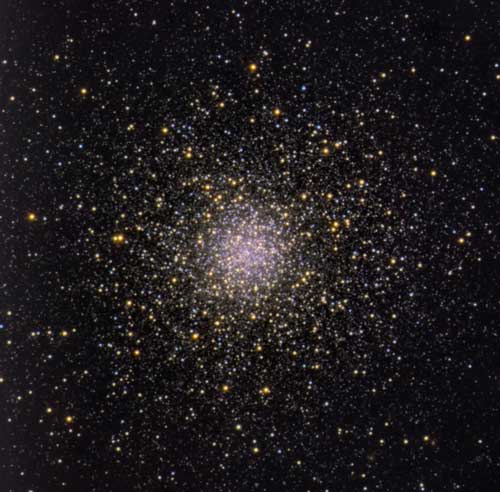
Solved: One of the mysteries of globular clusters
A study shows that the most massive stars in the last stages of their lives are those which contaminate the interstellar medium with new chemical elements, giving rise to successive generations of stars in these 'astronomical fossils'.
November 8, 2016 Read more
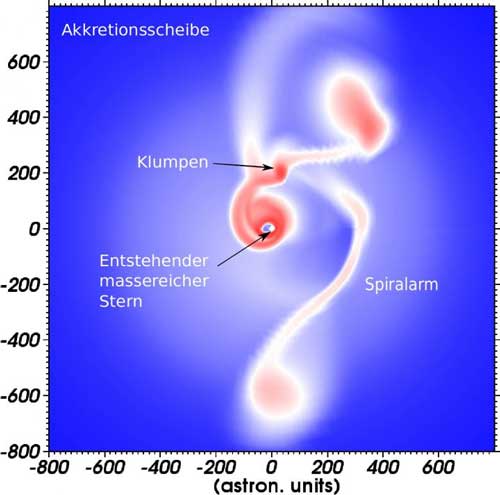
The birth of massive stars is accompanied by strong luminosity bursts
'How do massive stars form?' is one of the fundamental questions in modern astrophysics, because these massive stars govern the energy budget of their host galaxies. Using numerical simulations, researchers revealed new components of the formation of massive stars, which were already known from the formation process of low-mass as well as primordial stars.
November 7, 2016 Read more
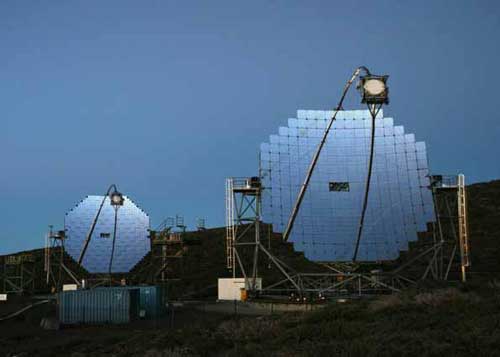
Detour via gravitational lens makes distant galaxy visible
Never before have astrophysicists measured light of such high energy from a celestial object so far away. Around 7 billion years ago, a huge explosion occurred at the black hole in the center of a galaxy. This was followed by a burst of high-intensity gamma rays. A number of telescopes have succeeded in capturing this light.
November 7, 2016 Read more
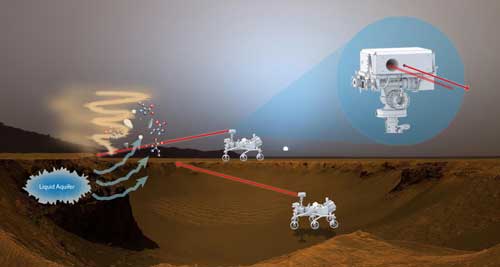
New instrument could search for signatures of life on Mars
A sensing technique that the U.S. military currently uses to remotely monitor the air to detect potentially life-threatening chemicals, toxins, and pathogens has inspired a new instrument that could 'sniff' for life on Mars and other targets in the solar system - the Bio-Indicator Lidar Instrument, or BILI.
November 1, 2016 Read more
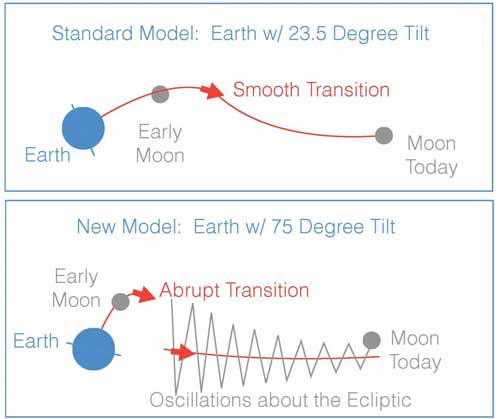
New model explains the moon's weird orbit
Simulations suggest a dramatic history for the Earth-moon duo.
October 31, 2016 Read more
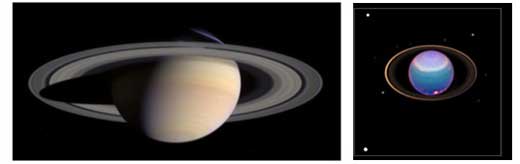
Mystery solved behind birth of Saturn's rings
A team of researchers have presented a new model for the origin of Saturn's rings based on results of computer simulations. The results of the simulations are also applicable to rings of other giant planets and explain the compositional differences between the rings of Saturn and Uranus.
October 31, 2016 Read more
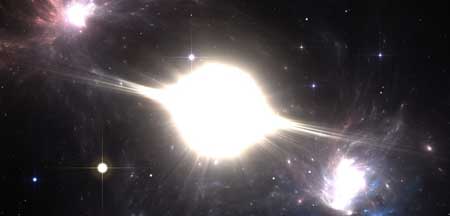
The universe is expanding at an accelerating rate - or is it?
Five years ago, the Nobel Prize in Physics was awarded to three astronomers for their discovery, in the late 1990s, that the universe is expanding at an accelerating pace. Now, a team of scientists has cast doubt on this standard cosmological concept.
October 21, 2016 Read more
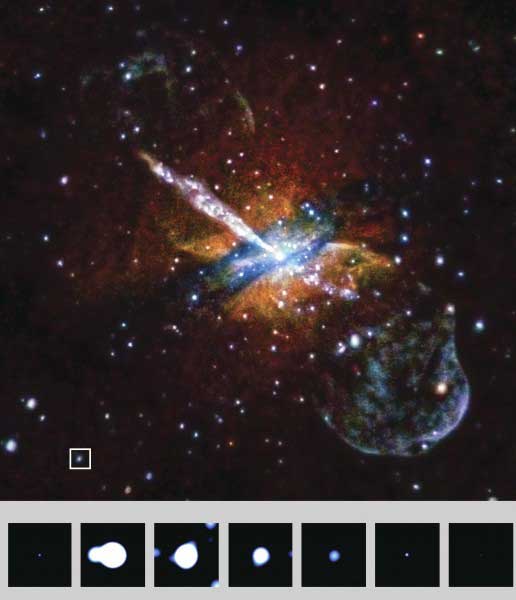
Study finds unexplainable activity in distant stars
Space energy anomalies more than 50 million light years from our galaxy are creating conditions that should be destroying stars, but instead are regenerating them, according to astronomers.
October 20, 2016 Read more
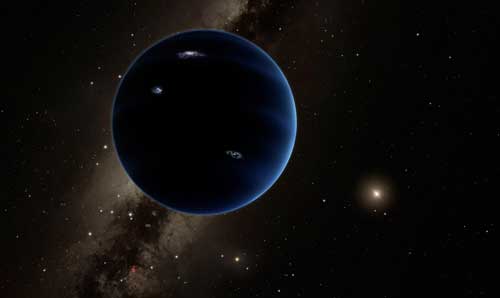
Curious tilt of the Sun traced to undiscovered planet
Planet Nine the undiscovered planet at the edge of the solar system that was predicted by the work of Caltech's Konstantin Batygin and Mike Brown in January 2016 appears to be responsible for the unusual tilt of the Sun, according to a new study.
October 20, 2016 Read more
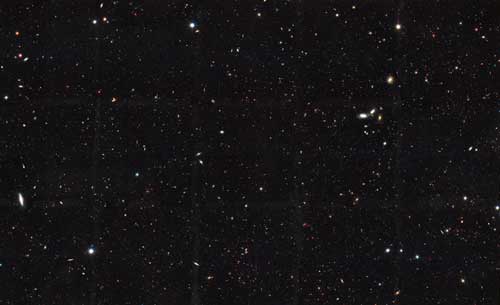
A universe of two trillion galaxies
An international team of astronomers has found that the universe contains at least two trillion galaxies, twenty times more than previously thought.
October 13, 2016 Read more
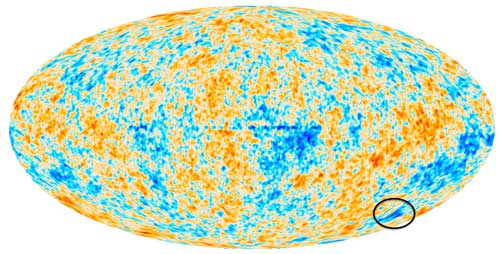
Cosmological mystery solved by largest ever map of voids and superclusters
A team of astrophysicists have created the largest ever map of voids and superclusters in the Universe, which helps solve a long-standing cosmological mystery.
October 12, 2016 Read more
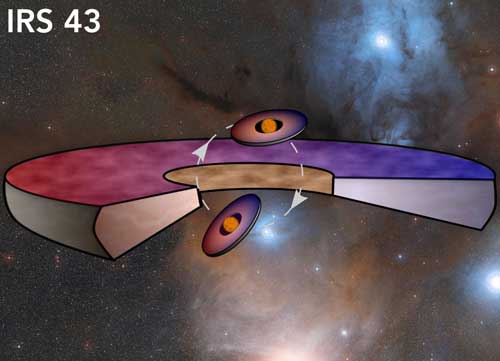
Chaos in cosmos: Stars with three planet-forming discs of gas
Astronomers have discovered a system consisting of two stars with three rotating planet-forming accretion discs around them. It is a binary star where each star has its own planet-forming disc and in addition, there is one large shared disc.
October 11, 2016 Read more
Mars-bound astronauts face chronic dementia risk from galactic cosmic ray exposure
Study raises questions about long-term brain health after extended spaceflights.
October 10, 2016 Read more
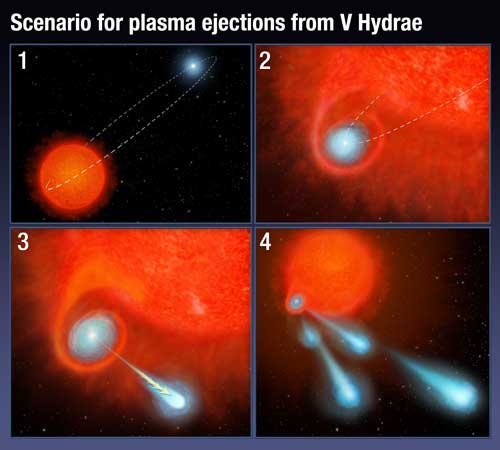
Hubble detects giant 'cannonballs' shooting from star
Great balls of fire! NASA's Hubble Space Telescope has detected superhot blobs of gas, each twice as massive as the planet Mars, being ejected near a dying star.
October 7, 2016 Read more
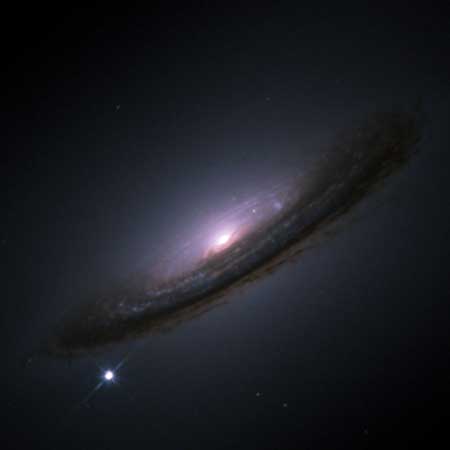
Detonating white dwarfs as supernovae
A new mathematical model created by astrophysicists describes how dead stars called white dwarfs could detonate, producing a type of explosion that is instrumental to measuring the extreme distances in our universe.
October 5, 2016 Read more
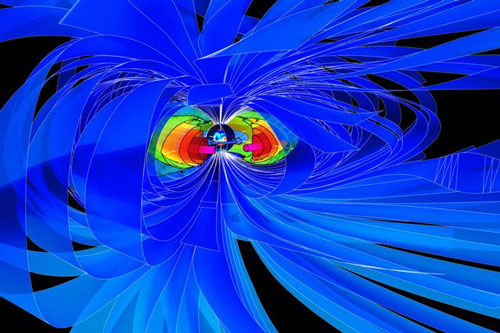
Research resolves a debate over 'killer electrons' in space
New findings answer a fundamental question about our space environment and will help scientists develop methods to protect valuable telecommunication and navigation satellites.
October 4, 2016 Read more
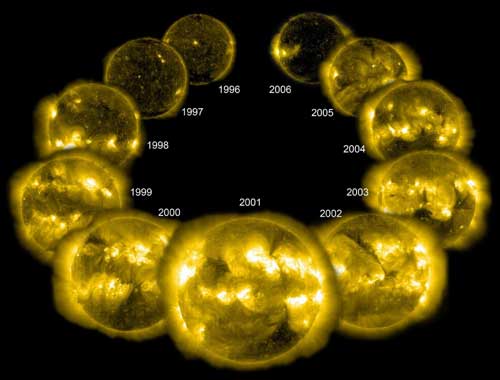
Are planets setting the sun's pace?
Researchers suggest a link between the solar cycle and the tidal effects of Venus, the Earth and Jupiter.
October 4, 2016 Read more
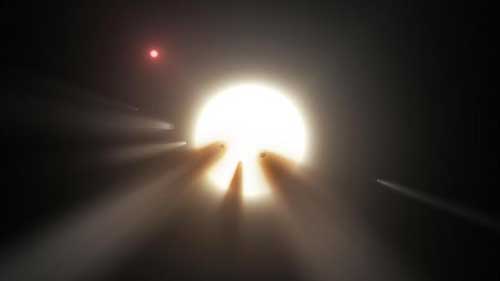
Our galaxy's most-mysterious star is even stranger than astronomers thought
A star known by the unassuming name of KIC 8462852 (Tabby's star) in the constellation Cygnus has been raising eyebrows both in and outside of the scientific community for the past year. The researchers analyzed further Kepler observations of the puzzling star and showed that in addition to its rapid unexplained brightness changes, the star also faded slowly and steadily during the four years it was watched by Kepler.
October 3, 2016 Read more