

Space Exploration News – Latest Headlines
 Subscribe to our Space Exploration News feed
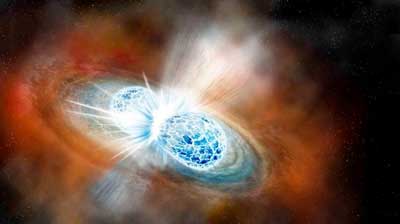
In 5-10 years, gravitational waves could accurately measure universe's expansion
New LIGO readings could improve disputed measurement quickly.
October 23, 2018 Read more
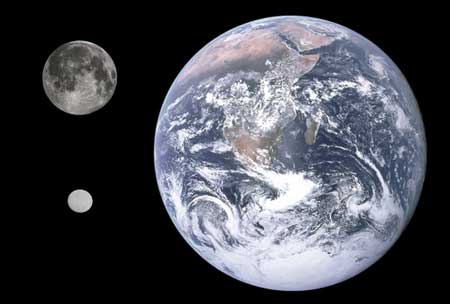
Weighing planets and asteroids
A team of scientists from the International Pulsar Timing Array consortium has used pulsar timing data to measure the masses of the dwarf-planet Ceres and other asteroids.
October 23, 2018 Read more
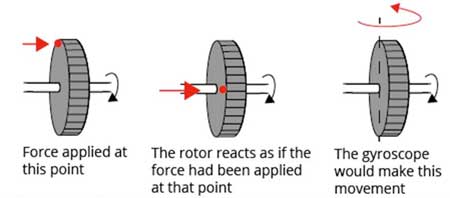
A scientific theory proposes a new Celestial Mechanics
A new scientific theory points out that we can understand the behavior of bodies subjected to successive accelerations by rotations, by means of field theory.
October 23, 2018 Read more
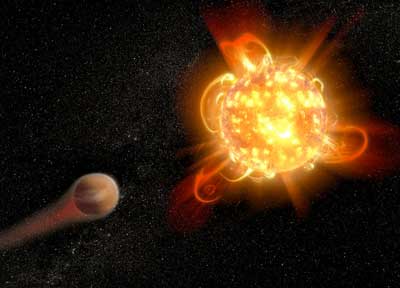
Superflares from young red dwarf stars imperil planets
Flares from the youngest red dwarfs surveyed are 100 to 1,000 times more energetic than when the stars are older. This younger age is when terrestrial planets are forming around their stars.
October 19, 2018 Read more
Supermassive black holes and supercomputers
Researchers reveal the story of the oldest stars and galaxies, compiled from 20 years of simulating the early universe.
October 17, 2018 Read more
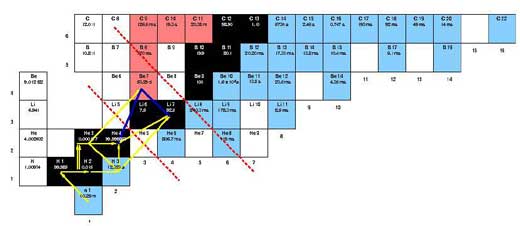
The cosmological lithium problem
This problem is one of the still unresolved questions of the current standard description of the Big Bang.
October 8, 2018 Read more
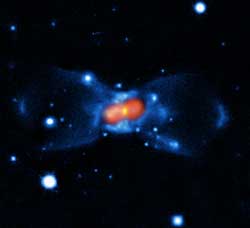
When Is a nova not a nova? When a white dwarf and a brown dwarf collide
International research team confirms collision of white dwarf and brown dwarf stars.
October 8, 2018 Read more
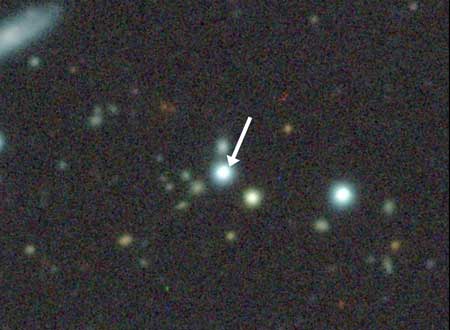
Journey to the beginning of time
With the Pristine survey, an international team is looking for and researching the oldest stars in our Universe. The goal is to learn more about the young Universe right after the Big Bang.
October 8, 2018 Read more
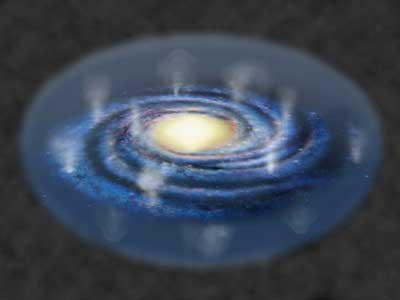
X-ray telescope reveals the Milky Way's halo of hot gas is fed by supernovae
Satellite x-ray observations reveal that supernovae feed the gas cloud that surrounds our galaxy.
October 5, 2018 Read more
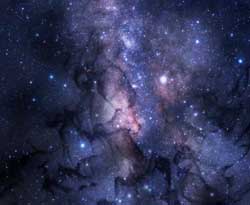
A new era in the quest for dark matter
In a review that was published this week, physicists argue that the time has come to broaden and diversify the experimental effort, and to incorporate astronomical surveys and gravitational wave observations in the quest for the nature of dark matter.
October 4, 2018 Read more
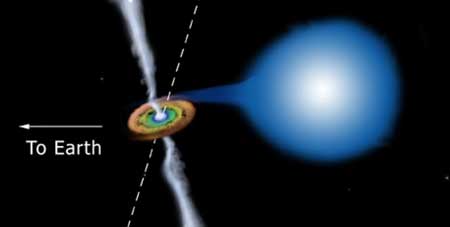
Scientists discover new nursery for superpowered photons
One of the weirdest objects in the Milky Way just got weirder. Scientists have discovered a new source of the highest-energy photons in the cosmos: a strange system known as a microquasar, located in our neck of the galaxy a neighborly 15,000 light years from Earth.
October 3, 2018 Read more
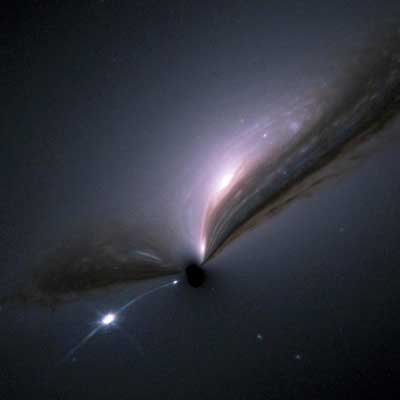
Black holes ruled out as universe's missing dark matter
Statistical analysis shows black holes can make up no more than 40 percent of dark matter.
October 2, 2018 Read more
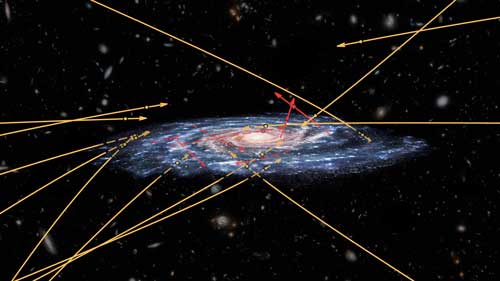
Gaia spots stars flying between galaxies
A team of astronomers using the latest set of data from ESA's Gaia mission to look for high-velocity stars being kicked out of the Milky Way were surprised to find stars instead sprinting inwards - perhaps from another galaxy.
October 2, 2018 Read more
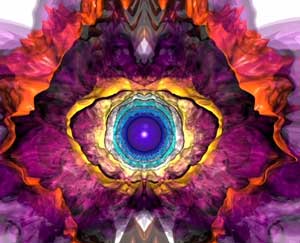
The notorious luminous blue variable star
New, three-dimensional simulations reveal the inner workings of one of the universe's most mysterious stars.
September 26, 2018 Read more
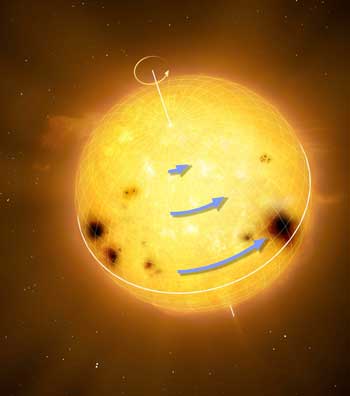
Astrophysicists measure precise rotation pattern of sun-like stars for the first time
Equators of Sun-like stars rotate up to two and a half times as fast as higher latitudes, researchers have discovered.
September 20, 2018 Read more
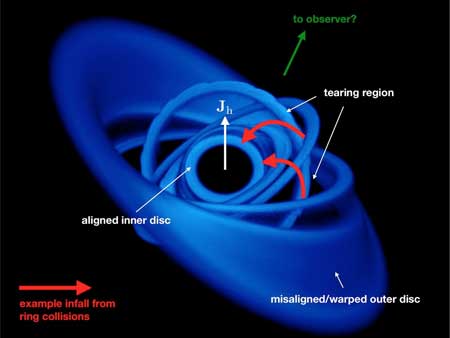
Matter falling into a black hole at 30 percent of the speed of light
Astronomers report the first detection of matter falling into a black hole at 30% of the speed of light, located in the centre of the billion-light year distant galaxy PG211+143.
September 20, 2018 Read more
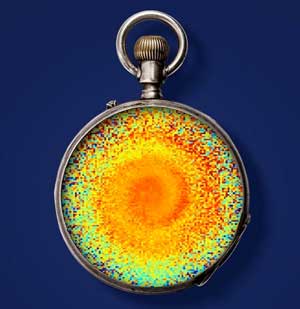
Gaia detects a shake in the Milky Way
Position and movement data of more than six million stars show substructures that were never seen, originated by an impact that occurred more than 300 million years ago.
September 19, 2018 Read more
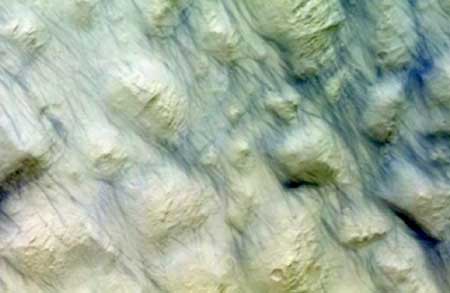
ExoMars highlights radiation risk for Mars astronauts, and watches as dust storm subsides
Astronauts on a mission to Mars would be exposed to at least 60% of the total radiation dose limit recommended for their career during the journey itself to and from the Red Planet, according to data from the ESA-Roscosmos ExoMars Trace Gas Orbiter.
September 19, 2018 Read more