

Nanotechnology News – Latest Headlines
Brain Drain: America needs more money for science
Increased funding, training students and teachers in science, math and related fields, and attracting high-skilled immigrants should be the key mantras for America to maintain its competitive edge in a global world, scientists and industry leaders say.
January 28, 2008 Read more
Defense department funds study of carbon nanotube-based drug
The Department of Defense has commissioned a nine-month study from Rice University chemists and scientists in the Texas Medical Center to determine whether a new drug based on carbon nanotubes can help prevent people from dying of acute radiation injury following radiation exposure. The new study was commissioned after preliminary tests found the drug was greater than 5,000 times more effective at reducing the effects of acute radiation injury than the most effective drugs currently available.
January 28, 2008 Read more
Programming biomolecular self-assembly pathways
Nature knows how to make proteins and nucleic acids (DNA and RNA) dance to assemble and sustain life. Inspired by this proof of principle, researchers at the California Institute of Technology have demonstrated that it is possible to program the pathways by which DNA strands self-assemble and disassemble, and hence to control the dynamic function of the molecules as they traverse these pathways.
January 26, 2008 Read more
Students' Terra di Aqua cocept: nanotechnology provides clean water in city of the future
In the future, there is no bottled water. Plastic bottles boasting the purest drinking water are relics of the past, and cities create pristine reservoirs using the power of nanotechnology. That is the future according to 16 eighth graders from Gates Intermediate School in Massachusetts.
January 26, 2008 Read more
Kalam: Make India a significant player in nanotechnology
Government and private sector should join hands and carry out focussed research to make India a significant player in nanotechnology, former President A P J Abdul Kalam said on Saturday.
January 26, 2008 Read more
Who are the rising stars in the new generation of chemists?
In Tomorrow's Chemistry Today, Bruno Pignataro has selected the rising stars of the new generation of chemists and compiled their innovative and award-winning research projects in one volume. Read Tomorrow's Chemistry Today and spot a future Nobel Prize winner or a development that may change the face of science.
January 25, 2008 Read more
Nanotechnology-based scanners to speed airport checks
The Telegraph in the UK is carrying a story on how new technology could help improve safety and efficiency at airports.
January 25, 2008 Read more
Chemists highly pure nanotubes needed for next generation electronic devices
Chemists have developed a procedure for creating highly pure carbon nanotubes needed for the development of the next generation of electronic devices. The discovery could break the scientific bottleneck keeping electronic devices from shrinking to the nanoscale.
January 25, 2008 Read more
FP7 one year on: revolutionary and working, says Potocnik
The EU's Seventh Framework (FP7), now one year into its seven-year life span, is a 'kind of transition programme', taking Europe's research community in the direction of the new instruments that were introduced last year, said EU Science and Research Commissioner Janez Potocnik.
January 25, 2008 Read more
EU project on intelligent materials to regenerate bone tissue
The Nanobiocom project, funded under the EU's Sixth Framework Programme (FP6), is working on the regeneration and repair of bone tissue. Its aim is to come up with a substitute for bone tissue that can repair the bone and regenerate it in such a way that it will be able to carry out similar functions to those in its natural state.
January 25, 2008 Read more
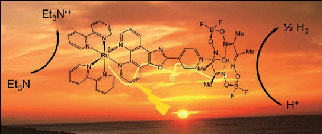
Towards bio-inspired hydrogen production without noble metals
For the first time, researchers have succeeded in producing hydrogen with a molecular system that doesn't require a noble metal catalyst. This outcome has important implications for the financial future of hydrogen energy.
January 25, 2008 Read more
Scripps scientists develop new method for creating self-assembling, nanoscale materials
While biomedical, electronics, and other branches of research are marching steadily into the realm of the smaller-than-small nanometer scale, building needed materials at this scale has been problematic. This week, however, a team from The Scripps Research Institute unveiled a novel approach to the problem that yields a material with novel properties, which some might find reminiscent of Flubber. The material is produced using naturally occurring proteins as templates for uniform, self-assembled, nano-scale construction.
January 25, 2008 Read more
DuPont's Chowdhry Offers Perspectives on Science and Global Policymaking at Davos World Economic Forum
DuPont Senior Vice President and Chief Science & Technology Officer Uma Chowdhry offered her perspectives on the importance of science in the formation of global policy during a discussion at the World Economic Forum today.
January 25, 2008 Read more
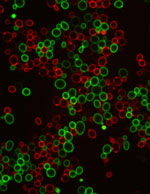
Nanowires hold promise for more affordable solar cells
The Department of Engineering Physics at McMaster University, Cleanfield Energy and the Ontario Centres of Excellence have formed a partnership to pursue the commercialization of nanowire technology in the production of solar cells. The particular type of nanowire technology developed at McMaster is able to trap more sunlight and convert it to electricity more efficiently than traditional solar cells.
January 25, 2008 Read more
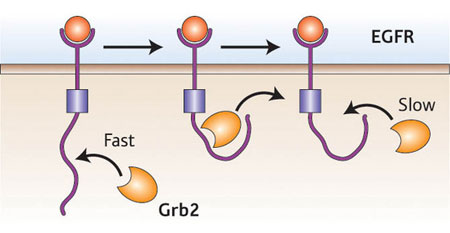
Small changes, big impacts
Molecular-scale rearrangements influence how receptors transmit their message, adding another layer of complexity to the regulation of cell signaling.
January 25, 2008 Read more
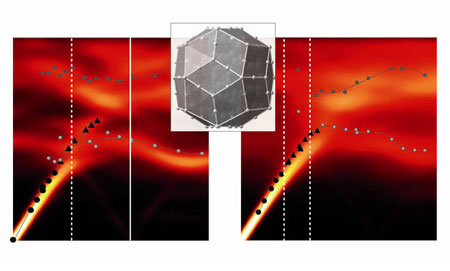
Quasi-crystals avoid repetition
X-rays, neutrons and theoretical modeling are used to explore the physics of quasi-crystals.
January 25, 2008 Read more
 Subscribe to our Nanotechnology News feed