

Nanotechnology News – Latest Headlines
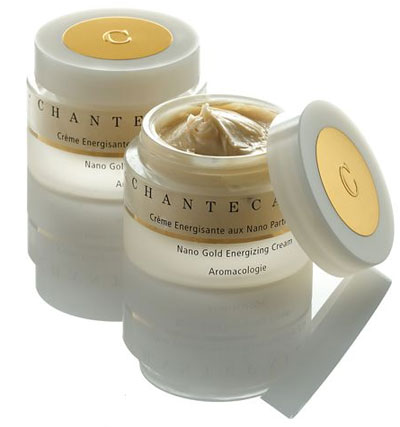
Truly golden nanotechnology for your face
Here is what you have been waiting for all week - our Slow News Friday entry. It's hard to make this stuff up, so here is the original text from a product review of a face cream 'using nanotechnology to safely deliver the power of pure gold.' At $250 an ounce (28 grams). Enjoy.
January 31, 2008 Read more
Nanotechnology could fix Achilles' heel
Tissue engineered bone and skin grafts, synthetic heart valves, ceramic hip replacementsâ?¦ surgery is turning us into bionic people. But the Achilles' heel in the prosthetic repertoire is fixing tendonsâ?¦ such as that found in the ankle. Now, researchers from the universities of Manchester and Liverpool have turned to nanotechnology to create artificial tendons using a spinning technique with a biodegradable plastic.
January 31, 2008 Read more
Talks on 'Bubbles' and 'Nanotechnology' in February
February speakers for the Scholar Series sponsored by the Center for Lifelong Learning at the University of Arkansas - Fort Smith and the Fort Smith Public Library are Dr. Daniel Pinzon, assistant professor of mathematics, and Dr. Kevin Lewelling, associate professor of electrical engineering.
January 31, 2008 Read more
Scientists not sheepish about potential of nanowool
Autralian researchers noticed that some of the silicon wafer chips they were annealing under high temperature inert gas had white discoloration around the edges. More surprising still, if the wafer chips had a metal film on their surface, the white material covered the entire sample when annealed under certain conditions.
January 31, 2008 Read more
Monash pioneers nano scaffold to rebuild nerve damage
A Monash University PhD student has developed a new technique that could revolutionise stem cell treatment for Parkinson's disease and spinal cord injury.
January 31, 2008 Read more
Programming advanced materials
Researchers create three-dimensional structures using DNA-directed assembly.
January 31, 2008 Read more
Engineers demonstrate nanotube wires operating at speed of commercial chips
Electrical engineers at Stanford University and Toshiba report using nanotubes to wire a silicon chip operating at speeds comparable to those of commercially available processors and memory.
January 31, 2008 Read more
Agilent CTO discusses the global trends expected to influence the future of measurement
In this article, Darlene Solomon, Agilent chief technology officer and vice president of Agilent Laboratories, discusses the significant global trends and measurement needs expected to influence the future of measurement technology.
January 31, 2008 Read more
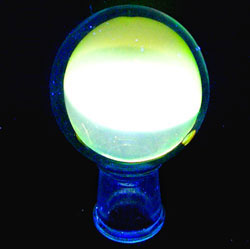
Nanocomposite solid-state lighting
Nanocrystal-based devices produce a higher quality white-light than current light sources and present an opportunity for higher efficiencies, say US scientists.
January 31, 2008 Read more
New adhesive mimics gecko toe hairs
A new anti-sliding adhesive developed by engineers at the University of California, Berkeley, may be the closest man-made material yet to mimic the remarkable gecko toe hairs that allow the tiny lizard to scamper along vertical surfaces and ceilings.
January 30, 2008 Read more
Scientists use nanomaterials to localize and control drug delivery
Using nanotechnology, scientists from Northwestern University and UCLA have developed a localized and controlled drug delivery method that is invisible to the immune system, a discovery that could provide newer and more effective treatments for cancer and other diseases.
January 30, 2008 Read more
Nanotechnology: What every EHS professional should know
NAEM, The National Association for Environmental Management, is conducting a web seminar on the environmental health and safety implications of nanotechnology tomorrow, January 31, 2008 from 1:00 to 2:30 pm ET.
January 30, 2008 Read more
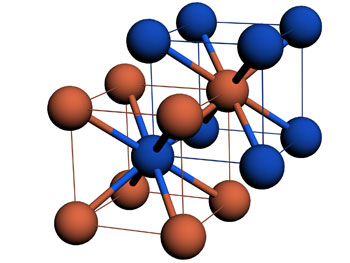
DNA technique yields 3-D crystalline organization of nanoparticles
First step toward three-dimensional catalytic, magnetic, and/or optical nanomaterials.
January 30, 2008 Read more
EU nanotechnology R&D in the field of health and environmental impact of nanoparticles
The European Union has released a 124-page publication on nanotechnology research funding addressing in particular the health and environmental impact of nanoparticles.
January 30, 2008 Read more
Governor Rell announces funding for nanotechnology partnerships with Yale, UConn
Governor M. Jodi Rell today announced that her revised budget will include $5 million to support industry-university partnerships in nanotechnology research at Yale University and the University of Connecticut.
January 30, 2008 Read more
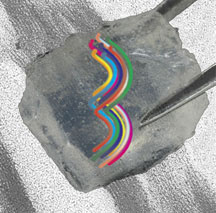
New method for creating self-assembling, nanoscale materials
A team from The Scripps Research Institute unveiled a novel approach that yields a material with novel properties, which some might find reminiscent of Flubber. The material is produced using naturally occurring proteins as templates for uniform, self-assembled, nano-scale construction.
January 30, 2008 Read more
 Subscribe to our Nanotechnology News feed