

Nanotechnology News – Latest Headlines
Crackpot technologies that could shake up IT
Computerworld has an article that looks at eight technologies that 'straddle the divide between harebrained and brilliant - each with a promise to transform the future of the enterprise.' One of them being nanotechnology.
February 19, 2008 Read more
Birck Nanotechnology Center's Weaver to receive 2008 IEST Fellow Award
The 2008 Institute of Environmental Sciences and Technology (IEST) Fellow Award will be presented to John Weaver for his 'numerous publications and significant technical contributions to the advancement of cleanroom design and construction, particularly in the emerging field of nanotechnology.'
February 19, 2008 Read more
Chemists measure copper levels in zinc oxide nanowires
Chemists at the National Institute of Standards and Technology have been the first to measure significant amounts of copper incorporated into zinc oxide nanowires during fabrication. The issue is important because copper plays a significantâ??but not well-understoodâ??role in important optical and electrical properties of the nanowires. Previous experiments found only trace amounts of copper.
February 19, 2008 Read more
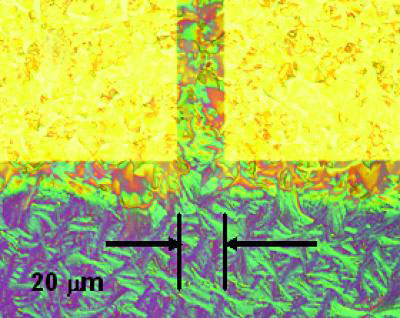
Directed self-ordering of organic molecules for electronic devices
A simple surface treatment technique demonstrated by a collaboration between researchers at the National Institute of Standards and Technology, Penn State and the University of Kentucky potentially offers a low-cost way to mass produce large arrays of organic electronic transistors on polymer sheets for a wide range of applications including flexible displays, 'intelligent paper' and flexible sheets of biosensor arrays for field diagnostics.
February 19, 2008 Read more
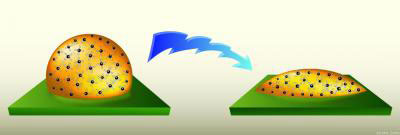
Strengthening fluids with nanoparticles
New study paves way for using nanofluids in cameras, microdevices and displays.
February 19, 2008 Read more
Partnership increases pot for Rice competition
The Greater Houston Partnership has pumped $200,000 into the prize pot for Rice University's annual Business Plan Competition.
February 19, 2008 Read more
The Bourne Report radio show kicks off its listener's challenge
he Bourne Report, a weekly talk radio show that focuses on nanotechnology and MEMS (micro-electro-mechanical systems), officially kicked off its Listener's Challenge this week. Listeners are being asked to pick a random item from everyday life and challenge host Marlene Bourne to find the MEMS or nanotech connection.
February 19, 2008 Read more
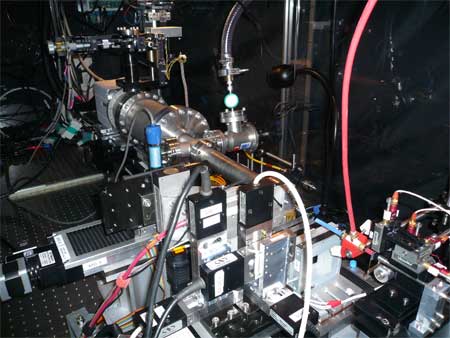
Lensless camera uses X-rays to view nanoscale materials and biological specimens
X-rays have been used for decades to take pictures of broken bones, but scientists at the U.S. Department of Energy's Argonne National Laboratory and their collaborators have developed a lensless X-ray technique that can take images of ultra-small structures buried in nanoparticles and nanomaterials, and features within whole biological cells such as cellular nuclei.
February 19, 2008 Read more
Ask EPA: What's up with nanotechnology?
Tomorrow (Wednesday, February 20) at 1 p.m. EDT, James Gulliford, assistant administrator for Prevention, Pesticides and Toxic Substances will host the online interactive forum Ask EPA and discuss the EPA's new Nancoscale Materials Stewardship Program.
February 19, 2008 Read more
University of Oregon dedicates nanoscience research center
University of Oregon students crossing a grassy oval in the Lorry I. Lokey Science Complex this spring will be surprised to learn that, under their feet, researchers are operating millions of dollars worth of delicate high-tech equipment to find answers that could help propel Oregon to the forefront of the fast-growing nanotechnology industry.
February 19, 2008 Read more
New technique promises to aid doctor's ability to identify, treat bacterial infections
A new technique developed by a University of Central Florida chemist will help physicians more quickly identify the bacterial infections patients have so they can be treated in hours instead of days.
February 19, 2008 Read more
NASA MidSTAR-1 puts nanotechnology in space
Two new technologies launched onboard a U.S. Naval Academy satellite called MidSTAR-1 have proven successful in their tests in space. One technology is a sensor that can check for harmful chemicals and the other is a special 'film' that can control heat.
February 19, 2008 Read more
Astronomy technology brings nanoparticle probes into sharper focus
Georgia Tech and Emory researchers have created a technology based on stellar photometry software that provides more precise images of single molecules tagged with nanoprobes, particles specially designed to bind with a certain type of cell or molecule and illuminate when the target is found.
February 19, 2008 Read more
Federal nanotechnology risk research plan still comes up short
An improved but still flawed government-wide plan for nanotechnology risk research is the result of a broken system. Federally funded studies essential to managing possible risks from this cutting-edge technology should be guided by a top-down strategy tied to projected commercialization, expected human and environmental exposures, and the regulatory decision-making process.
February 19, 2008 Read more
Meyyappan, Director of NASA's Center for Nanotechnology, to receive 2008 IEEE Judith A. Resnik award
The IEEE has named Meyya Meyyappan as the recipient of its 2008 Judith A. Resnik Award, recognizing his contributions and leadership in the emerging field of nanotechnology, particularly carbon nanotubes and their applications in sensors, instrumentation and nanodevices in both aerospace and industrial applications.
February 19, 2008 Read more
AIBN to host strategic NSF nanotechnology workshop in Australia
In a major coup, University of Queensland's Australian Institute for Bioengineering and Nanotechnology (AIBN) will host the first ever National Science Foundation (NSF) strategic workshop to be held in Australia.
February 19, 2008 Read more
 Subscribe to our Nanotechnology News feed