

Nanotechnology News – Latest Headlines
Position sensors: magnets know their place
Non-contact position sensors are small but important parts of many modern machines. Researchers have used a phenomenon known as magnetoresistance to develop a practical, low-cost position sensor that performs better than existing designs. Commercial production will follow this year.
February 22, 2008 Read more
Special coating greatly improves solar cell performance
The energy from sunlight falling on only 9 percent of California's Mojave Desert could power all of the United Statesâ?? electricity needs if the energy could be efficiently harvested, according to some estimates. Unfortunately, current-generation solar cell technologies are too expensive and inefficient for wide-scale commercial applications. A team of Northwestern University researchers has developed a new anode coating strategy that significantly enhances the efficiency of solar energy power conversion.
February 22, 2008 Read more
Research at UAlbany NanoCollege contributes to 30+ papers at SPIE Adv. Lithography Conference
More than 30 scientific and technical papers based on research conducted at the College of Nanoscale Science and Engineering of the University at Albany will be presented next week at one of the world's leading conferences focused on the global nanoelectronics industry.
February 22, 2008 Read more
Bitter Setback for the European Nanobiotechnology Sector
Following four years of successful work, the funding programme for the European Network of Excellence Nano2Life is to be discontinued.
February 22, 2008 Read more
Switchyard for single electrons
Scientists of the Physikalisch-Technische Bundesanstalt (PTB) achieved to transfer very small charge 'packets', comprising a well-defined number of few electrons, between metallic electrons precisely by using a single-electron pump.
February 22, 2008 Read more
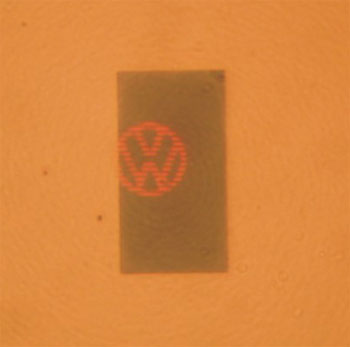
Fabrication and characteristics of 'nanoleaves'
A film having a thickness of a single molecule, fabricated by researchers in Germany.
February 22, 2008 Read more
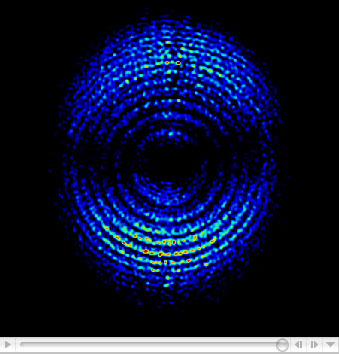
Electron filmed for first time ever
Now it is possible to see a movie of an electron. The movie shows how an electron rides on a light wave after just having been pulled away from an atom.
February 22, 2008 Read more
Manufactured nanomaterials: OECD work program 2006-2008
The OECD has put the 'Manufactured nanomaterials: OECD work program 2006-2008' document on its website.
February 22, 2008 Read more
Nanotechnology makes a big difference to rapid prototyping and manufacturing
Leading suppliers of materials for rapid prototyping and rapid manufacturing are finding that nanoparticles can dramatically alter the properties of finished components. Paul Stevens from engineer LIVE looks at what is available on the market and how another nanotechnology-based process is enhancing the properties of parts built from standard materials.
February 21, 2008 Read more

Nanotechnology chicken feed
Poultry is big business in South Carolina and Clemson University scientists are using nanotechnology to keep the birds and consumers healthy.
February 21, 2008 Read more
By color-coding atoms, new Cornell electron microscope promises big advance in materials analysis
A new electron microscope recently installed in Cornell's Duffield Hall is enabling scientists for the first time to form images that uniquely identify individual atoms in a crystal and see how those atoms bond to one another. And in living color.
February 21, 2008 Read more
Seashells inspire space age material
The next generation of aeroplanes and spacecraft could be made from materials inspired by seashells and pearls, according to researchers in Switzerland. By mimicking the structure of nacre, better known as mother of pearl, the scientists believe they can create strong and flexible components that are perfect for advanced aerospace applications.
February 21, 2008 Read more
IBM scientists first to measure force required to move individual atoms
IBM scientists, in collaboration with the University of Regensburg in Germany, are the first ever to measure the force it takes to move individual atoms on a surface. This fundamental measurement provides important information for designing future atomic-scale devices: computer chips, miniaturized storage devices, and more.
February 21, 2008 Read more
Conference date: Environmental Effects of Nanoparticles and Nanomaterials
On September 15-16, 2008, the University of Birmingham organizes the 3rd International Conference on the Environmental Effects of Nanoparticles and Nanomaterials.
February 21, 2008 Read more
Energetic nanoparticles swing sunlight into electricity
The electrons in nanoparticles of noble metal oscillate together apace with the frequency of the light. This phenomenon can be exploited to produce better and cheaper solar cells, scientists at Chalmers University of Technology in Sweden have shown.
February 21, 2008 Read more
Network for Swedish nanotechnology research receives further boost
The Swedish Micro and Nano Fabrication Network, MyFab, has now been strengthened through a grant of SEK 75 million from the Knut and Alice Wallenberg Foundation. The goal of becoming a national resource has come one step closer.
February 21, 2008 Read more
 Subscribe to our Nanotechnology News feed