

Nanotechnology News – Latest Headlines
The first drug-delivery particles capable of passing through human mucus
Chemical engineers from Johns Hopkins University have broken the mucus barrier, engineering the first drug-delivery particles capable of passing through human mucus - regarded by many as nearly impenetrable - and carrying medication that could treat a range of diseases.
August 20, 2008 Read more
240 elephants in a tunnel
September 2008 will see particle physicists setting protons on a collision course through the Large Hadron Collider with more energy than ever before. Their intention is to track down the Higgs boson and solve the problem of why the universe contains almost no antimatter.
August 20, 2008 Read more
Biomarkers reveal our biological age
Researchers are hoping for improved therapies for treating age-related diseases.
August 20, 2008 Read more

Monolithic comb drive - a nanoscale manipulator with atomic-scale precision
Engineers have created a tiny motorized positioning device that has twice the dexterity of similar devices being developed for applications that include biological sensors and more compact, powerful computer hard drives.
August 20, 2008 Read more
Spying on self-assembly
Proteins attaching to gold nanoparticles don't mill around randomly, but organise into clusters, according to UK scientists who say they have for the first time spied in detail peptides assembling on a surface.
August 20, 2008 Read more
Fastest quantum computer building block created
The fastest quantum computer bit that exploits the main advantage of the qubit over the conventional bit has been demonstrated by researchers.
August 20, 2008 Read more
Polymer electric storage better than conventional batteries
A team of Penn State materials scientists is developing ferroelectric polymer-based capacitors that can deliver power more rapidly and are much lighter than conventional batteries.
August 20, 2008 Read more
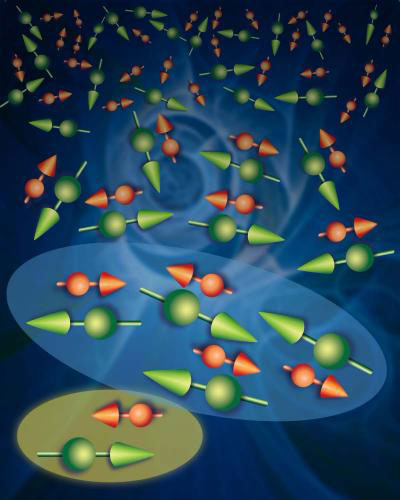
Team discovers quantum halfway house between magnet and semiconductor
Scientists report that they have combined silicon and ferromagnetic iron with a small amount of another common metal, manganese, to create a new material which is neither a magnet nor an ordinary semiconductor.
August 20, 2008 Read more

E-health closer to reality thanks to real-time medical data extraction
In the framework of Holst Centre, IMEC - Europe's leading independent nanoelectronics research institute - has broadened the functionality and scope of its wireless health monitoring technology by linking it to real-time extraction of relevant medical data.
August 20, 2008 Read more
Graphene pioneer named as one of world's top young innovators
Dr. Novoselov, a Royal Society Research Fellow in The School of Physics and Astronomy, was selected from more than 300 nominees under the age of 35 following his discovery of graphene with Professor Andre Geim in 2004.
August 20, 2008 Read more
Atomic structure of gold nanoparticles now determined
The structure of gold nanoparticles has been largely unknown for over a decade. The current study helps to understand the stability, composition as well as electronic, chemical and optical properties of the particles.
August 20, 2008 Read more
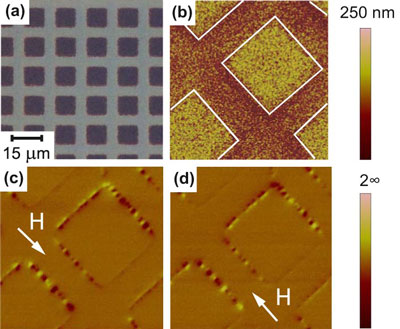
Kohlenstoff bringt Magnetismus in die Elektronik
Forscher in Japan stellten vor einigen Jahren in einem Experiment zufaellig eine Verbindung aus Silizium, Mangan und Kohlenstoff her, die unerwarteterweise auch bei Raumtemperatur ferromagnetisch war. Forschern aus Karlsruhe und Dresden gelang nun die Herstellung von magnetischen 'Nano-Draehten' aus diesem Material.
August 20, 2008 Read more
Sri Lanka sets up nanotechnology park
The first nanotechnology park in Sri Lanka is expected to commence operations from November with an investment of US$10 million
August 20, 2008 Read more
U.S. Department of Energy invests $15.3 million in hydrogen storage for vehicles
The U.S. Department of Energy announced on August 14 that it has selected 10 hydrogen storage research and development projects to receive $15.3 million over the next 5 years, subject to annual appropriations.
August 20, 2008 Read more
Indonesian nanotechnology researchers inspired by physics conference
Indonesian researchers can access the latest research in particle physics from world-class scientists gathering for the 4th Asia-Pacific Conference on Few-Body Problems in Physics, which opened Tuesday.
August 20, 2008 Read more
New online forum for established and emerging materials technologies
The new Materials Technology@TMS site provides forums for those engaged in developing emerging materials technologies, improving established materials technologies, educating the next generation of materials scientists and engineers, and using technical skills to meet societal needs.
August 19, 2008 Read more
 Subscribe to our Nanotechnology News feed