

Nanotechnology News – Latest Headlines
Transforming medical diagnosis with new scanning technology
A new technology which dramatically improves the sensitivity of Magnetic Resonance techniques including those used in hospital scanners and chemistry laboratories has been developed by scientists at the University of York.
March 27, 2009 Read more
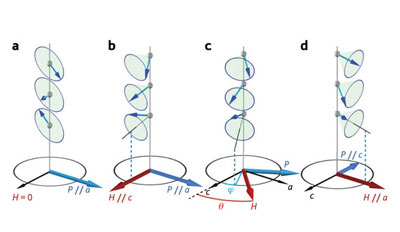
Twist and turn
Researchers have studied how the electric polarization of multiferroic materials responds to changes in an externally applied magnetic field.
March 27, 2009 Read more
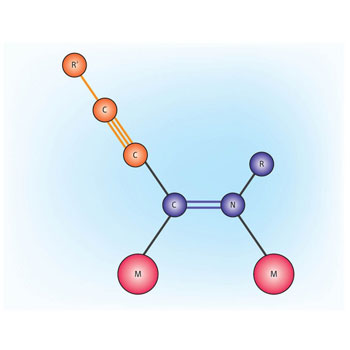
Selectivity at the double
Designing new catalysts based on two or more metal centers.
March 27, 2009 Read more
Nanyang-Berkeley collaboration to focus on synthetic biology, stem cells and energy efficiency
UC Berkeley and Nanyang Technological University, Singapore, aims to achieve new peaks in research excellence through collaboration in three research areas which are of significance globally - synthetic biology, stem cells and energy efficiency.
March 26, 2009 Read more
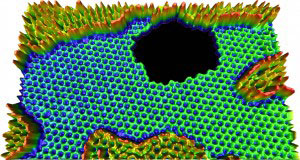
First live action movie of individual carbon atoms in action
Science fiction fans still have another two months of waiting for the new Star Trek movie, but fans of actual science can feast their eyes now on the first movie ever of carbon atoms moving along the edge of a graphene crystal.
March 26, 2009 Read more
SOCMA nanotechnology SME coalition expands membership categories
In response to the growth and development of nanotechnology companies that produce and use nanoscale materials, SOCMA's Nanotechnology SME Coalition has expanded its membership categories to address their specific needs.
March 26, 2009 Read more
Silicon micro-islands and nano-spikes channel water on glass slides
Working at the nanoscale level, University of Arkansas engineering researchers have created stable superhydrophilic surfaces on a glass substrate.
March 26, 2009 Read more
Fraunhofer - 60 years of working for the future
Founded in Munich in 1949, the Fraunhofer-Gesellschaft evolved from a challenging into the largest organization for applied research in Europe.
March 26, 2009 Read more
Nanoparticles in cosmetics/personal care products may have adverse environmental effects
Using aquatic microbes as their 'canary-in-a-cage', scientists from Ohio today reported that nanoparticles now being added to cosmetics, sunscreens, and hundreds of other personal care products may be harmful to the environment.
March 26, 2009 Read more
Nanopore sequencing could slash DNA analysis costs
Researchers have successfully tested a system that can identify a piece of DNA's bases directly as it moves through a modified protein nanopore. With further development, this system could greatly reduce the expensive equipment, chemicals, and lab time needed for current scanning methods.
March 26, 2009 Read more
Polymer nanowires detect cancer biomarker
Investigators at the University of California, Riverside, have developed a simple and cost-effective method of building conducting polymer nanowires that can detect a wide range of levels of a cancer biomarker.
March 26, 2009 Read more
Cobalt nanoparticles boost imaging sensitivity and edge detection
Scientists have developed a 'nanowonton' of cobalt and gold to create an imaging contrast agent for use with both MRI and PAT.
March 26, 2009 Read more
Nanoparticles open door to cancer prevention
Using nanoparticles made of a biocompatible polymer, investigators were able to encapsulate a molecule isolated from green tea that triggers apoptosis and inhibits angiogenesis, two key biochemical events that could prevent cancer.
March 26, 2009 Read more
Safer nanoparticles for in vivo applications
A team of scientists has created miniscule flakes of silicon that glow brightly, last long enough to slowly release cancer drugs, then break down into harmless byproducts.
March 26, 2009 Read more
Twin nanoparticle shown effective at targeting, killing breast cancer cells
A team of investigators at Brown University has developed a novel way to treat a class of breast cancer cells. The team has created twin nanoparticles that specifically targets the Her-2 tumor cell and unload a cancer-fighting drug directly into it.
March 26, 2009 Read more
Nanoparticles deliver gene therapy, killing tumors
A trans-European research team has developed a nanoparticle that transports antitumor genes selectively to cancer cells.
March 26, 2009 Read more
 Subscribe to our Nanotechnology News feed