

Cleantech and Environmental News – Latest Headlines
 Subscribe to our Cleantech News feed
Google invests $200 million in Texas wind farm
Google Inc. is investing $200 million in a Texas wind farm, the Internet search leader's latest big bet on the future alternative energy.
January 9, 2013 Read more
Tree seeds offer potential for sustainable biofuels
Tree seeds, rather than biomass or fuel crop plants, could represent an abundant source of renewable energy.
January 9, 2013 Read more

Mathematics and weather and climate research
How does mathematics improve our understanding of weather and climate? Can mathematicians determine whether an extreme meteorological event is an anomaly or part of a general trend? Presentations touching on these questions will be given at the annual national mathematics conference in San Diego, California.
January 9, 2013 Read more
Shareholder responsibility could spur shift to sustainable energy
Allowing shareholders to be held liable for the damages that companies cause to the environment and people could help transform the world's energy system towards sustainability.
January 8, 2013 Read more
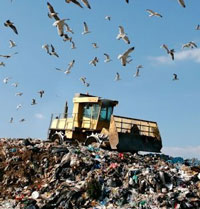
New tool calculates potential renewable energy derived from waste material
Cranfield University has developed a new approach for calculating the potential renewable energy derived from waste material, prior to incineration, which could save time and money for the energy and waste industries.
January 8, 2013 Read more
China's offshore wind energy industry entering era of large-scale development
Wind power has become the third-largest electric power in China.
January 8, 2013 Read more
Study finds flame retardant pollutants at far-flung locations
Research supports effectiveness of tree bark as novel sampling medium for contamination.
January 8, 2013 Read more
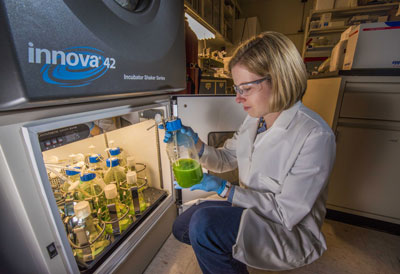
Engineering alternative fuel with cyanobacteria
Sandia National Laboratories Truman Fellow Anne Ruffing has engineered two strains of cyanobacteria to produce free fatty acids, a precursor to liquid fuels, but she has also found that the process cuts the bacteria's production potential.
January 7, 2013 Read more
A French nuclear exit?
France has been held up, worldwide, as the forerunner in using nuclear fission to produce electricity. However, a third of the nation's nuclear reactors will need replacing in the next decade, and public opinion has shifted toward reducing reliance on nuclear power.
January 7, 2013 Read more

Wine feels the effects of a changing climate
The signs of climate change are universally evident, but for French winemakers, already feeling the effects of competition from other countries, the year of volatile weather does not bode well.
January 7, 2013 Read more
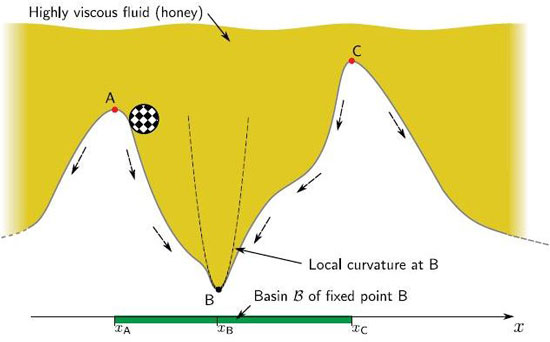
From the Amazon rainforest to human body cells: quantifying stability
The Amazon rainforest, energy grids, and cells in the human body share a troublesome property: they possess multiple stable states. When the world's largest tropical forest suddenly starts retreating in a warming climate, energy supply blacks out, or cells turn carcinogenic, complex-systems science understands this as a transition between two such states.
January 7, 2013 Read more
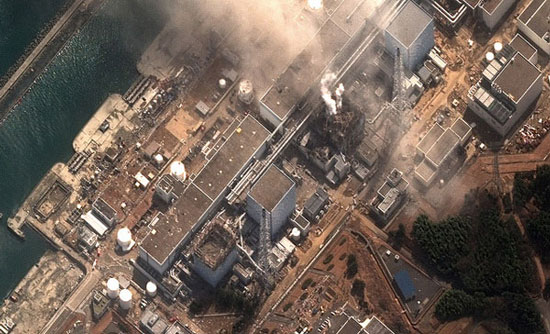
Sacrifice and luck help Japan survive without nuclear power
In the wake of the Fukushima disaster, nuclear-dependent Japan began shutting down its other reactors. Toshiya Okamura, a Tokyo Gas executive and visiting scholar at Stanford University, explains how the country survived the summer, and expresses deep concerns about this winter and his country's energy future.
January 7, 2013 Read more
DOE awards $10M to develop advanced biofuels
These projects use innovative synthetic biological and chemical techniques to convert biomass into processable sugars that can be transformed into bioproducts and drop-in biofuels for cars, trucks, and planes.
January 5, 2013 Read more
Photosynthesis: The last link in the chain
For almost 30 years, researchers have sought to identify a particular enzyme that is involved in regulating electron transport during photosynthesis. A team of scientists has now found the missing link, which turns out to be an old acquaintance.
January 5, 2013 Read more
New York State awards $15 million to three new clean-energy 'idea incubators'
The New York State Energy Research and Development Authority (NYSERDA) has awarded a total of $15 million to Columbia University, the Polytechnic Institute of New York University and High Tech Rochester to create three Proof-of-Concept Centers dedicated to helping inventors and scientists turn their high-tech, clean-energy ideas into successful businesses.
January 4, 2013 Read more
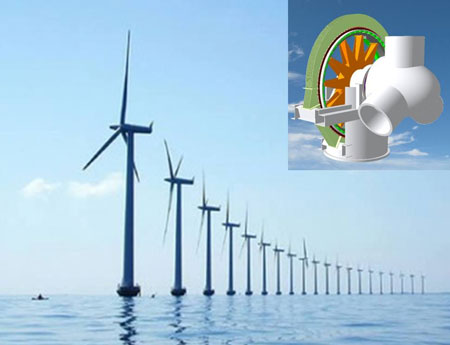
Superconductors for efficient wind power plants
An efficient, robust, and compact wind power plant with a 10 MW superconducting generator is being developed by partners from industry and science within the recently established EU project SUPRAPOWER.
January 4, 2013 Read more
The laws of global warming
How to regulate geo-engineering efforts to fight climate change?
January 2, 2013 Read more
Toward reducing the greenhouse gas emissions of the Internet and telecommunications
Amid growing concern over the surprisingly large amount of greenhouse gas produced by the Internet and other telecommunications activities, researchers are reporting new models of emissions and energy consumption that could help reduce their carbon footprint.
January 2, 2013 Read more