

Cleantech and Environmental News – Latest Headlines
 Subscribe to our Cleantech News feed
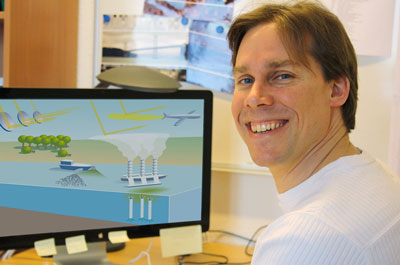
Climate engineering: Minor potential, major side effects
Researchers at the GEOMAR Helmholtz Centre for Ocean Research Kiel have studied with computer simulations the long-term global consequences of several 'climate engineering' methods. They show that all the proposed methods would either be unable to significantly reduce global warming if CO2 emissions remain high, or they could not be stopped without causing dangerous climate disruption.
February 25, 2014 Read more

'Greener' aerogel technology holds potential for oil and chemical clean-up (w/video)
A group of researchers at the University of Wisconsin Madison is examining alternative materials that can be modified to absorb oil and chemicals without absorbing water. If further developed, the technology may offer a cheaper and 'greener' method to absorb oil and heavy metals from water and other surfaces.
February 25, 2014 Read more
Rapeseed-based animal feed cuts greenhouse gases by up to 13 per cent
The use of rapeseed cake in the production of livestock feed cuts methane and carbon dioxide emissions by up to 13%, according to the initial results of the research carried out by Neiker-Tecnalia within the framework of the Life-Seed Capital project.
February 25, 2014 Read more
Now it will become cheaper to make second-generation biofuel for our cars
Producing second-generation biofuel from dead plant tissue is environmentally friendly -- but it is also expensive because the process, as used today, needs expensive enzymes, and large companies dominate this market. Now a Danish/Iraqi collaboration presents a new technique that avoids the expensive enzymes. The production of second generation biofuels thus becomes cheaper, probably attracting many more producers and competition, and this may finally bring the price down.
February 24, 2014 Read more
Kinetic battery chargers get a boost
New technology to capture the kinetic energy of our everyday movements, such as walking, and to convert it into electrical energy has come a step closer thanks to new research.
February 19, 2014 Read more
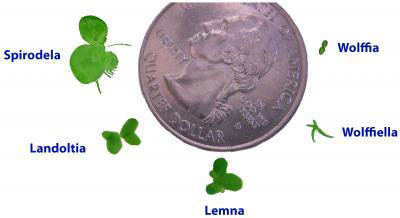
Pond-dwelling powerhouse's genome points to its biofuel potential
Duckweed is a tiny floating plant that's been known to drive people daffy. It's one of the smallest and fastest-growing flowering plants that often becomes a hard-to-control weed in ponds and small lakes. But it's also been exploited to clean contaminated water and as a source to produce pharmaceuticals. Now, the genome of Greater Duckweed (Spirodela polyrhiza) has given this miniscule plant's potential as a biofuel source a big boost.
February 19, 2014 Read more
Study on methane emissions from natural gas systems indicates new priorities
A new study says that the total impact of switching to natural gas depends heavily on leakage of methane (CH4) during the natural gas life cycle, and suggests that more can be done to reduce methane emissions and to improve measurement tools which help inform policy choices.
February 18, 2014 Read more
China out-spends the U.S. for first time in $15bn smart grid market
The world's most populous country spent $4.3bn in 2013, part of that going on the installation of 62m smart meters, while U.S. investment declined.
February 18, 2014 Read more
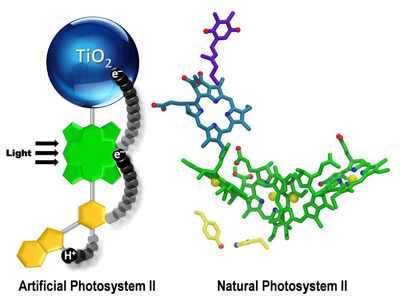
Artificial leaf jumps developmental hurdle
Scientists report advances toward perfecting a functional artificial leaf.
February 18, 2014 Read more
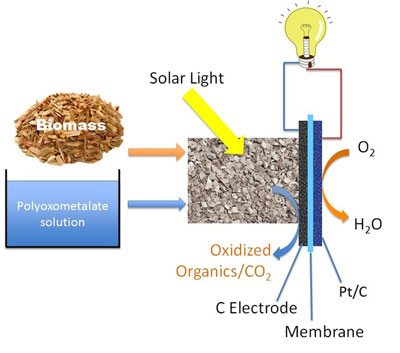
Solar-induced hybrid fuel cell produces electricity directly from biomass
Researchers have developed a new type of low-temperature fuel cell that directly converts biomass to electricity with assistance from a catalyst activated by solar or thermal energy. The hybrid fuel cell can use a wide variety of biomass sources, including starch, cellulose, lignin - and even switchgrass, powdered wood, algae and waste from poultry processing.
February 18, 2014 Read more
Researchers to identify best microbes for biofuel production
Researchers demonstrate the use of AFM-IR used by French researchers to identify best microbes for biofuel production.
February 18, 2014 Read more
Archaeologists lend long-term perspective to food security and climate shock
What role does pre-existing vulnerabilities play for people who experience a climate shock? Does it amplify the effects of the climate shock or is effect negligible? Four Arizona State University archaeologists are looking into this as part of an international team examining how people can be most resilient to climate change when it comes to food security.
February 17, 2014 Read more
Finding common ground fosters understanding of climate change
Grasping the concept of climate change and its impact on the environment can be difficult. Establishing common ground and using models, however, can break down barriers and present the concept in an easily understood manner.
February 17, 2014 Read more
Waste from age-old paper industry becomes new source of solid fuel
In today's search for renewable energy sources, researchers are turning to the hi-tech, from solar and hydrogen fuel cells, and the very low-tech. The latest example of a low-tech alternative comes from an age-old industry: paper. A new study reveals a sustainable way to turn the huge amounts of waste from paper production into solid fuel with the added bonus of diverting the sludge from overflowing landfills.
February 12, 2014 Read more
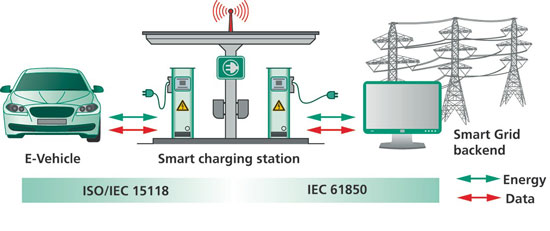
Seamless e-vehicle/smart grid connectivity through intelligent communication
To prevent e-vehicles from overloading power grids while charging, seamless connectivity is required. To help address this issue, Fraunhofer ESK is developing underlying communication methods for a uniform energy management system.
February 12, 2014 Read more
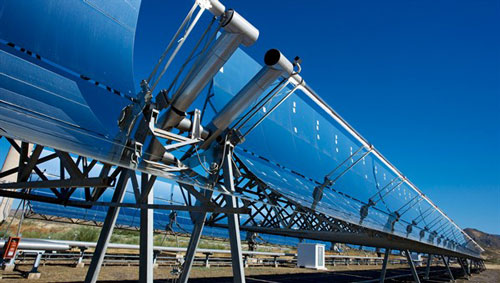
NREL report finds similar value in 2 CSP technologies
Parabolic troughs and dry-cooled towers deliver similar value for concentrating solar power plants, despite different solar profiles, a new report by the Energy Department's National Renewable Energy Laboratory has found.
February 12, 2014 Read more
Wind turbines and solar power plants - where to construct which system?
DLR provides freeware simulation program for assessment of renewable power plant projects.
February 11, 2014 Read more
Flat-pack lens boosts solar power
Micro-machining could be used to create almost flat, Fresnel lenses, that boost the electrical efficiency of solar panels, according to researchers in China.
February 10, 2014 Read more