

Biotechnology News – Latest Headlines
 Subscribe to our Biotechnology News feed
Next generation cures born from the sea
The SeaBioTech project, started in 2012, is intended to close some of these knowledge gaps by looking in the seas and oceans around the globe for life forms with novel properties. The aim is to find raw material for the world's biotechnology industry, with a particular emphasis on antibiotics and other medical compounds.
September 2, 2013 Read more

Scientists sequence genome of high-value grape, seek secrets of wine's aroma
Demystifying the chemical processes that create a wine's aroma, and the invaluable potential application of that understanding in winemaking, is the new objective of scientists in Uruguay who, with European partners, also recently sequenced the genome of the high-value Tannat grape, from which 'the most healthy of red wines' are fermented.
September 2, 2013 Read more
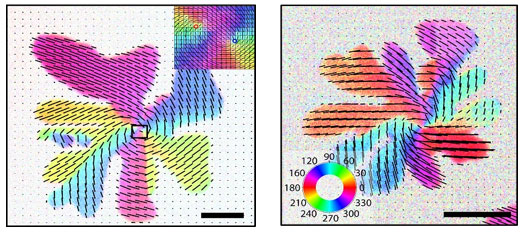
Membranes contain beautiful patterns - but their function is a mystery
Biological cells are surrounded by a membrane, and here some of the most important processes for sustaining life take place. There can also be something very beautiful happening in membranes, researchers from the University of Southern Denmark have discovered: Membranes can contain beautiful, mysterious patterns.
August 30, 2013 Read more
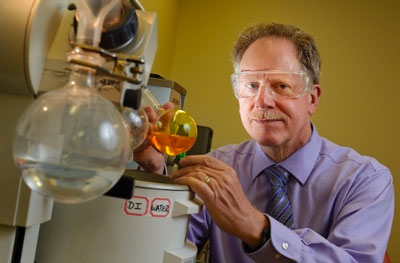
Novel polymer helps oral medications reach the bloodstream
Research on new polymer additives that enhance the ability of orally administered drugs will result in greater effectiveness and fewer side effects.
August 28, 2013 Read more
Researcher controls colleague's motions in first human brain-to-brain interface (w/video)
University of Washington researchers have performed what they believe is the first noninvasive human-to-human brain interface, with one researcher able to send a brain signal via the Internet to control the hand motions of a fellow researcher.
August 27, 2013 Read more
Scientists report breakthrough in DNA editing technology
Scientists at the Scripps Research Institute have found a way to apply a powerful new DNA-editing technology more broadly than ever before.
August 26, 2013 Read more
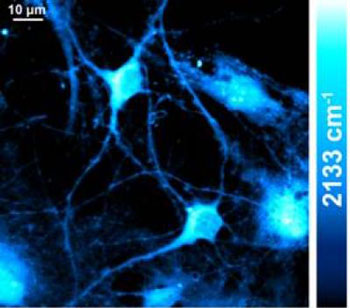
Watching the production of new proteins in live cells
Columbia researchers make significant step in understanding and imaging protein synthesis.
August 26, 2013 Read more
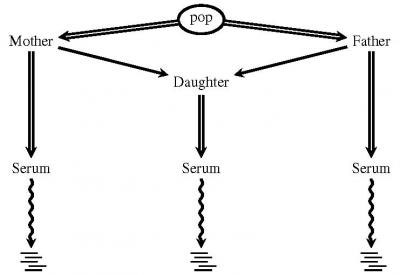
New tool enhances the search for genetic mutations
Researchers report on a new software tool known as DeNovoGear, which uses statistical probabilities to help identify mutations and more accurately pinpoint their source and their possible significance for health.
August 26, 2013 Read more
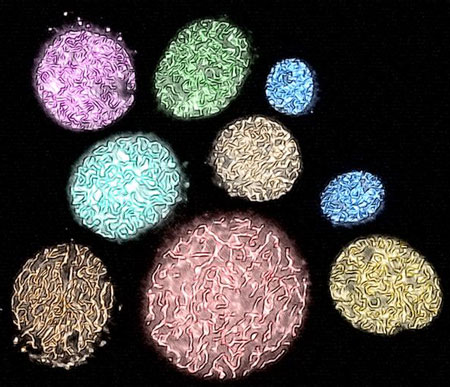
A skeleton for chromosomes
Scientists at the Research Institute of Molecular Pathology (IMP) found that the structure of Chromosomes is supported by a kind of molecular skeleton, made of cohesin.
August 26, 2013 Read more
Unprecedented control of genome editing in flies promises insight into human development, disease
In an era of widespread genetic sequencing, the ability to edit and alter an organism's DNA is a powerful way to explore the information within and how it guides biological function.
August 23, 2013 Read more
DNA testing of bacteria could lead to reduced chemical treatment of drinking water
Research has discovered that combinations of bacteria commonly found in water pipes can form a biofilm which enables other potentially more harmful bacteria to thrive.
August 22, 2013 Read more
New steps in the quest to break the code of life
Understanding protein function on a genomic scale is now one of the central goals of biology. The project ENZYME MICROARRAYS ('An integrated technology for the deconvolution of complex biochemical systems, drug discovery and diagnostics') was aimed at developing new techniques to help better understand protein functioning.
August 20, 2013 Read more
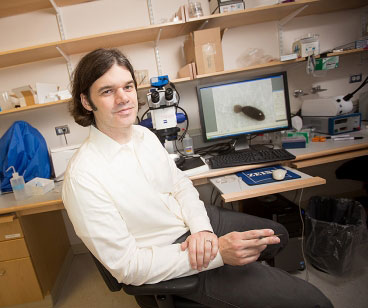
Solving the mysteries of regeneration
Biologist Peter Reddien seeks to understand planarians' famous ability to grow new body parts.
August 20, 2013 Read more
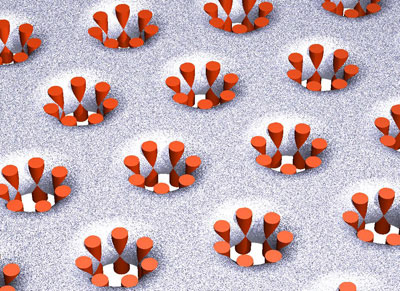
Biophysicists zoom in on pore-forming toxin
A new study by Rice University biophysicists offers the most comprehensive picture yet of the molecular-level action of melittin, the principal toxin in bee venom. The research could aid in the development of new drugs that use a similar mechanism as melittin's to attack cancer and bacteria.
August 18, 2013 Read more
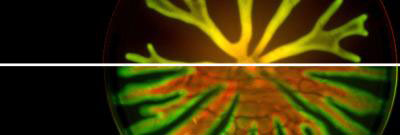
Evolution of hyperswarming bacteria could develop anti-biofilm therapies
Hyperswarming, pathogenic bacteria have repeatedly evolved in a lab, and the good news is that they should be less of a problem to us than their less mobile kin. That's because those hyperswarmers, adorned with multiple whipping flagella, are also much worse at sticking together on surfaces in hard-to-treat biofilms. They might even help us figure out a way to develop anti-biofilm therapies for use in people with cystic fibrosis or other conditions.
August 15, 2013 Read more
Microelectronics: Automating cancer detection
A sensor developed at A*STAR can detect bladder cancer cells and track tumor progression.
August 14, 2013 Read more
Pathology: All sorted on a single microchip
A microchip that can identify human pathogens in a single test could revolutionize the diagnosis of infections.
August 14, 2013 Read more
Computer model predicts red blood cell flow
Researchers have now created the first simplified computer model of the process that forms the Fahraeus-Lindqvist layer in our blood -- a model that could help to improve the design of artificial platelets and medical treatments for trauma injuries and for blood disorders such as sickle cell anemia and malaria.
August 13, 2013 Read more