

Biotechnology News – Latest Headlines
 Subscribe to our Biotechnology News feed
Signal gradients in 3-D guide stem cell behavior
Researchers at Case Western Reserve University have developed an easy and versatile way of forming physical and biochemical gradients in three dimensions -- a step toward identifying the recipes that induce stem cells to generate specific tissues, including multiple tissues, such as a bone-cartilage interface. Ultimately, one of their goals is to engineer systems to manipulate stem cells to repair or replace damaged tissues and organs.
September 18, 2013 Read more
Gen9 announces call for entries in annual contest recognizing innovation in synthetic biology
Second Annual G-Prize will award 1 million base pairs of custom designed DNA.
September 17, 2013 Read more
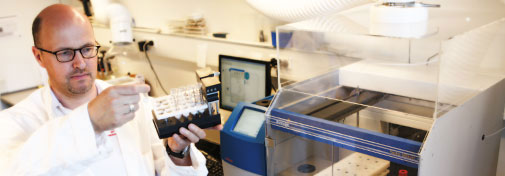
Chemistry magic promises better medicine with fewer side-effects
A gentler new chemistry promises cleaner and subsequently far safer pharmaceuticals. Knud J. Jensen, who developed the ground-breaking method at the University of Copenhagen, is convinced that the method will become pivotal in the development of new pharmaceuticals.
September 16, 2013 Read more
Chemists develop switchable antibiotic
Scientists at the University of Groningen have developed an antibiotic whose activity can be controlled using light. It is possible to 'switch on' the substance immediately before use, after which it will slowly lose its activity.
September 16, 2013 Read more
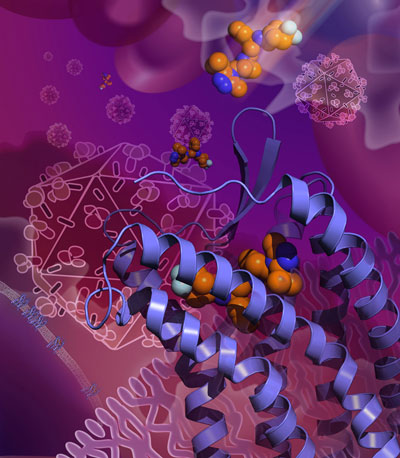
Molecular structure reveals how HIV infects cells
A team of Chinese and US scientists has determined the high-resolution atomic structure of a cell-surface receptor that most strains of HIV use to get into human immune cells. The researchers also showed where maraviroc, an HIV drug, attaches to cells and blocks HIV's entry.
September 12, 2013 Read more
Marine biotechnology opens new channels to innovative bioproducts for human health
On September 12th in her inaugural address upon taking up the post of Special Professor of Marine Biotechnology at Wageningen University Prof. Dr Shirley Pomponi will present how marine animals use a broad range of fine chemicals to defend themselves against infection, overgrowing and other threats. Her effort is to identify these chemicals, to let them be produced in a sustainable way and to develop innovative bioproducts for human health.
September 12, 2013 Read more
Scientists create super biomaterials from squids, mussels and sea snails
The marriage of molecular biology and material science leads to biomaterials that are stronger than most plastics.
September 11, 2013 Read more
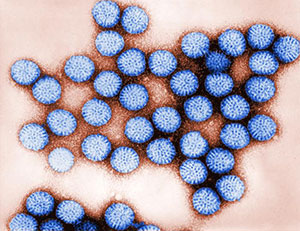
Personalized vaccines edge closer
A technique for analyzing specific T-cell responses could pave the way for more rationally designed vaccines.
September 11, 2013 Read more
Study suggests possibility of selectively erasing unwanted memories
For the first time, scientists from the Florida campus of The Scripps Research Institute (TSRI) have been able to erase dangerous drug-associated memories in mice and rats without affecting other more benign memories.
September 10, 2013 Read more
Yeast uses carbon dioxide to boost bioethanol production
Introducing four genes from bacteria and spinach has enabled researchers at the Delft University of Technology to improve the production of bioethanol with yeast by using carbon dioxide.
September 10, 2013 Read more
Novel mechanism discovered in first line of immune defence
Scientists' discovery opens doors to developing new therapies to eradicate tumour cells and combat infections.
September 10, 2013 Read more
Synthetic mRNA can induce self-repair and regeneration of the infarcted heart
A team of scientists at Karolinska Institutet and Harvard University has taken a major step towards treatment for heart attack, by instructing the injured heart in mice to heal by expressing a factor that triggers cardiovascular regeneration driven by native heart stem cells. The study, published in Nature Biotechnology, also shows that there was an effect on driving the formation of a small number of new cardiac muscle cells.
September 8, 2013 Read more
New venture is commercializing a novel catalytic process to convert non-food biomass into sugar
Flagship VentureLabs announced that Midori Renewables is globally deploying their Breaking the Biomass Barrier technology, a novel catalyst that melts non-food biomass into low cost sugar, enabling the production of many valuable renewable products and animal feed.
September 5, 2013 Read more
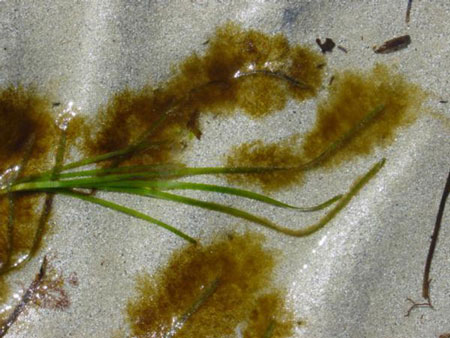
Brown algae reveal antioxidant production secrets
Brown algae contain phlorotannins, aromatic (phenolic) compounds that are unique in the plant kingdom. As natural antioxidants, phlorotannins are of great interest for the treament and prevention of cancer and inflammatory, cardiovascular and neurodegenerative diseases. Researchers have recently elucidated the key step in the production of these compounds in Ectocarpus siliculosus, a small brown alga model species.
September 5, 2013 Read more
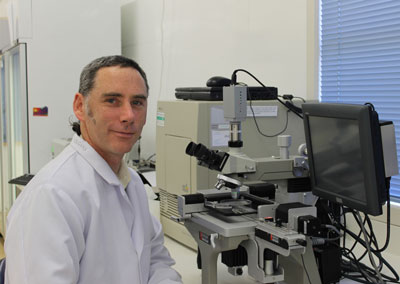
Slowing the ageing process - it's in your genes
Imagine being able to take a drug that can reduce the rate at which you age. Research by Massey University senior lecturer in genetics Dr Austen Ganley is making this dream one step closer to reality.
September 5, 2013 Read more
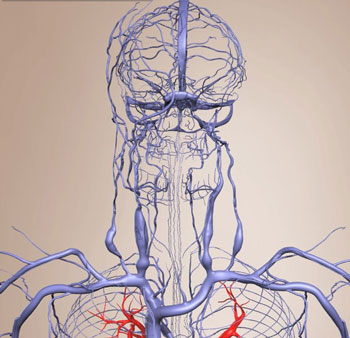
Researchers looking inside vessels to understand blood's ebb and flow
Researchers have known for some time that the blood vessels that transport blood to and from tissues and organs in the body are more than just bodily pipelines. Arterioles and capillaries, the small vessels, actually play a key role in regulating the flow of the blood they're carrying. Biomedical engineers at Drexel University, who study cardiovascular function, are creating a mathematical model that explains just how they do it.
September 4, 2013 Read more
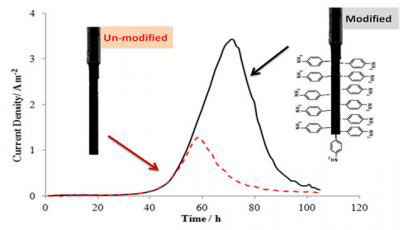
Wiring microbes to conduct and produce electricity faster
A team of researchers have found evidence that altering the chemistry of an electrode surface can help microbial communities to connect to the electrode to produce more electricity more rapidly compared to unmodified electrodes. Practical applications of these systems include current generation, wastewater treatment, and biochemical and biofuel production.
September 4, 2013 Read more
An easier way to control genes
New method for turning genes on and off could enable more complex synthetic biology circuits.
September 3, 2013 Read more