Reference terms from Wikipedia, the free encyclopedia
 

Polychlorinated biphenyl

A polychlorinated biphenyl (PCB) is an organic chlorine compound with the formula C12H10−xClx. Polychlorinated biphenyls were once widely deployed as dielectric and coolant fluids in electrical apparatus, carbonless copy paper and in heat transfer fluids.

Because of their longevity, PCBs are still widely in use, even though their manufacture has declined drastically since the 1960s, when a host of problems were identified. With the discovery of PCBs' environmental toxicity, and classification as persistent organic pollutants, their production was banned by United States federal law in 1978, and by the Stockholm Convention on Persistent Organic Pollutants in 2001. The International Agency for Research on Cancer (IARC), rendered PCBs as definite carcinogens in humans. According to the U.S. Environmental Protection Agency (EPA), PCBs cause cancer in animals and are probable human carcinogens. Many rivers and buildings, including schools, parks, and other sites, are contaminated with PCBs and there has been contamination of food supplies with the substances.

Some PCBs share a structural similarity and toxic mode of action with dioxins. Other toxic effects such as endocrine disruption (notably blocking of thyroid system functioning) and neurotoxicity are known.

The bromine analogues of PCBs are polybrominated biphenyls (PBBs), which have analogous applications and environmental concerns.

An estimated 1.2 million tons have been produced globally. Though the federal ban was enforced by the EPA as of 1979, PCBs continued to create health problems in later years through their continued presence in soil and sediment, and from products which were made before 1979. In 1988, Tanabe estimated 370,000 tons were in the environment globally and 780,000 tons were present in products, landfills and dumps or kept in storage.

 
Note:   The above text is excerpted from the Wikipedia article Polychlorinated biphenyl, which has been released under the GNU Free Documentation License.
 

Check out these latest Nanowerk News:

 

New review explores perovskite solar cells for space, underwater, and other extreme environments

Advances in perovskite solar cell design may enable reliable power generation in some of the world's harshest environments.

AI platform turns catalyst data into a discovery engine

A new AI-ready data framework could accelerate catalyst discovery, supporting cleaner energy and more sustainable chemical processes.

Machine learning points scientists to new superconductors- and possibly thousands more

Machine learning helped identify new superconductors and a process that could speed the discovery of thousands more energy-saving materials.

Lithium-doped carbon nanorings promise better optical devices

Simulations show that adding lithium to carbon nanorings greatly boosts nonlinear optical response, guiding designs for future photonic and optical devices.

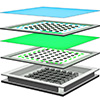
Roll-to-roll lithography boosts flexible electronics production

A roll-to-roll digital lithography system compensates for substrate distortion in real time, enabling faster mass production of flexible electronics.

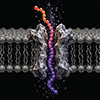
Identifying proteins, molecule by molecule

A nanopore detection method can rapidly identify individual proteins, aiding disease research, drug development, and biomarker discovery.

Switching spin states in manganese ions with light

Scientists developed a manganese-based molecular data storage material that works at about -132 C, warmer than earlier iron-based versions.

Shape-shifting surface adds touch to displays

A soft magnetic metasurface can morph into thousands of shapes, sense deformation, and show LED feedback, pointing to tactile interfaces, wearables, soft robotics, and AR/VR.

Plastic bottles could find new life in batteries as graphite

Graphene oxide helps turn PET plastic waste into synthetic graphite for lithium-ion battery anodes, offering a recycling route for battery materials.

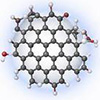
Atomic defects tune carbon quantum dots for precise light control

Atomic defects can tune carbon quantum dots across UV to near-infrared light, guiding cleaner design of sensors, bioimaging and solar materials.